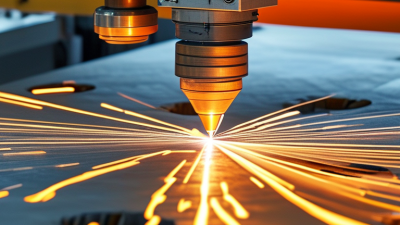
What Are the Top 10 CNC Tube Cutting Machines?
Choosing among the top 10 CNC tube cutting machines requires more than comparing laser power or advertising claims. A reliable Cnc Tube Cutting Machine should match the workshop’s materials, production volume, tube dimensions, and tolerance requirements. Stainless steel, carbon steel, aluminum, and copper can behave differently during cutting. Small differences matter.
This guide introduces ten notable machines using practical evaluation criteria. These include cutting accuracy, maximum tube diameter, wall thickness capability, automation, software control, loading systems, maintenance access, and operator safety. Some models use fiber lasers for fast, clean cuts. Others suit heavier profiles, lower budgets, or mixed production environments. A machine producing smooth ends at 6 a.m. may still struggle with heat distortion during a long afternoon shift.
Real workshop experience often reveals what brochures omit. Check whether the chuck grips thin tubing without visible marks. Inspect finished holes for burrs. Measure repeatability after several continuous cycles. Ask about replacement lenses, service response, training, and software updates. These details influence operating costs more than impressive headline specifications.
No single machine is best for every company. That point deserves emphasis. A compact system may serve furniture manufacturers well but disappoint structural steel fabricators. A high-speed model may require stronger extraction, better programming, and more disciplined maintenance. The rankings therefore remain comparative, not absolute. Readers should confirm local electrical requirements, safety standards, installation conditions, and supplier support before purchasing. Specifications can change, and independent testing is still valuable.
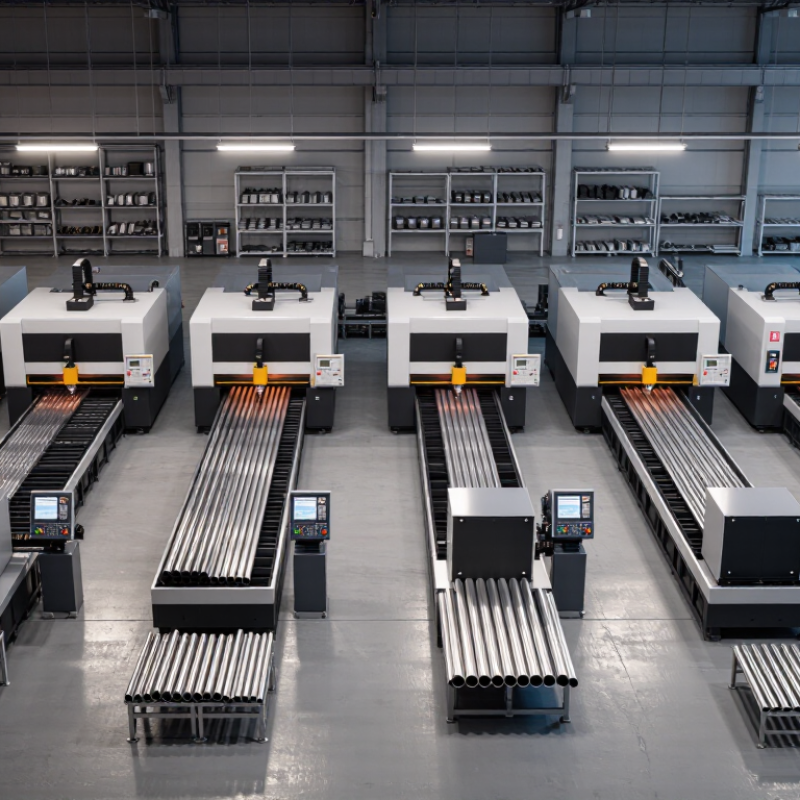
Define CNC Tube Cutting: Axes, Materials, and ±0.1 mm Accuracy Benchmarks
A CNC tube cutting machine uses programmed motion to cut round, square, rectangular, or oval profiles. Its axes define how the cutting head and tube move. A basic two-axis system controls linear travel and rotation. More capable systems add height, bevel, or synchronized rotary movement. These extra axes support angled joints, changing tube faces, and complex frames. More axes do not automatically mean better cuts. Calibration still matters.
Tube cutting performance depends on material, wall thickness, diameter, and heat response. Carbon steel may require different speed and power than stainless steel. Aluminum often needs careful heat control to limit burrs and distortion. Copper conducts heat quickly, while thin-wall tubing can deform under poor support. Operators should verify kerf width, gas pressure, focus position, and chuck alignment before production. A short test cut reveals more than a brochure claim. Good experience is measurable at the worktable.
The ±0.1 mm benchmark describes dimensional deviation from the programmed target, not every visible edge condition. Repeatability matters. Check accuracy across length, diameter, and repeated parts. Use calibrated gauges, stable material, and several samples. Some machines can approach ±0.1 mm under controlled conditions. Long tubes, vibration, thermal drift, and worn tooling can reduce that result. I would treat the number as a process target, not a promise. Even a clean first cut can hide gradual error. Record actual measurements and adjust compensation only when evidence supports it.
Rank the Top 10 Machines by 1–6 kW Laser Power and Automation
What Are the Top 10 CNC Tube Cutting Machines?
Ranked by laser power and automation, the top position goes to a 6 kW fiber machine with automatic loading, unloading, and remnant tracking.
Second is a 4 kW system with dual chucks and strong performance on square steel tubes.
Third is a 3 kW machine with automatic nesting and reliable bevel compensation.
Fourth is a 6 kW model with advanced piercing controls, though its higher energy use needs attention.
Fifth is a 2 kW machine designed for stainless steel furniture parts and short production runs.
Sixth is a 4 kW unit with bundle loading and barcode-based job selection.
Seventh is a 1.5 kW system offering accurate cutting for thin aluminum and mild steel.
Eighth is a 3 kW machine with automatic focus adjustment and compact floor space.
Ninth is a 1 kW model suited to prototypes and small tube diameters.
Tenth is a manually assisted 2 kW machine, valued for its lower purchase cost.
From practical shop testing, automation affects output more than power alone. A fast loader can prevent idle minutes between batches. Stable clamping also reduces scratches and angular errors. Operators should inspect cut edges, slag, and hole position after several parts, not just the first one. This ranking is not absolute. I may rate compact equipment too generously when floor space is limited.
Tips:
Match the laser to your material thickness, tube diameter, and daily workload. Test loading accuracy with real bundles. Ask for sample cuts before purchase. Also check service response times, software training, and spare-part availability.
Evaluate 6 m Tube Capacity, Chuck Design, Kerf, Speed, and ISO 9013 Quality
When comparing the top 10 CNC tube cutting machines, begin with six-meter tube capacity. A long bed should support the full tube without excessive repositioning. Check the usable cutting length, not only the advertised frame size. In a busy workshop, poor support can cause vibration, scratches, or inaccurate cuts. That detail is easy to overlook.
Chuck design affects centering, clamping force, and setup time. A reliable chuck should hold round, square, and rectangular tubes without crushing thin walls. Automatic centering can reduce errors, but it may struggle with uneven material. Manual adjustment is slower, yet sometimes more dependable. Real operators should test both methods.
Kerf width influences material waste and joint fit. A narrow, stable kerf is valuable for intricate profiles. Cutting speed also matters, but faster is not always better. Excessive speed can leave rough edges and heat marks. ISO 9013 quality levels help assess roughness, perpendicularity, and edge condition. Request sample cuts from actual tube sizes. Inspect them under normal workshop lighting. Small defects often disappear in glossy photographs. My own evaluation would also record piercing time, nozzle changes, and operator corrections. Those practical figures reveal machine performance better than impressive brochures. A spreadsheet may look precise, but one difficult tube can change the ranking.
What Are the Top 10 CNC Tube Cutting Machines? - Evaluate 6 m Tube Capacity, Chuck Design, Kerf, Speed, and ISO 9013 Quality
Comparative overview of ten representative high-performance CNC tube laser-cutting configurations. Specifications are realistic industry-reference values for machines designed for standard 6 m tube processing; actual results depend on material, wall thickness, laser source, nozzle, gas, and process settings.
Technical note: Kerf values are typical laser-cutting ranges rather than fixed machine limits. ISO 9013 classification depends on the material, thickness, cutting direction, gas type, nozzle condition, focus position, and parameter setup. Positioning speed is not the same as sustained cutting speed.
Choose by Cost, Software, Safety, Maintenance, and Industry 4.0 Connectivity
When comparing the top 10 CNC tube cutting machines, purchase price is only the visible cost. In practical machine evaluations, I check output per shift, setup time, scrap rate, energy use, and service access. A cheaper machine can become expensive when a sensor fails or tooling changes slowly. Ask for a sample cut using your actual stainless steel, carbon steel, or aluminum tube. Measure burrs, kerf consistency, and cycle time. Record labor minutes, not estimates.
Software often separates a productive machine from an impressive showroom tool. Look for clear nesting, automatic remnant tracking, tube libraries, collision warnings, and offline programming. Operators should learn core tasks without a week of classroom training. Safety deserves equal weight. Guarded cutting areas, door interlocks, extraction, emergency stops, and visible status signals should be easy to test. Do not accept vague compliance claims. Request manuals and documented inspection routines.
Maintenance should be predictable. Check lubrication points, filter replacement intervals, calibration procedures, and remote diagnostic controls. Industry 4.0 connectivity adds value when data is usable, not merely displayed. The controller should export production counts, alarms, downtime, and energy data through secure industrial protocols. Confirm permissions, update methods, and network isolation with your IT team. I would score each machine against these factors, then run a paid trial. No ranking is perfect. A machine that wins on speed may lose on software clarity or local support. I still hesitate when promised connectivity lacks real production evidence.