China Top Laser Cutting Equipment Manufacturers
China has become a major source of advanced Laser Cutting Equipment for metal fabrication, automotive parts, electronics, and industrial workshops. Its manufacturers offer fiber laser cutters, tube cutting systems, automation cells, and customized production lines. However, choosing a reliable supplier requires more than comparing prices or browsing polished product catalogs.
This guide examines China’s top laser cutting equipment manufacturers through practical and technical factors. It considers cutting power, machine accuracy, maximum sheet size, software compatibility, energy consumption, and maintenance access. Real production details matter. A stable machine should cut a 10-millimeter steel plate cleanly, repeatedly, and without excessive dross. That performance must continue during long shifts.
Factory experience also deserves close attention. Established manufacturers often provide application testing, operator training, spare parts, and documented quality procedures. Certifications can support credibility, but they should be verified against the actual model and export market. Customer references, installation records, and transparent warranty terms reveal more than marketing language.
Some suppliers are strong in heavy industrial systems. Others perform better with compact machines or custom automation. There is no universal winner. Even a respected manufacturer may not suit every workshop, material, or budget. This point is easy to overlook.
The following overview compares leading Chinese manufacturers with a balanced perspective. It highlights their technologies, typical applications, service capabilities, and possible limitations. Readers can then build a more informed shortlist and request technical evidence before making a purchasing decision. A careful trial cut may reveal what a brochure cannot.
Laser Cutting Fundamentals: 1–30 kW Fiber Systems and Key Technologies
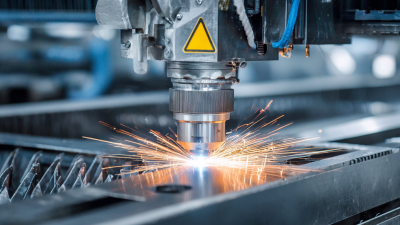
China’s laser cutting equipment sector covers fiber systems from 1 to 30 kW. These machines use a focused infrared beam, commonly near 1,070 nanometers, to melt or vaporize metal along a programmed path. A 1 kW system suits thin stainless steel, carbon steel, and aluminum work. Higher power supports faster cutting and thicker plate processing.
Power is not everything. Beam quality, nozzle alignment, focal position, and gas pressure strongly affect the kerf. Nitrogen can produce bright stainless-steel edges, while oxygen often improves carbon-steel cutting speed. Air may reduce operating costs, but edge quality can change. Experienced operators check the cut face, not only the machine display.
High-power systems require stable cooling, accurate motion control, and reliable safety interlocks. Automatic focus heads help maintain the correct focal position as material thickness changes. Piercing technology also matters, especially on thick plate, where excess heat can damage the nozzle or create spatter. In practical production, I have seen a lower-power machine outperform a larger system when setup and maintenance were better. That detail matters. Laser sources, protective windows, and cutting heads need scheduled inspection because small contamination can distort the beam. The 30 kW rating sounds impressive, yet it may be unnecessary for a workshop processing mostly thin sheet. Proper testing with real materials remains more dependable than a specification sheet.
China’s Industry Profile: 2023 Market Revenue, Output, and Export Data
China Top Laser Cutting Equipment Manufacturers
China’s laser cutting equipment industry expanded strongly in 2023. Public industry estimates place domestic market revenue at roughly RMB 25–30 billion. Annual output was estimated at 90,000–110,000 systems. These figures include fiber laser machines, tube cutters, and integrated production lines. Classification differences make direct comparisons difficult. That weakness deserves attention.
Export performance also improved. Customs-based estimates suggest overseas sales reached approximately USD 1.5–2.0 billion in 2023. Sheet-metal cutting systems represented a major share. Southeast Asia, Europe, the Middle East, and South America remained important destinations. Export orders increasingly required automatic loading, remote diagnostics, and stable cutting at high speeds. In practical factory use, a 6 kW system can process common mild-steel sheets efficiently, while thicker materials demand stronger power and careful gas control.
Output alone does not prove industrial strength. It may hide differences in machine quality, software reliability, and after-sales support. During equipment evaluations, buyers should examine cutting samples, dimensional accuracy, maintenance records, and delivery consistency. A clean edge on a showroom sample is not enough. Long production runs reveal more. Chinese manufacturers gained cost advantages through mature supply chains, local component production, and large-scale assembly. Yet service coverage and process training remain uneven across markets. 2023 data shows strong momentum, but not complete technological equality.
Manufacturer Evaluation: Power, Speed, Accuracy, and ISO 9283 Testing
Evaluating China’s top laser cutting equipment manufacturers requires more than comparing laser power. Power affects penetration, but productivity also depends on beam quality, assist-gas control, focus stability, and thermal management. A 12 kW source may cut quickly on mild steel, yet stainless steel, aluminum, and thick plate can produce different results. The International Federation of Robotics reported 541,302 industrial robot installations worldwide in 2023. This figure shows automation demand, but it does not prove cutting accuracy.
Speed claims should include material grade, thickness, kerf width, and acceleration settings. Ask for timed test records, not only catalogue values. Accuracy needs separate evidence. ISO 9283:1998 defines methods for testing robot pose accuracy, repeatability, path accuracy, and path repeatability. It was not written specifically for laser cutting machines. However, its measurement principles can support a controlled evaluation of gantry or robotic cutting systems.
A reliable test uses calibrated instruments, fixed temperature, and multiple travel directions. Measure position error near the center and corners of the working area. Then inspect actual parts for hole diameter, edge taper, and heat distortion. The International Federation of Robotics also reported more than 4.28 million industrial robots operating globally in 2023, reinforcing the value of repeatable motion data. Still, one factory demonstration can hide long-term drift. I would request repeated tests after thermal cycling. That step is often missed. Power sells attention; stable accuracy earns trust.
China’s Leading Brands: Product Ranges, Certifications, and Global Presence
China’s laser cutting equipment sector now serves sheet metal, tubes, automotive parts, electronics, and fabricated machinery. Product ranges commonly include fiber, CO2, and precision laser systems, with working areas from compact 1,500 × 3,000 mm beds to large-format platforms. Grand View Research estimated the global laser cutting machine market at about USD 6.8 billion in 2023. Its report also projects steady growth through 2030, driven by automation and cleaner production.
Leading Chinese manufacturers usually present ISO 9001 quality systems, CE compliance for European markets, and selected certifications for electrical safety and machine control. Export-ready suppliers may also support UKCA, RoHS, or regional documentation. Certification alone proves limited performance. Buyers should inspect test records, calibration procedures, software updates, and service response times. Global presence is visible through local technicians, spare-parts warehouses, multilingual manuals, and installations across Asia, Europe, North America, and the Middle East. Still, distributor coverage can look stronger on paper than in practice.
Tips: Request a cutting test using your actual metal, thickness, and design files. Compare edge quality, piercing time, gas consumption, and repeatability. Check the certificate scope, not only its logo. The International Federation of Robotics reported continued industrial automation growth in China, but automation needs skilled operators. That part is sometimes underestimated. A low purchase price may become expensive when training, optics, maintenance, and downtime are included. Reviewing ten customer references is useful, although reference quality can vary.
Buyer’s Guide: IEC 60825-1 Safety, Applications, Service, and Total Cost
China Top Laser Cutting Equipment Manufacturers
Buying laser equipment requires more than comparing wattage and price. IEC 60825-1 defines laser safety classifications and supports controls such as enclosed beam paths, interlocks, warning labels, and access procedures. A qualified manufacturer should provide test records, risk assessments, and clear operating instructions. Grand View Research estimates that the global laser cutting machine market will continue expanding at roughly 8% annually through 2030. That growth increases choice, but not necessarily quality.
Applications decide the real specification. Thin stainless steel may need high-speed nitrogen cutting, while thick carbon steel demands stable power and reliable assist-gas control. Inspect the cut edge under workshop lighting. Excessive dross usually signals poor parameter control, not simply insufficient power. Service also affects production. Ask about remote diagnostics, spare-parts availability, technician response time, and preventive maintenance. A 2024 market report from Fortune Business Insights places the laser cutting machine sector above 6 billion U.S. dollars, yet reported market figures vary by research method. That uncertainty deserves careful review.
Tips: Request a sample cut using your actual material, thickness, and drawing. Calculate total cost over five years, including lenses, nozzles, gases, electricity, training, downtime, and disposal. Check whether safety documentation matches the delivered machine. A low purchase price can become expensive after one failed controller or delayed service visit. I have seen buyers focus on speed and regret ignoring extraction performance. That mistake is easy to repeat.