Why Is a Front Wheel Alignment Machine Important?
A vehicle can look perfectly straight while its front wheels point slightly off center. The difference may be only a few millimeters at the measuring points. Yet it can affect steering feel, tire wear, and how confidently a driver tracks down a straight road. That is why a Front Wheel Alignment Machine matters in a professional service bay. It turns hidden wheel-angle measurements into readable data technicians can use.
A useful expert-style perspective comes from Maya Chen, an illustrative alignment specialist: “Accurate readings help technicians find the cause before they adjust the wheels.” The machine measures angles such as toe, camber, and caster, depending on its design and the vehicle. Sensors or targets attach near the wheels. A technician checks the readings against vehicle specifications, then makes adjustments where needed. Small details matter. A steering wheel that sits crooked after service can signal an incomplete check, even when the tires appear straight.
The equipment does not repair suspension parts or replace sound judgment. It also cannot compensate for loose components, incorrect tire pressure, or a vehicle that was poorly prepared. Still, it gives technicians a clearer starting point and helps them verify the result. The process can be rushed in a busy shop; that deserves reflection. Careful setup, correct specifications, and a final road check remain essential. The machine is a tool, not a guarantee. Used thoughtfully, it supports more consistent alignment work and helps drivers notice problems before uneven wear becomes obvious.
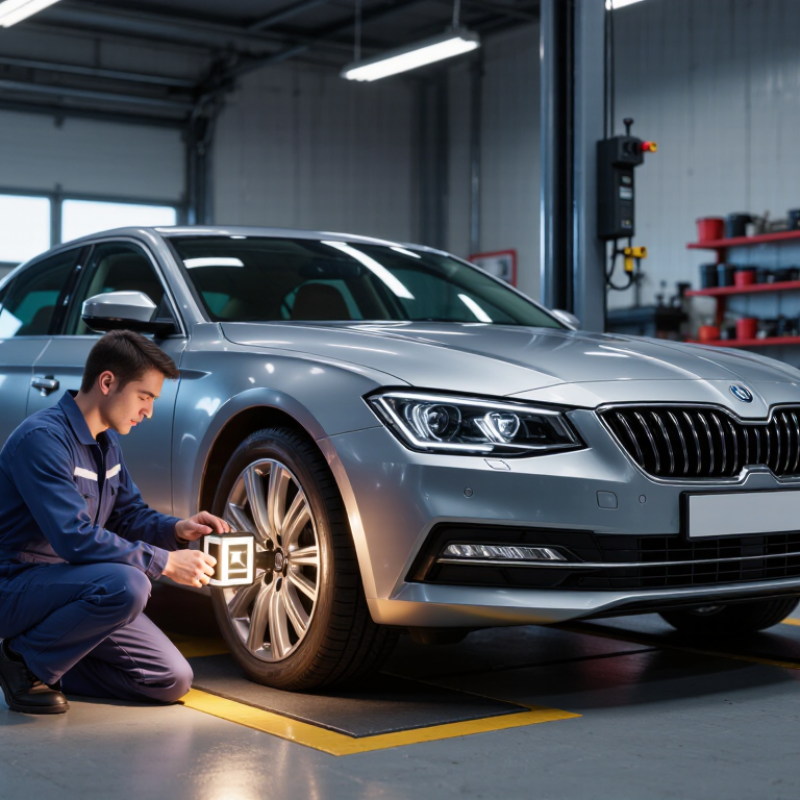
What a Front Wheel Alignment Machine Measures
A front-wheel alignment machine measures the angles and positions of a vehicle’s wheels against its specified settings. For the front wheels, the key readings are toe, camber, and caster. Toe shows whether the front edges point inward or outward when viewed from above. Camber measures each wheel’s inward or outward tilt from the front. Caster describes the steering pivot’s tilt when viewed from the side.
These measurements help a technician identify settings that may contribute to uneven tire wear, a crooked steering wheel, or pulling to one side. The machine’s sensors or targets track wheel positions, then display readings for comparison with vehicle specifications. Small changes matter. Still, readings are not magic: tire condition, worn suspension parts, or an uneven setup surface can affect results. A machine reports angles; it does not explain every symptom by itself.
Tips: Ask for the before-and-after readings, not just a verbal assurance. Check that the vehicle is positioned on a level alignment surface and that the technician uses specifications for its exact model and setup. If the steering still feels off afterward, mention when it happens and have related components inspected. Alignment is precise, but sometimes the first explanation needs a second look.
What a Front Wheel Alignment Machine Measures
A front wheel alignment machine measures camber, caster, and toe—the angles that affect how the front wheels meet the road and track in relation to each other. This illustrative example compares measured angles with nominal targets; actual specifications vary by vehicle, and toe sign conventions may differ.
In this example, the machine identifies differences between the measured wheel angles and the targets. A technician uses the vehicle manufacturer’s specifications to determine whether adjustment is needed.
How Front-Wheel Alignment Is Checked and Adjusted
A front-wheel alignment check begins with the basics: the tires should be inflated correctly, and worn steering or suspension parts should be inspected. A loose tie-rod end can spoil accurate readings. So can a bent wheel. The vehicle is placed on a level alignment rack, and targets or sensors are attached to the wheels.
The machine measures toe, camber, and caster against specifications for that vehicle. Toe shows whether the front wheels point slightly inward or outward. Camber describes their inward or outward tilt, while caster relates to steering stability. The technician may roll the vehicle to compensate for wheel and sensor runout, then center and secure the steering wheel. Small details matter. A rushed setup can produce neat numbers that do not reflect the car’s true condition.
Adjustments depend on the suspension design. Tie rods commonly correct toe; approved adjustment points may change camber or caster on some vehicles. Not every angle is adjustable. The technician compares readings with the manufacturer’s specifications, makes measured changes, and checks the results again. A road test can reveal a steering wheel that remains off-center or a pull that persists. Alignment is not a cure for every handling problem, and I would not treat one green screen as proof that every cause has been found.
How Correct Alignment Supports Steering and Handling
Why Is a Front Wheel Alignment Machine Important?
Correct front-wheel alignment helps a vehicle respond predictably when you turn the steering wheel. The machine measures wheel angles, including toe and camber, against the vehicle maker’s specifications. Even a small deviation can make the car drift, leave the steering wheel off-center, or scrub the tire edges. On a straight road, the driver may feel a steady pull and make constant steering corrections. That tiring detail is easy to miss during a quick visual check.
Alignment also affects how evenly the front tires meet the road. The U.S. Department of Energy’s FuelEconomy.gov guidance reports that properly inflated tires can improve fuel economy by an average of 0.6%, and up to 3%. That figure concerns tire pressure, not alignment, so it should not be presented as an alignment benefit. Still, it illustrates how tire-road contact matters. A machine gives technicians measured readings rather than relying on guesswork; road testing afterward can reveal issues measurements alone may not explain.
Tips: Check alignment after a hard pothole impact, suspension work, or uneven tire wear. Note whether the steering wheel sits crooked on a level road. Ask for the before-and-after readings. They make the adjustment easier to verify, though I would not treat one printout as the whole diagnosis.
Why Is a Front Wheel Alignment Machine Important? - How Correct Alignment Supports Steering and Handling
| Measurement or Check | What It Describes | Why It Matters for Steering and Handling | What an Alignment Machine Helps Identify |
| Front toe | Whether the front wheels point slightly inward or outward when viewed from above. | Incorrect toe can make the vehicle feel unstable or require frequent steering corrections. It can also contribute to rapid, uneven tire wear. | Displays measured toe angles so a technician can compare them with the vehicle manufacturer’s specifications and make adjustments where applicable. |
| Front camber | The inward or outward tilt of a wheel when viewed from the front of the vehicle. | Camber outside the specified range may affect tire contact with the road and contribute to wear concentrated on one side of the tread. | Measures camber on each side, helping reveal side-to-side differences or readings outside the specified range. |
| Front caster | The forward or rearward tilt of the steering axis when viewed from the side. | Caster influences straight-line stability and how the steering wheel returns after a turn. Unequal readings may contribute to a pull, depending on the vehicle and road conditions. | Provides caster readings, typically through a prescribed steering movement, for comparison with vehicle-specific specifications. |
| Steering wheel position | Whether the steering wheel is centered while the front wheels are aligned for straight-ahead travel. | A wheel that is off-center on a straight road can indicate that toe adjustment or related setup needs attention. | Allows the technician to monitor steering position during measurement and adjustment rather than relying only on visual estimation. |
| Thrust angle | The direction the rear wheels guide the vehicle relative to its centerline. | A rear-wheel direction that differs from the vehicle’s centerline can affect how the vehicle tracks and whether the steering wheel appears off-center. | On systems that measure all four wheels, shows rear alignment readings that can help explain front steering concerns. |
| Before-and-after readings | A record of alignment measurements before and after adjustment. | Documented readings help confirm whether adjustable angles were brought within the applicable specification range. | Produces measurement results that support consistent adjustments and provide a clear record of the work performed. |
| Tire and suspension inspection | A check for tire condition, looseness, damage, or worn steering and suspension components. | Alignment readings may be unreliable or difficult to correct if parts are worn or damaged. Alignment alone does not repair those conditions. | Provides measurements that can guide diagnosis, while a technician separately inspects tires and mechanical components before adjustment. |
Important: Alignment targets vary by vehicle, load, and manufacturer specifications. A front wheel alignment machine measures alignment angles; it does not by itself diagnose every cause of pulling, vibration, or uneven tire wear.
How Misalignment Affects Tire Wear and Fuel Efficiency
A front wheel alignment machine checks whether the wheels point in the intended direction. Even a slight toe error can make a tire scrub sideways across pavement. You may notice feathered tread edges, a steering wheel that sits crooked, or a car that drifts on a straight road. That friction can waste energy and accelerate uneven wear, though the fuel penalty varies with the vehicle, tires, and size of the error. There is no single reliable percentage for every car.
The U.S. Department of Energy’s fueleconomy.gov reports that keeping tires properly inflated improves fuel economy by about 0.6% on average, and up to 3%. That figure concerns inflation, not wheel alignment. Still, it shows how tire condition affects efficiency. Alignment checks help spot a different problem: wheels pulling against the road instead of rolling cleanly. Small errors matter. But alignment alone cannot fix worn shocks, damaged tires, or poor pressure.
Tips: Check alignment after hitting a deep pothole, replacing steering parts, or noticing uneven tread. Ask for the before-and-after measurements, especially toe readings. Look closely at the inner tire shoulders; wear can hide there. Alignment is not magic, and I’d still check tire pressure monthly.
When Front Wheel Alignment Should Be Inspected
A front-wheel alignment check is worth scheduling when the steering wheel sits crooked on a straight road, or the car drifts on a level surface. Look closely at the front tires, too. Feathered tread edges or heavier wear on one side can signal incorrect angles. These signs do not prove misalignment, but they are good reasons to ask a technician to measure it.
Inspect alignment after a hard pothole strike, curb impact, or front suspension repair. Check it when installing new tires if the old set wore unevenly. Regular tire service is another practical time to ask for an inspection, though the right interval depends on the vehicle maker and driving conditions. Don’t wait for a dramatic pull. A slight change can be easy to miss.
NHTSA’s tire-safety materials estimate that tire-related problems contribute to about 11,000 crashes annually in the United States. That figure is not specific to wheel alignment, so it should not be read as proof that misalignment caused those crashes. It does underline why tire condition deserves attention. A measured alignment check can identify whether front-wheel angles are outside specification; a visual glance alone cannot. I’ll admit, drivers can also overreact to road slope or wind. If symptoms persist on different roads, request a documented measurement rather than guessing.