
Why Choose a Sheet Metal Top Cover?
A top cover may look like a simple panel, but it helps define an enclosure’s protection, serviceability, and finished appearance. A well-designed Sheet Metal Top Cover can shield internal components from dust, accidental contact, and everyday handling. Its formed edges can also improve stiffness without adding bulky supports. Small details matter: a clean bend, aligned mounting holes, and a smooth edge can make assembly easier.
Material choice deserves more than a quick price comparison. World Steel Association’s World Steel in Figures 2024 reports global crude steel production of about 1.89 billion tonnes in 2023. That figure reflects the scale of the steel supply base, not the quality of any particular cover. For product teams, the practical questions are more specific: Does the material suit the environment? Can the finish resist scratches or corrosion? Will the cover maintain its shape around cutouts and fasteners? Aluminum may reduce weight, while steel can offer a sturdy, economical option. Neither is automatically better.
Design details matter most.
A cover’s real performance depends on thickness, forming, coating, tolerances, and how it joins the enclosure. Poorly designed seams may leave gaps. An unsuitable finish can wear at contact points. These are easy details to overlook, and they deserve review before production. This guide examines why manufacturers choose sheet metal, where it performs well, and what to check before specifying a cover. The right choice is rarely just about appearance. It should fit the product, the operating conditions, and the assembly process.
What Is a Sheet Metal Top Cover?
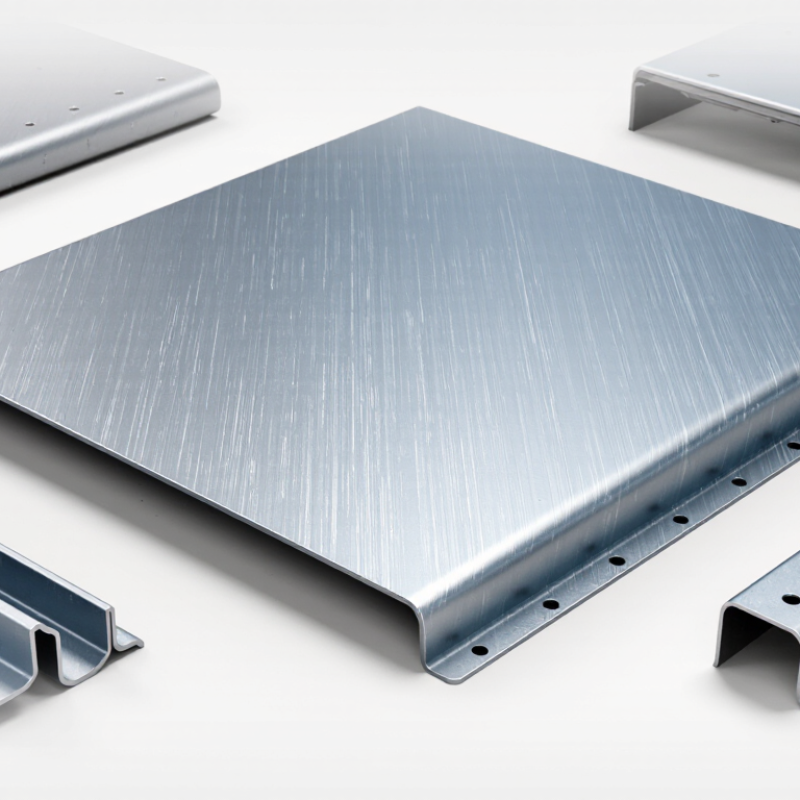
A sheet metal top cover is a formed panel fitted over the upper opening of a cabinet, machine, or electrical enclosure. It usually has folded edges or flanges for fastening, plus cutouts for cables, handles, or ventilation. Steel and aluminum are common choices. The right material and thickness depend on the load, environment, and how often the cover will be removed.
Its job is practical: shield internal parts from dust, accidental contact, and minor falling objects. A cover is not automatically waterproof or airtight; seams, fasteners, and openings can leave gaps. That detail matters. In real installations, a poorly aligned edge may rattle or expose components, even when the panel itself is sturdy. Specify coatings and edge finishes for the actual surroundings, especially where moisture or frequent handling is expected.
Material efficiency matters, too. World Steel Association’s 2023 sustainability indicators report that roughly 630 million tonnes of steel scrap are recycled each year, avoiding about 950 million tonnes of CO2 emissions. The International Energy Agency’s Iron and Steel Technology Roadmap notes that steel production accounts for around 7% of global energy-system emissions. These figures do not make every metal cover sustainable by default; they underline why sensible sizing, durable finishes, and recyclable material choices deserve attention. A cover that is too heavy or over-specified can be a quiet design mistake.
How Is a Sheet Metal Top Cover Designed and Made?
A sheet metal top cover is designed around the equipment it must protect, not just its outer dimensions. Engineers define the available space, mounting points, ventilation needs, and exposure to dust or moisture. A three-dimensional model helps reveal clashes with cables, hinges, or nearby panels before material is cut. The drawing should specify sheet thickness, material, bend locations, hole sizes, and finish. Small details matter. A hole placed a few millimeters off can make installation awkward.
The design is then prepared for cutting and forming. Laser cutting or punching creates the flat pattern, while a press brake bends it into shape. Bend allowances must account for material thickness and tooling; otherwise, the finished cover may not fit the frame. Edges are deburred to remove sharp burrs, then the part is checked for dimensions, flatness, and clean bends. Depending on the application, the cover may be painted, powder-coated, or left with a protective metal finish. A trial fit can catch problems that drawings miss. It may seem like an extra step, but skipping it is not always efficient. Feedback from assembly can lead to revised hole positions or a more practical bend sequence.
What Benefits Does a Sheet Metal Top Cover Provide?
A sheet metal top cover does more than close an enclosure. It creates a firm barrier against dust, light impacts, and accidental contact with internal components. A formed edge can add stiffness and reduce rattling when equipment runs. Small details matter. Countersunk fasteners keep the surface nearly flush, while ventilation slots can help release heat. The cover can also provide a clear place for labels or service instructions.
Sheet metal suits applications that need consistent dimensions and a durable finish. Steel may suit heavier housings, while aluminum can reduce weight; the right choice depends on loads, surroundings, and fabrication limits. Coatings can resist everyday wear, but cut edges and openings still need attention. That is easy to overlook. Fit matters too: a poorly matched cover may pinch wiring, block a fan, or make inspection awkward. Check clearances, mounting points, and service access before choosing thickness and finish. A metal cover is not always the best option. For demanding equipment, a prototype can reveal flex, heat buildup, or noise before production.
Why Choose a Sheet Metal Top Cover? - What Benefits Does a Sheet Metal Top Cover Provide?
| Benefit or Design Factor | Representative Data | What It Means for a Top Cover | Practical Design Note |
|---|---|---|---|
| Low mass options | At 1.0 mm thickness, approximate mass per square metre is 2.7 kg for 5052 aluminum, 7.9 kg for low-carbon steel, and 8.0 kg for 304 stainless steel. | Aluminum can reduce cover weight when lifting, transport, or overall equipment mass is important. | These figures are based on typical material densities and exclude bends, cut-outs, coatings, and hardware. |
| Heat transfer potential | Typical room-temperature thermal conductivity: 5052 aluminum, about 138 W/m·K; low-carbon steel, about 45–60 W/m·K; 304 stainless steel, about 16 W/m·K. | Aluminum conducts heat more readily than the listed steels and may help spread heat across a panel. | Actual cooling depends on airflow, surface area, contact, finish, and heat load; a cover alone does not guarantee cooling. |
| Structural stiffness through forming | Flanges, bends, ribs, and hems add section depth without requiring a solid plate. | Formed geometry can help limit panel flex while keeping the cover relatively lightweight. | Required thickness and reinforcement depend on panel size, supports, loads, and allowable deflection. |
| Corrosion resistance choices | 304 stainless steel provides corrosion resistance in many indoor and general-purpose environments; coated steel and aluminum are also common options. | Material and finish can be selected to suit the cover’s exposure and service conditions. | Coastal, chemical, or persistently wet environments may require a more specific material and finish selection. |
| Manufacturing flexibility | Sheet metal can be cut, punched, bent, and joined using processes such as laser cutting, press braking, riveting, and welding. | Openings, mounting features, edges, and ventilation patterns can be incorporated into the cover design. | Feature size and placement should account for bend radii, tooling limits, tolerances, and assembly access. |
| Electrical bonding and shielding potential | Conductive metal can support electrical bonding and electromagnetic shielding when the enclosure is designed with conductive joints. | A metal cover can form part of a grounded enclosure or shielding system. | Bonding points, seams, coatings, gaskets, and fasteners affect electrical continuity and shielding performance. |
| Serviceability and protection | A removable cover can provide access to internal components while shielding them from contact, dust, or incidental impacts. | Fasteners and formed edges allow the cover to be attached and removed for inspection or maintenance. | Ingress protection and impact performance depend on the complete enclosure design, including joints and seals. |
Material figures are representative values; actual properties vary by alloy, grade, thickness, finish, and supplier data.
Where Are Sheet Metal Top Covers Commonly Used?
Sheet metal top covers are commonly used on electrical enclosures, control cabinets, and industrial machinery. They shield internal components from dust, accidental contact, and falling debris. In a workshop, a formed steel cover can protect wiring above a control panel while still allowing technicians to remove it for inspection. Fit matters.
They also appear on HVAC equipment, pump housings, and production-line machines. A cover may close an upper opening, support a small display, or provide a flat surface for cable glands. On outdoor equipment, suitable coatings and sealed joints help limit moisture entry. A poorly fitted edge can still collect water, so the cover alone does not guarantee protection.
Telecommunications cabinets, access-control units, and transport equipment may use these covers as well. Their strength is useful where panels face frequent handling or vibration. Yet not every location needs heavy steel. Weight, corrosion exposure, heat buildup, and service access should guide the design. Sometimes ventilation slots help; sometimes they admit dust. That trade-off deserves a closer look before fabrication.
What Factors Matter When Choosing a Sheet Metal Top Cover?
Choosing a sheet metal top cover starts with its job, not its finish. Will it shield wiring from dust, support a mounted component, or handle frequent opening? Measure the available clearance and check load, vibration, and access needs. A cover that fits neatly but blocks airflow can trap heat. Small vents help, but they may admit dust or moisture. Trade-offs are real.
The installation environment matters just as much. For humid, coastal, or washdown areas, compare base metal, coating, edge protection, and drainage. NACE International’s 2013 IMPACT study estimated corrosion costs at US$2.5 trillion annually, or 3.4% of global GDP. That is an economy-wide estimate, not a forecast for one enclosure, but it shows why corrosion deserves early attention. Also check dissimilar-metal contact; it can accelerate corrosion. Details matter.
Gauge, forming method, and finish affect stiffness, weight, and cost. A heavier panel may feel reassuring, yet add weight without fixing poor support. There is no perfect gauge. Aluminum may suit weight-sensitive designs, while steel can offer practical stiffness. The Aluminum Association reports that recycling aluminum uses about 95% less energy than producing primary aluminum. If recycled content matters, ask suppliers for material documentation; assumptions are not evidence. Inspect a sample for sharp edges, coating coverage, and fastener alignment before approving production.
