
7 Best Track Chain Link Manufacturers for Global Buyers
A Track Chain Link may look like a row of steel joints, pins, and bushings. In service, it carries impact, tension, abrasion, and the machine’s full working load. One weak link can interrupt an entire shift. That is expensive.
The global demand picture matters, but reported market figures rarely isolate track chains as a separate product category. World Mining Data 2024 documents the scale and geographic spread of mineral production, while Deloitte’s Tracking the Trends 2024 examines productivity and operating pressures across mining. Together, these reports help explain why buyers compare more than unit price. Material quality, heat treatment, dimensional consistency, sealing, and access to replacement parts all affect uptime. Still, specifications on a datasheet cannot tell the whole story. Field performance depends on soil, operating habits, maintenance, and machine fit.
For market context, Off-Highway Research managing director Chris Sleight is a recognized construction-equipment analyst. I could not verify a direct quotation from him specifically about Track Chain Link products, so attributing one would risk misleading readers. A practical selection principle is simpler: match the chain to the machine, workload, and service conditions—not just the lowest offer. Small differences matter.
This guide compares seven manufacturers for global buyers, including their product focus, manufacturing strengths, and support considerations. It is a starting point, not a substitute for checking drawings, tolerances, warranty terms, and local parts availability. The best supplier is the one whose claims hold up after installation.
What Track Chain Links Are and How They Function in Undercarriage Systems
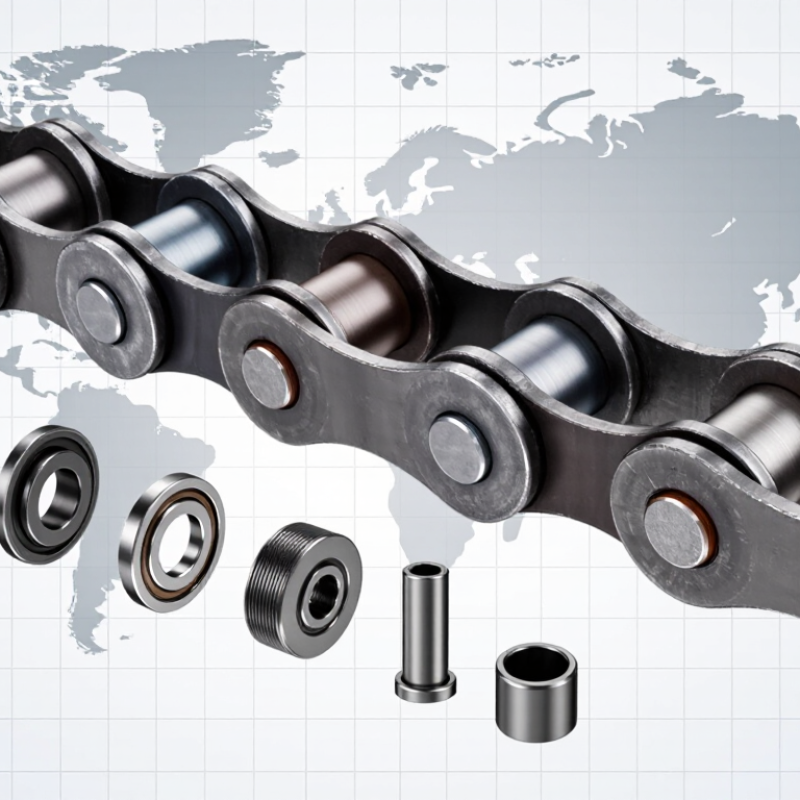
A track chain link is one segment in the continuous chain that carries a tracked machine across the ground. Links connect through pins and bushings, while track shoes bolt onto the links to form the visible tread. At the sprocket, teeth engage the bushings and transfer drive force; rollers support and guide the chain along the frame. The assembly must flex around the sprocket, yet resist heavy loads, grit, and repeated impact. Small wear can matter.
Industry undercarriage maintenance guidance commonly cites costs reaching about 50% of a tracked machine’s total maintenance expense. This is a broad benchmark, not a fixed rule: abrasive soil, high travel speeds, and poor tension can change the figure sharply. A loose chain may slap against the frame; an overly tight one adds strain to pins, bushings, and bearings. The overlooked detail is often the operating surface, not the link itself.
Tip: Check link wear, pin movement, and chain sag on level ground. Record measurements over time, rather than relying on appearance alone. A clean inspection is useful, but it cannot reveal every internal wear pattern.
Key Factors for Evaluating Track Chain Link Manufacturers
When evaluating track chain link manufacturers, start with the operating conditions, not a brochure. Track links face repeated impact, abrasive soil, and changing loads. Ask how the supplier controls steel composition, forging or casting quality, and heat treatment. Request inspection records for hardness, dimensions, and finished-link fit. A precise hardness figure alone does not prove long service life.
Check whether samples match the proposed production process. Measure pin-bore alignment and link pitch with suitable gauges, then compare results across several pieces. Ask how batches are identified and how defects are handled. Clear traceability matters when a replacement part must fit an existing undercarriage. Delivery history and technical response times also reveal more than polished sales claims. No supplier is perfect; look for evidence of honest corrective action.
Tips: Share machine model, working hours, ground conditions, and photos of worn parts. Request a sample and written tolerances before placing a large order. Keep the evaluation practical. A small mismatch can cause uneven wear, yet paperwork alone may not catch it. Ask who performs final inspection and whether test results are available for each batch. If answers stay vague, pause and verify.
7 Best Track Chain Link Manufacturers for Global Buyers - Key Factors for Evaluating Track Chain Link Manufacturers
An anonymous, criteria-based shortlist framework—not a verified ranking of specific companies. Compare actual suppliers using the same drawings, operating requirements, and evidence requests.
| Manufacturer Profile | Potential Best Fit | Key Technical Checks | Quality Evidence to Request | Buyer Evaluation Questions |
|---|---|---|---|---|
| 1. OEM-aligned supplier | Buyers replacing links for a defined machine make, model, or undercarriage system. | Part-number and drawing match; pitch, link height, pin and bushing fit, and compatibility with the intended track assembly. | Controlled drawings and revision history; dimensional inspection records; traceability linking the delivered lot to its production records. | Can the supplier confirm fit against the machine serial number or approved drawing? How are engineering changes controlled? |
| 2. Heavy-duty application specialist | High-load, abrasive, or demanding working conditions where wear life and durability are priorities. | Steel grade and heat-treatment details; hardness specifications and test locations; design suitability for the stated load and ground conditions. | Material certificates; hardness-test records; documented process controls. Confirm test methods and acceptance limits against the agreed specification. | What service conditions was the proposed link designed for? Can the supplier explain how its material and heat-treatment choices address them? |
| 3. Custom-engineering manufacturer | Non-standard, legacy, or low-volume requirements that need drawing review or product adaptation. | Engineering capability; tolerance agreement; sample and prototype process; confirmation that any change preserves assembly compatibility. | Approved drawings; first-article inspection results; documented review and approval of deviations before production. | Who owns design approval? What are the tooling, sample, and lead-time requirements for a custom order? |
| 4. High-volume production supplier | Repeat orders or fleet programs that need stable production capacity and replenishment planning. | Capacity for the required part mix; process consistency between lots; production and delivery planning for forecast demand. | Lot-based inspection reports; production traceability; quality-system documentation, such as a current ISO 9001 certificate where applicable. | Can the supplier share realistic capacity and lead-time commitments? How does it manage shortages, nonconforming parts, and corrective actions? |
| 5. Export-focused supplier | Importers and distributors requiring international shipment and export documentation. | Packaging suitable for the transport route; agreed shipping terms; clear product identification and packing-list accuracy. | Sample export documents; packing and marking specifications; shipment inspection records when included in the purchase agreement. | Which export documents can be provided? Who is responsible for freight, insurance, customs clearance, and damage claims under the agreed terms? |
| 6. Distributor and aftermarket specialist | Buyers sourcing multiple replacement parts or needing consolidated purchasing and product identification support. | Part-number cross-reference accuracy; stated source and origin; compatibility confirmation for each item in a mixed order. | Traceable purchase and product records; written warranty terms; documented handling of returns and product complaints. | Is the supplier the manufacturer or a reseller? Can it identify the production source and support a technical claim? |
| 7. Value-focused manufacturer | Cost-sensitive orders where buyers can define acceptance criteria and perform supplier qualification. | Quoted material, process, finish, tolerances, and included inspection; ensure the offer matches the same specification as competing quotations. | Pre-shipment inspection results; agreed sampling plan; written nonconformance, replacement, and warranty procedures. | What is included in the quoted price? Are tooling, testing, packaging, freight, and after-sales support quoted separately? |
Seven Track Chain Link Manufacturers Serving Global Buyers
A useful comparison of seven track chain link manufacturers starts with the parts themselves. Track links must match the machine’s specifications, including pitch, bushing dimensions, and pin fit. Small differences can affect wear and installation. Buyers should compare manufacturers by documented production capability, not broad claims.
Some suppliers specialize in forged links for heavy-duty equipment. Others focus on controlled heat treatment, machining accuracy, or flexible production runs. Check whether each manufacturer can provide material details, inspection records, and samples for measurement. Ask how it controls hardness across a batch. A clear answer is more useful than a polished brochure. Export experience also matters: confirm packaging protects machined surfaces from moisture and impact during transit.
Global buyers may need different strengths. One manufacturer might offer consistent large-volume output, while another handles smaller orders or custom dimensions. Compare lead times, minimum quantities, quality checks, and communication before making a shortlist. Request drawings and written specifications, then review them with a qualified maintenance or engineering professional. That sounds tidy; real procurement is messier. Sample testing can reveal fit or finish issues that paperwork misses. A supplier’s stated capability is only a starting point.
How to Compare Product Quality, Compatibility, and Customization
When comparing track chain manufacturers, ask for hardness readings, heat-treatment records, and dimensional inspection results. Check pin and bushing wear, not just the link’s appearance. A certificate helps, but it does not prove field life. I would also request a sample or test data for the intended load and working conditions. Small details matter.
Compatibility starts with measurements: chain pitch, link count, track shoe width, and sprocket engagement. Match these against machine specifications or reliable drawings. A worn chain can give misleading measurements, so compare several links and inspect the sprocket profile too. Fit is unforgiving. Similar-looking parts may still wear quickly when pitch or engagement differs.
Customization should be specific, not vague. State the machine model, operating environment, expected duty cycle, and any needs for seals or corrosion resistance. Deloitte and MAPI’s 2019 Smart Factory Study surveyed 600 manufacturing executives; 86% expected smart factory initiatives to drive competitiveness within five years. That figure is not track-chain-specific, but it underscores the value of production traceability. Ask whether custom batches retain material, heat-treatment, and inspection records. I would not assume every supplier can provide the same level of evidence.
Track Chain Supplier Comparison: Quality, Compatibility & Customization
The bars show the number of verification checks in each evaluation area—not manufacturer ratings. Use these points to compare supplier documentation and product specifications.
- Quality — 4 checks: material and specification traceability, heat-treatment or hardness information, dimensional consistency, and wear or fatigue evidence.
- Compatibility — 5 checks: machine make/model/serial, chain pitch, link count, pin and bushing dimensions, and shoe width or bolt pattern.
- Customization — 4 checks: chain length, shoe width, attachment or bolt pattern, and special material or treatment requirements.
Procurement, Logistics, and After-Sales Support for International Buyers
For international buyers, a track chain link order should begin with a clear technical package. Send the machine model, link pitch, track gauge, and drawings if available. A photo beside a ruler can help clarify a worn or unusual profile. Ask manufacturers to confirm steel grade, heat-treatment process, hardness range, and inspection records in writing. Small differences matter. A link that fits poorly can accelerate wear across the undercarriage.
A useful quotation should separate unit price from tooling, packaging, and freight assumptions. Confirm the order quantity, production lead time, payment milestones, and export documents before approving a purchase. Ask how links will be protected against moisture and impact during ocean transit; sealed wrapping and sturdy crates are practical details, not decoration. Agree on shipping terms and the named delivery point, then check whether the quoted schedule includes inspection and customs-document preparation. Delays can happen. Build a realistic buffer rather than planning around the best-case date.
After-sales support deserves the same attention as price. Request a named contact, a process for reporting fit or quality issues, and the records needed to trace each production batch. Keep installation photos and measurements from the first sample. They make later discussions more useful. One point buyers sometimes overlook is replacement availability: a low initial price is less helpful if matching links are difficult to source later. Still, even careful specifications can miss a field condition, so leave room to review the first shipment before repeating the order.
