Top 10 Skid Loader Models for Global Buyers to Consider?
In the dynamic world of construction and landscaping, choosing the right equipment is crucial. Skid Loaders are versatile machines that can tackle various tasks. They excel at digging, lifting, and hauling materials in tight spaces. The global market offers numerous models, each with unique features and benefits.
When selecting a skid loader, buyers need to consider power, size, and performance. Reliable brands often incorporate advanced technology to enhance efficiency. However, the best option can vary based on specific needs. Not every model will suit every application, and making the wrong choice can lead to inefficiencies.
Buyers should research thoroughly and consult experts when necessary. Looking into user reviews and ratings provides valuable insights. A skid loader's cost is an important factor as well. Balancing budget constraints with quality is a challenge. This guide will explore the top ten skid loader models available globally, providing a comprehensive overview for informed decision-making.
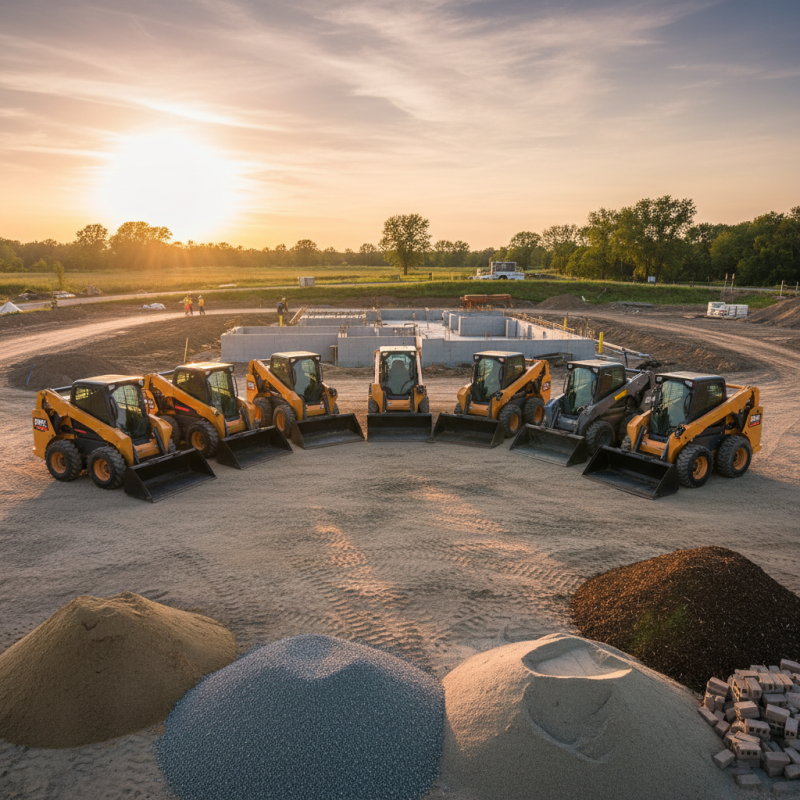
Overview of Skid Loader Models for Global Buyers
When considering skid loader models, global buyers must evaluate various features that impact performance and efficiency. Recent industry reports indicate a significant increase in demand for skid loaders. The global market is expected to grow at a CAGR of 4.2% from 2023 to 2030. Buyers should focus on power-to-weight ratios and operational versatility. These factors greatly influence site productivity.
Different regions may have distinct preferences based on work ecology. It’s essential to analyze local requirements and applications. For instance, urban settings may favor compact models, while rural areas may prioritize larger machines for heavy-duty tasks.
Tips: Always conduct site-specific assessments. This helps in choosing the right loader model. Consider the terrain, material type, and space constraints. Investing time in research can yield better long-term gains. Understand that there’s no one-size-fits-all solution. Each model has its limitations. Evaluating these helps in making informed decisions.
Key Features to Consider When Choosing a Skid Loader
Choosing the right skid loader requires careful consideration of key features. One essential factor is the engine power. Skid loaders typically range from 20 to 100 horsepower. The appropriate power level depends on the tasks you need to accomplish. A powerful engine offers better efficiency in heavy-duty applications. However, overestimating your power needs can lead to higher operating costs.
Another critical aspect is the machine's lifting capacity. Most skid loaders can lift between 600 to 3,500 pounds. It is essential to match this capacity to your workload. Underutilizing a high-capacity model may waste resources. On the other hand, selecting a unit with insufficient capacity can impede productivity and lead to early wear.
Additionally, consider attachment compatibility. Many skid loaders can accommodate various attachments, enhancing versatility. This adaptability opens up options for different projects. However, not all models offer the same flexibility. A comprehensive understanding of your primary tasks can guide you towards the most suitable attachments. Always assess the potential ROI based on usage to ensure a sound investment. With careful deliberation on these features, buyers can avoid common pitfalls.
Top 10 Skid Loader Models for Global Buyers to Consider
Top 10 Skid Loader Models and Their Specifications
When selecting a skid loader, buyers must focus on various specifications. Key specs include engine power, lifting capacity, and operating weight. These factors determine a machine’s efficiency and suitability for specific tasks. Understanding these specifications will enhance your decision-making process.
One popular specification to consider is the loader's breakout force. This is the force required to break the ground or lift heavy materials. A higher breakout force indicates better performance for demanding tasks. Additionally, check for the loader's attachment compatibility. Versatile attachments can greatly expand your machine's utility on job sites.
Tips: Always evaluate the machine's dimensions. A compact skid loader may navigate tight spaces better. Also, consider the maintenance requirements. Some models are easier to service than others, impacting long-term costs. Listen to user reviews and consult with professionals. This helps in making a well-informed decision. Skid loaders can be an investment, and it’s essential to choose wisely.
Comparative Analysis of Performance and Efficiency
When evaluating skid loaders, performance and efficiency are critical factors that global buyers cannot overlook. According to a report from the Equipment Dealers Association, high-performance skid loaders typically exhibit an average operating capacity of over 1,500 pounds. This capacity enables operators to push and lift heavier loads without compromising agility. Furthermore, advanced hydraulic systems in these loaders enhance lifting speeds by up to 20%, improving productivity on site.
However, efficiency is not solely defined by power. Fuel consumption is a significant consideration. Recent studies show that top models consume approximately 10-15% less fuel than older versions. This reduction translates into significant cost savings, especially for contractors managing large projects. Buyers should also consider the lifespan of components. Many skid loaders require parts replacements every 1,000 hours, leading to increased maintenance costs if not properly addressed.
User reviews indicate varying experiences with loading times and maneuverability. Some operators report that specific models can be less responsive on uneven terrain. While many units boast compact designs for tight spaces, the perceived stability may not meet all expectations. Addressing these discrepancies through comprehensive testing can lead to better-informed purchasing decisions.
Market Trends and Buying Tips for Skid Loaders
When considering skid loaders, understanding market trends is crucial. The global skid loader market is projected to grow at a CAGR of 5.3% from 2022 to 2028, according to industry reports. This growth is driven by increasing demand in construction and agriculture. Key markets include North America, Europe, and Asia-Pacific, reflecting a diverse clientele. Buyers should look for models that offer versatility and improved fuel efficiency, as these factors enhance operational cost-effectiveness.
Choosing the right skid loader also involves assessing features like hydraulic capacity and lift height. These specifications can significantly impact productivity. For instance, loaders with a higher lift capacity can handle larger loads, reducing the number of trips required on site. Moreover, with rising environmental concerns, many buyers are prioritizing models that comply with emissions standards. Examining reports indicates that features such as advanced emissions controls can attract eco-conscious buyers.
Market data suggest that buyers underestimate the importance of post-purchase support. Ensuring reliable parts availability and service is just as important as the initial selection. Many buyers realize too late that a skid loader’s longevity can depend on decent after-sales service. These considerations are critical for maximizing return on investment in any equipment.