
Top Compact Track Loader Track Roller Manufacturers
Choosing among the top Compact Track Loader Track Roller manufacturers is not just a price comparison. Track rollers carry machine weight, guide the undercarriage, and endure mud, gravel, and repeated impact. A poorly matched roller can contribute to uneven wear, excess vibration, or avoidable downtime. Small parts matter.
This guide examines manufacturers through practical criteria: material quality, heat treatment, sealing design, dimensional consistency, and access to replacement parts. These details affect how a roller performs beneath a compact loader, where limited space and heavy loads leave little room for error. A clear product specification helps, but it does not tell the whole story. Ask how compatibility is verified, what inspection standards apply, and whether support remains available after purchase. Real-world service records can add useful context, though they may be difficult to compare across different machines and working conditions.
There is no single best supplier for every fleet. Soil type, operating hours, machine model, and maintenance habits all shape the right choice. A roller that works well on a landscaping site may face a tougher test on rocky ground. That distinction is easy to overlook. The sections ahead offer a grounded way to compare leading manufacturers, assess product claims, and identify questions worth asking before ordering. Some information may still require direct confirmation with the supplier; that is a limitation, not a detail to ignore.
Compact Track Loader Track Rollers: Function, Layout, and Load Path
Top Compact Track Loader Track Roller Manufacturers
Compact Track Loader Track Rollers: Function, Layout, and Load Path
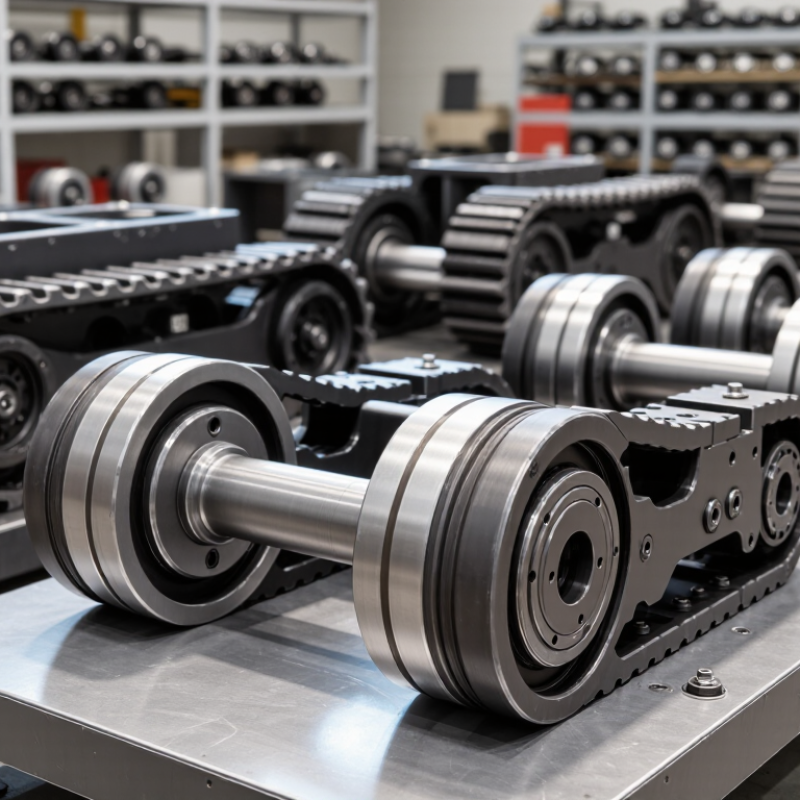
Track rollers carry the loader’s weight along the lower track run. Their steel wheels contact the inside of the track belt, helping it stay supported as the machine travels over uneven ground. Rollers also limit belt sag and spread pressure across the undercarriage. The effect is easy to notice: a worn or seized roller can create heat, noise, and uneven track wear.
Most compact track loaders use several rollers on each side, arranged beneath the frame. Their spacing supports the track between the front idler and rear drive sprocket. The load path runs from the loader frame, through the roller mounts and roller shells, into the track belt, then down to the ground. Turning, carrying a full bucket, and crossing sharp edges add changing forces. A clean-looking roller can still hide internal wear, so visual checks alone are not enough. That judgment can be imperfect.
Tips: Check for flat spots, leaks, unusual heat, and looseness. Compare both sides, and inspect after the machine cools. Record recurring wear; it may point to tension, alignment, or operating issues.
Core Roller Specifications: Diameter, Width, Seals, and Load Rating
Top Compact Track Loader Track Roller Manufacturers
A track roller’s diameter and width determine how it supports the chain and spreads contact across the undercarriage. Measure the existing roller, including its flange profile, before comparing replacements. A wider roller may distribute contact differently, but it must still clear the frame and match the track chain. Small differences matter.
Seal design is just as important. Mud, abrasive grit, and wash water can work past worn seals, contaminating the bearing and shortening service life. Check whether the assembly uses sealed, lubricated construction, and inspect for oil leakage or rough rotation. For load context, ISO 16754:2008 describes a method for determining average ground contact pressure on crawler machines. It does not specify an individual roller’s load rating. Ask suppliers for the rated radial load and test conditions; operating weight alone cannot establish a safe rating because impact and uneven terrain change roller loading. This is easy to overlook.
Tips: Compare like with like. Confirm diameter, width, seal type, and load rating in writing. A clean-looking roller can still have internal wear.
Compact Track Loader Track Roller Specifications
Calculated average static load per roller for three example machine masses, assuming 16 rollers share the machine weight equally.
Loads are calculated as machine mass × 9.81 m/s² ÷ 16 and are not manufacturer load ratings. Actual roller loads vary with machine design, terrain, attachments, and dynamic forces. Compare roller outside diameter and tread width in millimeters, confirm seal type and fitment, and check the rated load for the specific application.
Manufacturing Quality: ISO 9001:2015 and Roller Inspection Tests
Compact track loader track rollers face repeated impact, grit, moisture, and changing loads. For manufacturers, quality starts with a controlled process, not a polished brochure. ISO 9001:2015 supports consistent procedures, document control, corrective actions, and traceable production records. It does not certify every roller as defect-free. Buyers should check what the factory actually measures.
Inspection should cover key dimensions, shaft alignment, and roller runout. Hardness tests can help confirm material treatment, while seal checks and rotation tests can reveal rough movement or leakage. Sample rollers may also undergo load or endurance testing. Ask for acceptance limits and test records, not just a pass label. No test catches every field problem. Even a tidy report can feel reassuring before a muddy shift; real service may expose weaknesses.
Tips: Request a sample inspection report and confirm how rejected parts are handled. Compare measured dimensions with the drawing, especially at the mounting points. Ask whether test results can be traced to a production batch. Small gaps in records matter. A supplier’s response to a failed test can say as much as the test itself.
Typical CTL Ground Pressure of 3–6 psi and Its Effect on Undercarriage Loads
Typical compact track loaders are often described as exerting 3–6 psi of ground pressure. The figure is useful, but it can sound more exact than it is. Operating weight, track width, attachment load, and soil conditions all change the average. A loader carrying a full bucket on firm gravel will not load its tracks like an empty machine crossing wet clay. Real contact is uneven.
That difference matters to track rollers. They carry the track chain and help transfer machine weight to the ground. On hard, uneven surfaces, repeated impacts can concentrate force on individual rollers and bearings. Tight turns add side loading, while packed mud or stones can increase friction around the running gear. Small stresses, repeated all day. Over time, they may contribute to uneven wear, heat, or looseness.
For buyers comparing track roller designs, the 3–6 psi range is a starting point, not a durability rating. Check the loader’s operating weight and approved track configuration, then consider the work cycle and terrain. A wider track may reduce average ground pressure, but it does not remove impact loads or poor alignment. This is easy to overlook. Regularly clearing debris and checking roller play can reveal problems early, though inspection intervals should follow the machine’s service guidance.
Comparing Track Roller Manufacturers by Materials, Testing, and Warranty
Top Compact Track Loader Track Roller Manufacturers
Comparing Track Roller Manufacturers by Materials, Testing, and Warranty
A compact track loader works in mud, gravel, and tight turns, so its track rollers face repeated impact and abrasion. When comparing manufacturers, look beyond price and catalog photos. Ask what steel grade or alloy is used, how the roller shell is hardened, and whether seals resist grit and water. Material descriptions should be specific, not just “heavy duty.” Small details matter.
Testing offers another useful check. Look for documented load, leakage, and endurance tests, plus clear inspection criteria for bearings and seals. A supplier should explain how samples are tested and whether production parts follow the same process. Read warranty terms closely: check the coverage period, wear exclusions, required evidence, and replacement procedure. A long warranty sounds reassuring, but may not cover normal wear in severe conditions. Even a careful comparison can miss differences in local duty cycles.
Tips: Match the roller to your loader model and operating conditions. Request a sample inspection report and written warranty terms. Before installation, check for smooth rotation, an even finish, and seal damage. Service notes help, though they are often incomplete.
Top Compact Track Loader Track Roller Manufacturers - Comparing Track Roller Manufacturers by Materials, Testing, and Warranty
| Manufacturer category | Materials and construction to verify | Useful testing evidence | Warranty points to compare | Best fit and buyer checks |
|---|---|---|---|---|
| Machine-maker service channel | Confirm the roller is specified for the exact machine model and serial range. Ask for the material and heat-treatment specifications; designs commonly use steel shells and shafts with hardened wear surfaces. | Request part-number traceability, dimensional inspection records, and any applicable hardness or leakage-test results. Check that fitment and installation instructions match the machine. | Check coverage period, whether labor and removal costs are included, claim documentation requirements, and exclusions for wear, contamination, or improper installation. Terms vary by seller and region. | Often convenient when fitment certainty and a coordinated service route matter. Verify the supplied part number and obtain the warranty terms in writing. |
| Specialist undercarriage manufacturer | Ask whether the shell and shaft use specified steel grades, whether the tread is induction hardened, and how seals and internal bearings are selected for the application. Do not assume all product lines use the same design. | Look for documented dimensional checks, hardness measurements, seal or leak checks, and batch traceability. Ask how test results are linked to the production lot. | Compare the written duration and start date, remedy offered, claim process, and whether coverage depends on installation or maintenance records. A stated warranty does not by itself establish service life. | May suit buyers comparing application-specific designs. Confirm compatibility with the machine, track system, operating conditions, and required quantity. |
| Aftermarket replacement supplier | Request the drawing or critical dimensions, material description, seal arrangement, and stated hardness range. Compare mounting dimensions and roller profile with the original part rather than relying on a model listing alone. | Useful evidence includes incoming-material controls, in-process dimensional checks, finished-part inspection, and a documented procedure for identifying nonconforming parts. | Check whether the warranty is provided by the manufacturer or distributor, what proof of purchase is needed, and how returns are handled. Confirm freight, labor, and consequential-damage exclusions. | Can offer a practical replacement option when specifications and support are clear. Ask for written fitment confirmation and an accessible claims contact before ordering. |
| Value-focused general supplier | Request specific, verifiable details rather than broad claims such as “heavy duty”: steel specification, heat-treatment process, sealing approach, and critical dimensions. | Ask for a sample inspection report or documented quality checks. Confirm that any hardness values identify the tested location and method, and that records are available for the supplied batch. | Read the full written policy carefully, including claim deadlines, return shipping, exclusions, and whether replacement or repair is the remedy. Do not infer coverage from a verbal assurance. | May be considered for cost-sensitive purchases when technical documentation and after-sales support meet the buyer’s requirements. Evaluate total cost, not purchase price alone. |
Note: These are general supplier categories and due-diligence criteria, not claims about individual manufacturers. Materials, test procedures, warranty coverage, and availability vary by product and market; verify specifications and terms for the exact part before purchase.
