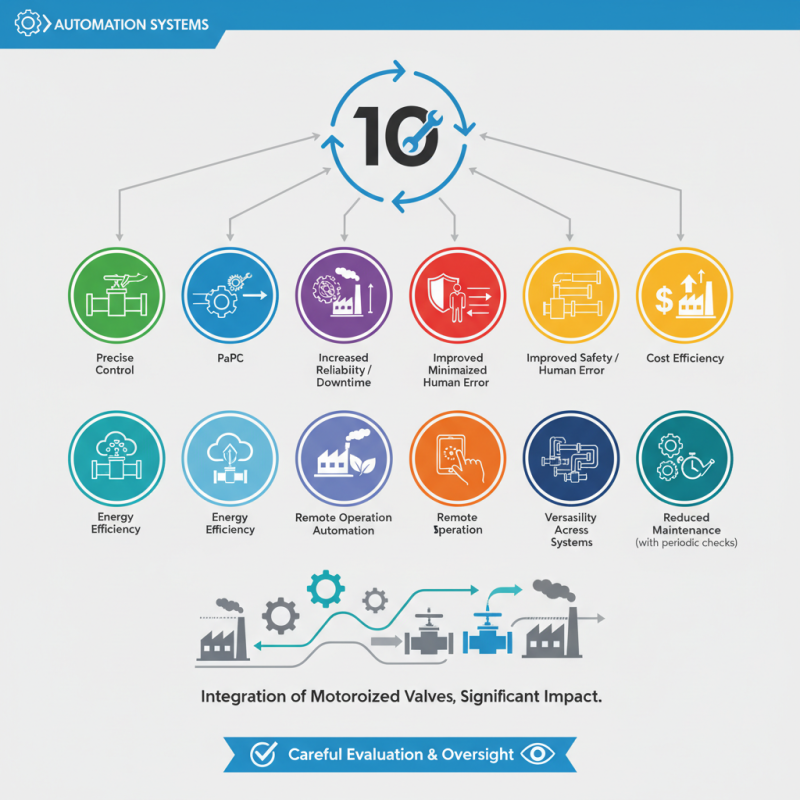
Top 10 Benefits of Motorized Valves for Your Systems?
The world of automation benefits greatly from the use of Motorized Valves. These components streamline processes in various systems. By understanding their advantages, engineers can make informed choices.
Motorized valves enhance control over fluid flow. They enable precise adjustments that manual valves cannot achieve. The reliability of motorized valves leads to decreased downtime. However, they may need periodic maintenance to ensure optimal performance.
Moreover, motorized valves improve safety in operations. Automated systems minimize human error, a key concern in many industries. As we embrace technology, the integration of motorized valves should be carefully evaluated. Their impact can be significant, but oversight is essential.
Understanding Motorized Valves: Definition and Functionality
Motorized valves are essential components in many systems. They control the flow of liquids or gases with precision. Understanding their functionality helps in optimizing various applications. These valves receive signals from a control system. They can open or close based on those signals, allowing for precise flow management.
In many instances, users may overlook the importance of regular maintenance. A malfunctioning motorized valve can lead to system inefficiencies. Sometimes, these issues occur due to wear and tear or obstruction. Regular checks can prevent costly downtime. When they fail, it’s often challenging to pinpoint the issue. Proper installation is crucial, but mistakes can happen. Over time, system pressure changes might affect valve performance, highlighting the need for vigilance.
Motorized valves offer automation benefits. They can enhance system performance and reduce manual labor. Yet, understanding their limits and operational conditions is vital. Users must consider environmental factors and valve specifications. These nuances can significantly impact overall effectiveness. Learning from real-world applications can provide valuable insights.
Enhanced Efficiency: How Motorized Valves Improve System Performance
Motorized valves can significantly enhance system efficiency. These devices automatically control the flow of liquids or gases, minimizing waste. This automation leads to precise adjustments in pressure and flow rates, resulting in optimal performance. For example, in HVAC systems, motorized valves finely tune temperature control, enhancing comfort while reducing energy consumption.
In industrial applications, the benefits are equally compelling. Properly installed motorized valves minimize human error. Operators can set specific parameters, allowing the system to adjust itself. This reliability decreases downtime and maintenance costs. However, improper configuration can lead to inefficiencies. Monitoring and regular maintenance are crucial.
The ability to integrate with smart technology is another advantage. Motorized valves can connect to sensors and controllers. These connections provide real-time feedback, fostering better decision-making. Yet, without proper training, operators may struggle to interpret data effectively. Investing in training ensures that teams leverage the full potential of these systems.
Automation and Control: Benefits of Integration in Industrial Systems
Automation is changing the landscape of industrial systems. Motorized valves play a crucial role in this transformation. They enable precise control over fluid flow, which is vital for many processes. Integration with automated systems allows for real-time adjustments. This means less downtime and improved efficiency. Operators can monitor operations remotely. This accessibility enhances decision-making.
While automation offers clear benefits, it also presents challenges. Dependence on technology can lead to potential malfunctions. Regular maintenance is critical for reliability. Moreover, training staff is essential to ensure they can handle advanced systems. The learning curve can be steep, and not all teams adapt equally. This requires thoughtful planning and support.
Control systems can become complex. Communication between devices must be seamless. If not, the entire operation can face disruptions. Careful consideration of system compatibility is essential. Balancing innovation and practicality can be difficult. However, the potential rewards of enhanced control and efficiency are worth the effort. Investing in motorized valves can lead to significant improvements when integrated thoughtfully.
Maintenance and Longevity: The Durability of Motorized Valves Explained
Motorized valves play a crucial role in enhancing the longevity and efficiency of various systems. Their durability stems from high-quality materials and precision engineering. These valves can withstand extreme temperatures and pressures. Regular wear and tear is minimal compared to manual alternatives. They often feature weather-resistant coatings, ensuring that environmental factors do not compromise performance.
However, even the best motorized valves are not impervious to failure. Installation errors can lead to significant problems later on. It's essential to integrate them properly into your systems. Maintenance schedules should not be overlooked. Periodic checks can catch issues before they escalate. For instance, failing to lubricate moving parts can lead to stiff operation.
Furthermore, some users may overlook the importance of compatibility. Not all motorized valves work well with every system. The choice of valve must align with the specific requirements of the application. Ignoring this could result in premature wear and decreased performance. Taking these factors into consideration can greatly enhance the lifespan of motorized valves.
Cost-Effectiveness: Financial Advantages of Using Motorized Valves
Motorized valves significantly enhance the efficiency of various systems. Their ability to automate control processes leads to considerable cost savings. Reduced manual labor not only lowers expenses but also minimizes human error. Additionally, precision in flow control can prevent wastage, which is crucial in industries like water management and manufacturing.
The initial investment in motorized valves may seem high, but think about long-term savings. Operating costs can decrease due to improved energy efficiency. Maintenance tends to be simpler, and fewer breakdowns lead to less downtime. However, one must reflect on the total lifecycle costs, including any potential repairs. It's essential to choose the right model for specific needs.
Switching to motorized valves can transform operations, yet it’s not without challenges. Integration into existing systems may require expert help, which adds another layer of expense. Training staff to use new technology takes time and resources. These factors can impact the perceived financial benefits. Balancing initial costs with future savings is vital for making an informed decision.
Top 10 Benefits of Motorized Valves for Your Systems
| Benefit | Description | Cost-Effectiveness Rating (1-5) |
| Improved Efficiency | Motorized valves provide precise control of fluid flow, increasing system efficiency. | 5 |
| Labor Savings | Reduced need for manual operation leads to lower labor costs. | 4 |
| Enhanced Safety | Automated controls reduce the risk of human error. | 5 |
| Reduced Maintenance | Motorized valves often have lower maintenance requirements compared to manual valves. | 4 |
| Energy Savings | Efficient operation can lead to lower energy usage and costs. | 5 |
| Remote Operation | Enables remote system management, enhancing operational flexibility. | 4 |
| Scalability | Easily integrated into larger systems for scalable solutions. | 3 |
| Better Process Control | Allows for finer adjustments in flow rates leading to better process outcomes. | 5 |
| Longer Lifespan | Typically more durable than manual valves, leading to longer service life. | 4 |
| Higher ROI | Initial investment often returns more in savings and efficiency over time. | 5 |