
Top 10 Benefits of Die Casting Molds for Manufacturing?
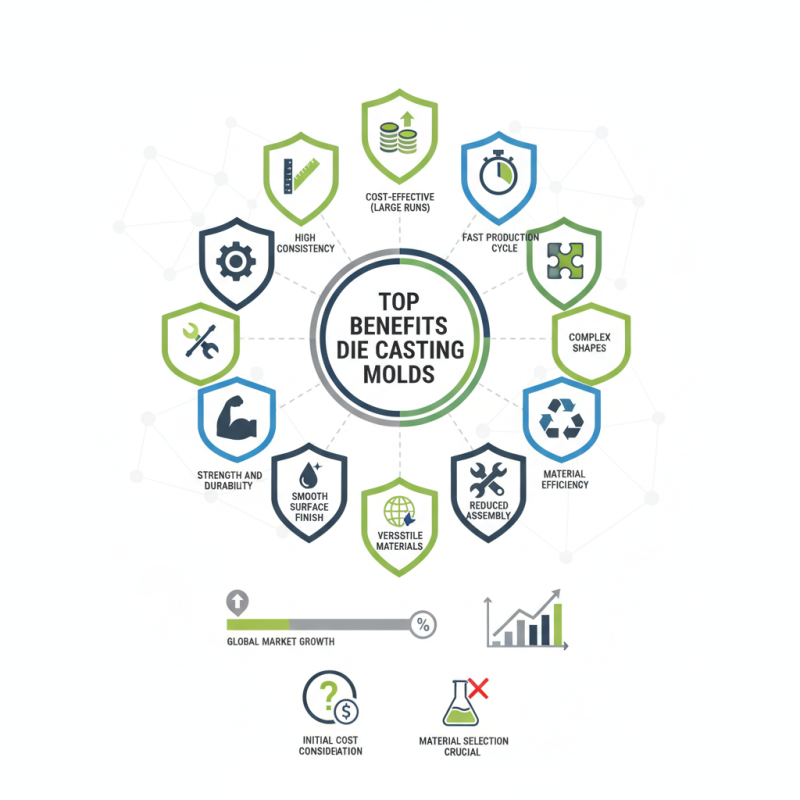
In the world of manufacturing, the efficiency and precision of the production process are critical. Die Casting Molds play a significant role in achieving these goals. According to a recent industry report, the global die casting market is projected to reach $86 billion by 2027, reflecting a compound annual growth rate of 8.5%. This growth highlights the increasing reliance on die casting for producing complex shapes with high accuracy.
One key advantage of using Die Casting Molds is their ability to produce parts with great consistency. For example, in the automotive sector, manufacturers can create components that meet exact specifications every time. However, it's essential to consider that while die casting offers numerous benefits, it does have limitations. For instance, the initial cost of die casting molds can be high, leading to potential barriers for smaller production runs.
Additionally, the selection of materials used in die casting is crucial. High-quality molds are needed to achieve the desired mechanical properties. Yet, not all materials are suited for every project. This requires careful planning and reflection on the specific needs of the manufacturing process. Understanding these factors can help manufacturers leverage the advantages of Die Casting Molds effectively.
Overview of Die Casting Molds in Manufacturing Processes
Die casting molds play a crucial role in modern manufacturing. This method creates precise metal parts efficiently. According to industry data, die casting can reduce production costs by up to 20%. This efficiency stems from high-speed production rates, leading to shorter lead times.
The design of die casting molds is essential. Molds are made from durable materials. They withstand high temperatures and pressure, ensuring consistent results. Reports show that the durability of molds can lead to lifecycle improvements of up to 30%. However, creating high-quality molds requires skilled craftsmanship and can be expensive initially.
Moreover, die casting allows for complex geometries. Products can include intricate designs without additional machining. Yet, there can be challenges in achieving fine details. The surface finish can sometimes be less than ideal, necessitating additional work. Balancing design and function is key for manufacturers looking to leverage this process.
Cost-Effectiveness of Die Casting Molds in Production
Die casting molds offer significant cost advantages in manufacturing processes. They enable mass production of complex components with high precision. This method reduces material waste dramatically compared to traditional techniques. The efficiency of die casting molds leads to faster production cycles. Manufacturers can meet high demand without sacrificing quality.
Moreover, the initial investment in die casting molds can be substantial. However, the long-term savings outweigh these upfront costs. Molds have a long lifespan, allowing for continuous production runs. Each cycle produces uniform parts, minimizing the need for additional machining. This enhances cost-effectiveness, especially for large-scale operations.
Still, it's important to consider some challenges. Designing effective molds requires expertise and time. Errors in mold design can lead to costly mistakes. Companies must also invest in maintenance to keep molds in optimal condition. Despite these concerns, the benefits of die casting molds often lead to profitability in manufacturing. Their potential for cost savings makes them an attractive option for many industries.
Top 10 Benefits of Die Casting Molds for Manufacturing
Enhanced Precision and Quality in Die Cast Components
Die casting molds are crucial in manufacturing high-quality components. They allow for enhanced precision, which is essential for complex designs. This method ensures that intricate shapes and fine details are replicated accurately. When properly executed, die casting produces parts with minimal variation. This results in higher efficiency during production. A well-designed mold contributes to consistency in each piece, reducing waste.
However, there are challenges in maintaining that precision. Mold wear and tear can occur over time. If not monitored closely, this can lead to defects in the final products. Manufacturers must invest time in regular maintenance and occasionally redesigning molds. Despite these challenges, the benefits of precision die casting molds far outweigh the drawbacks. Quality assurance processes play a vital role in ensuring that products meet industry standards.
The ability to produce intricate details reliably is a notable strength of die casting. This method is often favored in industries requiring high-quality components, such as automotive and electronics. Yet, the complexities of the process require careful planning and execution. Continuous improvement and adaptation are necessary to truly harness the precision and quality die casting offers. The pursuit of perfect molds is an ongoing journey for those in manufacturing.
Reduction of Waste and Environmental Impact with Die Casting
Die casting molds are increasingly favored in manufacturing due to their efficiency in reducing waste. This process allows for the creation of complex shapes with minimal material usage. By injecting molten metal into a mold, manufacturers can achieve high precision. Less scrap material results in lower costs and a smaller ecological footprint.
The environmental impact of manufacturing is a concern. Die casting actively addresses this by minimizing waste generation. However, challenges remain in sourcing sustainable materials. While die casting can be effective, the demand for more eco-friendly practices is growing. Companies must invest in research to improve this aspect.
Adopting die casting molds can lead to significant advantages. But, the industry must remain adaptable. Embracing sustainability is not a one-time effort. Continuous improvement is key. It's essential to evaluate and refine production methods regularly.
Top 10 Benefits of Die Casting Molds for Manufacturing
| Benefit | Description | Environmental Impact | Cost Efficiency |
|---|---|---|---|
| Reduced Material Waste | Die casting allows for precise shaping, minimizing leftover scrap material. | Significantly lowers environmental burden by decreasing waste. | Cost savings from reduced raw material purchasing. |
| Energy Efficiency | Die casting processes are generally faster and consume less energy. | Lower energy consumption contributes to lower carbon footprint. | Reduced energy costs enhance overall profitability. |
| High Production Rate | Die casting can produce large quantities of parts quickly. | Efficient production helps in minimizing resource use overall. | Increased throughput can offset initial tool costs. |
| Durable Parts | Die casting produces strong components with excellent mechanical properties. | Long-lasting products reduce demand for replacements. | Reduces costs associated with repairs and replacements. |
| Complex Geometries | Allows for intricate designs that are hard to achieve with other methods. | Efficient use of materials in complex parts reduces waste. | Eliminates additional machining costs by providing finished parts. |
| Recyclability | Aluminum and zinc die castings are recyclable, promoting sustainability. | Helps reduce landfill waste and conserves resources. | Recycling efforts can further reduce overall costs. |
| Minimal Secondary Operations | Often requires less secondary machining due to accuracy. | Less processing leads to lower energy and material use. | Lower labor and operational costs enhance financial efficiency. |
| Consistent Quality | Mass production ensures uniform specifications across parts. | Quality consistency reduces waste from defective parts. | Fewer defects lower costs and improve customer satisfaction. |
| Reduced Lead Times | Fast production and fewer processes result in shorter lead times. | Speedier production translates to less waste in storage and handling. | Cost reductions are realized through improved time efficiency. |
Versatility of Die Casting Molds Across Various Industries
Die casting molds are pivotal in many industries today. Their adaptability makes them a favorite choice for diverse applications. Automotive manufacturers often use these molds to produce complex engine components. The precision they offer leads to better performance and durability.
In electronics, die casting molds create intricate housings and parts. These molded pieces provide excellent strength while remaining lightweight. However, not all designs thrive under die casting. Some items may require adjustments to fit die casting standards effectively. The learning curve can be steep but rewarding.
In the aerospace sector, die casting helps reduce weight without compromising safety. Molds form parts more efficiently than traditional methods, but issues can arise. Variations in metal flow may affect the final product. Manufacturers must be vigilant. Continuous evaluation and adaptation remain essential for success in this field.
