
Top 10 Paper Coating Machine Manufacturers Worldwide?
Paper Coating Machine technology sits at the intersection of surface chemistry, web handling, energy control, and production economics. Selecting the right manufacturer affects coating uniformity, drying stability, defect rates, and long-term maintenance costs. This matters as packaging, publishing, and specialty paper producers face tighter quality requirements and changing sustainability expectations.
Recent reports from Smithers, Mordor Intelligence, and Valmet identify growth in coated packaging papers, barrier papers, and lightweight grades. Smithers’ paper packaging studies repeatedly highlight recyclable coatings and material reduction as important market directions. Valmet’s technical publications also emphasize precise coating application, efficient drying, and stable machine operation. However, market reports often combine complete paper machines with coating units. The comparison is not always perfect.
Dr. Pratima Bajpai, a recognized pulp and paper technology author, states, “A coating must improve paper performance without compromising runnability.” That principle guides this ranking. The leading manufacturers differ in blade coaters, curtain coaters, air-knife systems, drying technology, automation, and after-sales support. A machine may look impressive in a showroom, yet perform differently with recycled fiber, high-speed webs, or water-based barrier coatings.
This Top 10 Paper Coating Machine Manufacturers Worldwide overview examines engineering capability, global installations, product flexibility, energy performance, and customer support. It also considers practical details, such as coating streaks, drying marks, cleaning access, and operator training. No ranking is universally final. Application conditions can change the result. Real purchasing decisions still require trials, reference checks, and total-cost analysis.
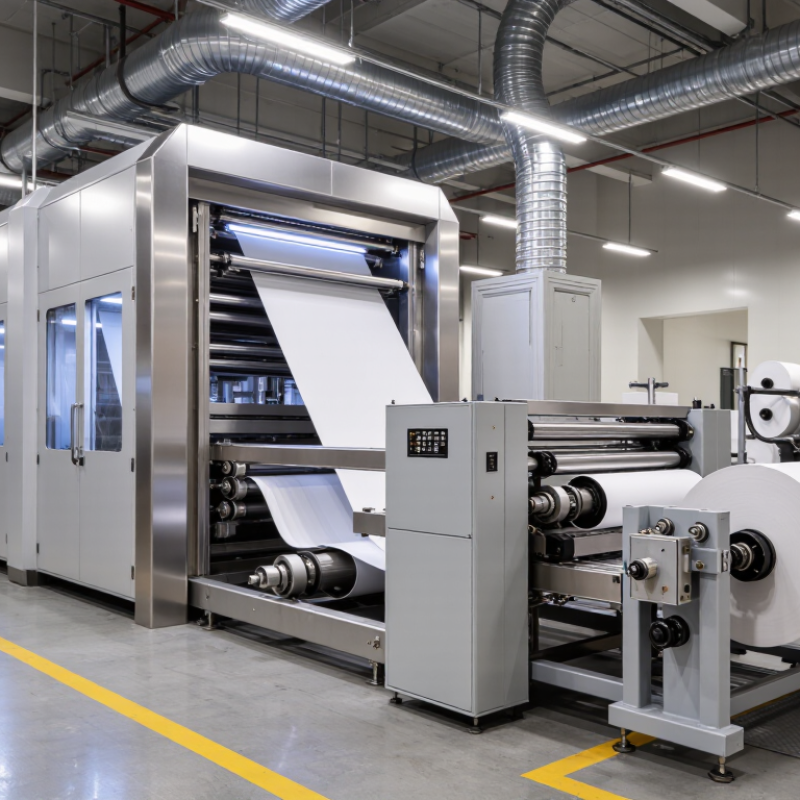
What Is a Paper Coating Machine and How Does It Work?
A paper coating machine applies a controlled layer of liquid or molten material to a moving paper web. The coating may improve gloss, whiteness, print sharpness, moisture resistance, or surface smoothness. In a modern production line, large rolls feed paper through aligned rollers at steady speed. The machine is not merely a paint applicator. It is a coordinated system of pumps, metering devices, dryers, sensors, and tension controls.
As the web enters the coating station, a pump delivers formulation into a pan, slot, or curtain head. A blade, rod, air knife, or precision slot controls the wet film thickness. Excess material returns to the circulation tank, while the coated sheet travels through heated or infrared drying zones. Sensors monitor moisture, coat weight, web tension, and temperature during operation. If the drying profile is uneven, the paper can curl, blister, or show streaks. Small errors matter. Experienced operators adjust speed, viscosity, pressure, and dryer output together, rather than chasing one reading.
When comparing worldwide manufacturers, buyers should examine application data, trial results, service response, and spare-part availability. A credible supplier can explain achievable coat weight, production speed, substrate limits, and cleaning requirements. Ask for test samples made with your actual paper grade. That step reveals defects that brochures often hide. Energy use deserves attention because drying can dominate operating costs. I would also question any promise of perfect uniformity. Paper, climate, and operator decisions change the result. The best machine is not always the fastest one.
Top 10 Paper Coating Machine Manufacturers Worldwide? — What Is a Paper Coating Machine and How Does It Work?
A paper coating machine applies a controlled layer of pigments, binders, or functional chemicals to a moving paper web. The coating is metered by a blade, rod, air knife, curtain, or size press, then dried and finished through calendering or winding.
The chart shows representative industrial coating-weight ranges in grams per square metre (g/m²) for common paper-coating processes. Actual values vary according to paper grade, coating formulation, machine configuration, and production speed. No company or brand ranking is included.
Key Features Used to Compare Paper Coating Machine Manufacturers
Top 10 Paper Coating Machine Manufacturers Worldwide?
When comparing paper coating machine manufacturers, production evidence matters more than polished brochures. Ask for test results using paper grades, coating formulas, and speeds close to your operation. A machine should maintain stable coat weight across the web. Small variations can create visible streaks, uneven gloss, or expensive rejected rolls.
Control systems deserve careful attention. Compare tension control, automatic viscosity adjustment, drying temperature accuracy, and online defect detection. Efficient dryers may reduce energy use, but their performance depends on airflow, moisture levels, and building conditions. Request measured consumption data. Do not rely only on estimated figures.
Service capability often separates similar manufacturers. Examine installation support, operator training, spare-part availability, and remote diagnostic response times. Ask how quickly technicians can solve a pump fault or coating-head blockage. I have found that practical maintenance access is frequently overlooked during purchasing. A compact machine may save floor space, yet cramped inspection points can slow every repair. Quoted production speed can also be optimistic. Real output may drop with delicate papers, frequent grade changes, or strict surface requirements. Trial runs, references from comparable mills, documented safety systems, and transparent warranty terms provide stronger evidence of reliability. Capability matters. So does honesty.
Top 10 Paper Coating Machine Manufacturers Worldwide
The top 10 paper coating machine manufacturers worldwide are often judged by engineering depth, production consistency, and field support. A credible comparison should examine more than catalog speed. It should review coating uniformity, drying control, web tension, energy use, and maintenance access.
Leading manufacturers typically supply blade, rod, air-knife, or curtain coating systems. Their machines may handle lightweight papers, packaging grades, release papers, and specialty substrates. Experienced buyers inspect coat-weight accuracy, edge coverage, vibration control, and reel-to-reel stability. A useful factory trial can reveal more than polished sales material. Watch the web during acceleration.
The strongest suppliers usually provide complete lines, including pumps, filters, dryers, inspection systems, and closed-loop controls. Their technical teams should support installation, operator training, spare parts planning, and process adjustments after commissioning. Local service coverage matters when a damaged bearing stops production at midnight. It sounds simple, but response time often affects profitability more than the initial machine price.
No ranking is perfect. Some manufacturers excel at high-speed lines, while others perform better on customized, narrow-web equipment. This difference deserves attention. Buyers should request verified references, recent performance data, safety documentation, and realistic output guarantees. A careful assessment also compares cleaning time, changeover losses, coating chemistry compatibility, and long-term operating costs. That is where impressive specifications sometimes become less impressive.
| Rank | Anonymous Manufacturer Profile | Primary Region | Core Coating Technologies | Typical Coating Method | Typical Production Speed | Typical Web Width | Common Paper Applications | Notable Engineering Strength |
|---|---|---|---|---|---|---|---|---|
| 1 | Manufacturer Profile 01 | Western Europe | Pre-metered, film, curtain and blade coating systems | Film, blade and curtain | Up to approximately 2,000 m/min | Up to approximately 10 m | Coated fine paper, packaging board and specialty grades | High-speed coating-line integration and process automation |
| 2 | Manufacturer Profile 02 | Northern Europe | Blade, rod, size-press and pigment-coating equipment | Blade, rod and film transfer | Approximately 1,200–1,800 m/min | Approximately 6–9 m | Graphic paper, publication paper and cartonboard | Efficient coating kitchens and precise cross-direction control |
| 3 | Manufacturer Profile 03 | Central Europe | Gravure, flexographic, reverse-roll and slot-die systems | Roll, gravure and slot-die | Approximately 500–1,500 m/min | Approximately 2–8 m | Release papers, labels, thermal papers and flexible packaging | Specialty coating precision and modular machine design |
| 4 | Manufacturer Profile 04 | East Asia | Blade, air-knife, rod and transfer-coating machinery | Blade, air-knife and rod | Approximately 800–1,500 m/min | Approximately 3–8 m | Coated board, decorative paper and printing paper | Cost-efficient customization for integrated paper mills |
| 5 | Manufacturer Profile 05 | North America | Extrusion, curtain, slot-die and specialty liquid-coating systems | Extrusion, curtain and slot-die | Approximately 300–1,200 m/min | Approximately 2–6 m | Barrier paper, cupstock, food packaging and technical papers | Barrier-layer development and pilot-to-production scale-up |
| 6 | Manufacturer Profile 06 | Southern Europe | Rotogravure, flexographic and laminating coating equipment | Gravure, flexographic and reverse-roll | Approximately 400–1,000 m/min | Approximately 1.5–5 m | Labelstock, decorative papers and flexible packaging materials | Accurate handling of low-viscosity and solvent-based coatings |
| 7 | Manufacturer Profile 07 | East Asia | Roll, blade, hot-melt and water-based coating systems | Roll, blade and hot-melt | Approximately 200–900 m/min | Approximately 1.2–4.5 m | Adhesive papers, tapes, specialty labels and industrial papers | Compact layouts and flexible multi-purpose coating lines |
| 8 | Manufacturer Profile 08 | Western Europe | Curtain, slot-die, spray and functional-coating systems | Curtain, slot-die and spray | Approximately 100–800 m/min | Approximately 1–4 m | Barrier papers, battery-separator substrates and technical papers | Research, pilot production and advanced functional coatings |
| 9 | Manufacturer Profile 09 | South Asia | Blade, roll, size-press and surface-treatment machinery | Blade, roll and size-press | Approximately 500–1,200 m/min | Approximately 2–6 m | Writing paper, packaging paper and coated duplex board | Reliable mill-scale equipment with competitive installation costs |
| 10 | Manufacturer Profile 10 | Southeast Asia | Film, rod, blade and water-based coating machinery | Film, rod and blade | Approximately 300–1,000 m/min | Approximately 1.5–5 m | Packaging paper, kraft paper and general coated grades | Practical retrofit solutions and regional service support |
How to Choose the Right Paper Coating Machine Manufacturer
Top 10 Paper Coating Machine Manufacturers Worldwide?
How to Choose the Right Paper Coating Machine Manufacturer
Choosing a paper coating machine manufacturer requires more than comparing quoted prices. FAO’s FAOSTAT forestry data recorded approximately 401 million tonnes of global paper and paperboard production in 2022. That scale increases pressure on coating uniformity, uptime, and energy control. Define your product first: coated fine paper, packaging board, thermal stock, or barrier grades. Each application needs different metering methods, drying capacity, web tension control, and surface treatment.
Ask manufacturers for measured results on a substrate similar to yours. Request coat-weight variation, maximum sustainable speed, drying energy per tonne, and reject rates. Do not accept only laboratory samples. Production evidence matters. It is easy to promise 98% availability. Harder to prove it during a humid night shift. Check installed references, spare-parts lead times, operator training, and remote diagnostic support. The European Commission’s Best Available Techniques reference documents also emphasize energy efficiency and process-integrated emission control, which should influence equipment design.
Total cost deserves careful attention. A cheaper machine may consume more steam, create more broke, or require frequent blade changes. Smithers’ industry research continues to identify barrier and functional coatings as important growth areas, but demand differs by region and grade. Build a pilot trial with realistic speeds and coating formulations. I would also challenge my own assumptions: the widest machine is not always the most productive. Sometimes, stable operation at a lower speed produces better margins. Get guarantees in writing, including acceptance tests and performance limits.
Industry Applications and Future Trends in Paper Coating Technology
Paper coating machine manufacturers are increasingly judged by application results, not machine size alone. In practical mill assessments, the leading ten suppliers typically support packaging board, inkjet paper, label stock, release paper, and specialty medical papers. Each application demands a different coating window.
Packaging lines need high-speed coverage and strong barrier performance. Label production requires smooth surfaces and precise coat weights. Digital printing depends on controlled absorption, while release papers need stable silicone distribution. Operators examine drying capacity, web tension, nozzle accuracy, and cleaning time before approving equipment.
Future systems will combine sensors, automation, and lower-energy drying. Online cameras can detect streaks, pinholes, and uneven gloss within seconds. Artificial intelligence may adjust coating pressure before defects spread. That sounds promising, but poor data can create poor decisions. Human review still matters.
Water-based formulations are gaining attention because they can reduce solvent exposure and simplify workplace controls. Bio-based coatings may expand in food packaging, although moisture resistance remains a difficult trade-off. Machines will also need flexible designs for shorter production runs and frequent product changes.
The most reliable equipment is not always the fastest. Stable operation matters more than impressive specifications. A small variation in viscosity can change the final surface noticeably. Manufacturers that provide operator training, testing support, spare parts, and measurable performance data deserve closer evaluation. Yet every factory has different limits, and standard solutions often need adjustment.
