
What Are the Top 10 Complete Motor Manufacturers in China?
China’s Complete Motor sector spans compact drives, industrial-duty machines, and high-efficiency systems. Its manufacturers differ in scale, engineering depth, production control, and export experience. A company’s catalog can look impressive. The motor still has to perform on the factory floor.
This guide compares ten Chinese manufacturers using practical signals: product range, application experience, quality systems, customization, and support. Electrical-machine researcher Professor Z. Q. Zhu has advanced work in motor design and optimization. A fair paraphrase of the engineering lesson reflected in that work—not a verified verbatim quotation—is: “Judge a motor by how it performs in its working system, not by rated power alone.” That distinction matters. A nameplate number cannot show every detail of efficiency, heat, vibration, or service life.
The ranking should be read as a starting point, not a universal verdict. Buyer needs vary. A pump maker may prioritize continuous operation, while an automation firm may need precise speed control and compact dimensions. Ask for test data. Check certifications and service arrangements. Compare like with like. Some details remain hard to verify from public materials, and that deserves caution. The following manufacturers are assessed with those limits in mind.
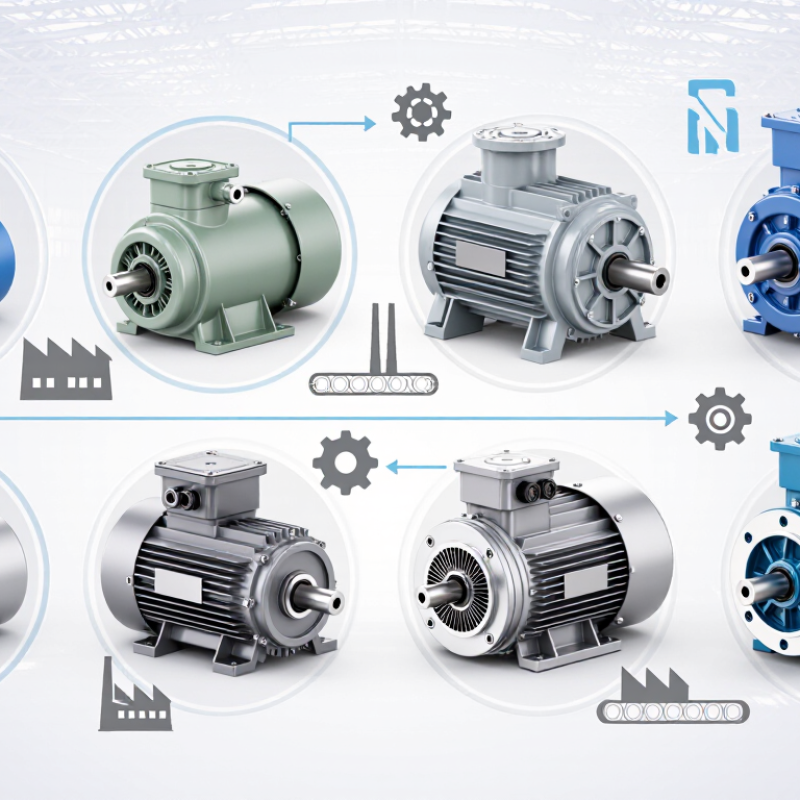
What Defines a Complete Motor Manufacturer in China?
A complete motor manufacturer manages more than final assembly. It should be able to explain how a motor moves from a performance requirement to a tested product. That process may include electromagnetic design, material selection, winding, rotor and stator production, assembly, and quality checks. Ask who controls each step. The answer reveals more than a polished factory tour.
Look for practical evidence: winding records, inspection points, test reports, and clear procedures for handling defects. Ask how the manufacturer checks temperature rise, vibration, noise, and efficiency for the motor type you need. A reliable supplier should discuss operating conditions, such as load, duty cycle, and ambient temperature, rather than offer one design for every use. Customization also matters, but it needs defined limits and realistic lead times. No factory is perfect. A gap in in-house capability is not automatically a problem, but it should be disclosed and managed. That detail is easy to overlook.
Request a sample test report and confirm that its measurements match your stated requirements. Ask whether critical components are made in-house or sourced externally. Then verify how changes, failures, and after-sales questions are handled. Be specific; vague answers deserve a second look.
Criteria for Evaluating Chinese Motor Manufacturers
Evaluating Chinese motor manufacturers requires more than comparing prices and catalogues. The IEA’s 2011 report, Energy Efficiency Policy Opportunities for Electric Motor-Driven Systems, estimates these systems use about 45% of global electricity. That makes verified efficiency data commercially important. Ask for test results by motor model, rating, and operating condition, then compare them with IEC 60034-30-1 efficiency classes. The U.S. Department of Energy’s motor-system sourcebook reports that motors account for about 68% of electricity use in U.S. manufacturing. That figure is not China-specific, but it shows why efficiency claims deserve scrutiny.
Check whether a supplier can provide test certificates, calibrated measurement records, material specifications, and traceable quality procedures. Request evidence for the exact configuration being quoted; a result from a different frame size may not transfer. Numbers matter. Assess engineering support too: can the team explain winding choices, insulation ratings, bearing life, and performance under variable loads? Review lead times, production capacity, spare-parts availability, and warranty terms against your own maintenance needs. A broad product range looks reassuring, but it does not prove consistent quality. I would also speak with existing industrial customers, while remembering that one positive reference is only one data point. Insist on a sample inspection or independent test when the application carries high downtime costs.
Profiles of Ten Leading Motor Manufacturers in China
China’s complete-motor manufacturers build finished units, from stator winding to final load testing. Their strengths vary by application, not just factory size. The first profile is a large industrial AC-motor producer, suited to pumps and compressors. The second focuses on high-efficiency motors and documents measured losses. The third builds servo motors for precise positioning on production lines. The fourth supplies traction motors, where heat management matters. The fifth makes compact motors for household appliances. Details matter. China’s Ministry of Industry and Information Technology set a 2021–2023 target of 170 million kilowatts in annual high-efficiency motor output. That policy signals demand, not proof of any single manufacturer’s performance.
The sixth profile specializes in motors paired with fans and pumps, where system matching can cut wasted energy. The seventh develops motors for wind-power equipment, emphasizing durability under variable loads. The eighth serves machine-tool makers with customized speed and torque ranges. The ninth produces marine motors, designed for vibration and humid conditions. The tenth combines motor production with testing and after-sales engineering. The International Energy Agency’s 2011 Energy-Efficient Motor Systems report estimated that motor systems use about 45% of global electricity, making efficiency a practical purchasing concern. Yet public company profiles often omit comparable test results, warranty terms, and failure rates. That gap deserves scrutiny. A polished catalog is not enough.
Motor Efficiency Classes: A Standardized Benchmark
The chart compares the nominal efficiency benchmarks for 7.5 kW, four-pole motors at 50 Hz across IEC efficiency classes. These standardized values provide context for evaluating motor technology; they are not company-specific product ratings.
Source: IEC 60034-30-1 efficiency-class tables.
Products and Industries Served by These Manufacturers
China’s leading complete-motor manufacturers serve varied needs, from compact appliance drives to heavy industrial power units. Their product lines commonly include induction motors, synchronous motors, servo motors, gear motors, and permanent-magnet designs. Some also supply pumps, fans, or integrated drive assemblies. The details matter. A motor for a ventilation fan may prioritize quiet operation, while a machine-tool drive needs precise speed control. Buyers should compare rated power, torque, insulation class, cooling method, and duty cycle—not just the headline efficiency figure.
These products support HVAC systems, water treatment, compressors, factory automation, elevators, agricultural equipment, and warehouse conveyors. In practice, manufacturers often adapt voltage, shaft dimensions, mounting, and enclosure protection for each application. A dusty workshop needs different protection from a clean indoor production line. There is no single best motor. The categories overlap, which can make catalogs confusing. Even experienced buyers sometimes overlook service access or operating temperature. Asking for test data and checking whether the motor matches the actual load can prevent costly mismatches.
Key Trends in China’s Motor Manufacturing Sector
China’s motor manufacturing sector is changing through electrification, efficiency demands, and more automated production. Manufacturers are adapting designs for electric vehicles, industrial equipment, pumps, and household appliances. Buyers comparing complete motor manufacturers should look beyond product range. Winding quality, insulation, bearings, and final testing all affect performance over time.
Factory floors increasingly use automated winding and balancing equipment. Digital monitoring can also track temperature, vibration, and energy use during testing. These tools help catch defects earlier, though they do not replace skilled engineering. A clean test report matters. So does knowing how the motor performs under realistic load, not only on a showroom bench.
Efficiency is another strong trend, shaped by operating costs and tighter customer specifications. Some manufacturers are refining magnetic materials and cooling systems, while others focus on compact designs that fit existing equipment. Progress is uneven. The picture is not tidy. Supply consistency, customization lead times, and service support can still vary between suppliers. Buyers should ask for clear test data, documented specifications, and details about replacement parts before selecting a manufacturing partner.
What Are the Top 10 Complete Motor Manufacturers in China? – Key Trends in China’s Motor Manufacturing Sector
The table presents ten key sector trends rather than a ranked list of companies. Company names, brands, and unsupported company-level rankings are intentionally omitted.
| No. | Sector trend | What it means for manufacturers | Relevant motor areas |
|---|---|---|---|
| 1 | Higher energy-efficiency requirements | Efficiency rules and customer energy-saving targets encourage improved motor design and performance verification. China’s GB 18613-2020 standard sets minimum allowable energy-efficiency values and efficiency grades for small and medium three-phase asynchronous motors. | Industrial induction motors, pumps, fans, compressors |
| 2 | Electrification of road transport | Electric-vehicle production requires traction motors and closely matched power-electronics and thermal-management systems. Motor designs vary by vehicle and application. | Traction motors, drive units, auxiliary motors |
| 3 | Broader use of permanent-magnet designs | Permanent-magnet synchronous motors are used in applications seeking high power density or efficient variable-speed operation; material choice and supply-chain management remain design considerations. | Vehicle traction, servo systems, compressors, industrial drives |
| 4 | Automation and precision motion control | Automated production equipment uses motors that can provide controlled speed, torque, and positioning, often with compatible drives and feedback devices. | Servo motors, stepper motors, variable-speed drives |
| 5 | More integrated motor-and-drive systems | Combining a motor with its drive or control electronics can simplify installation and system integration, while requiring coordinated thermal, electrical, and software design. | Integrated drives, compact machinery, building systems |
| 6 | Demand for application-specific motor designs | Different operating environments require suitable enclosures, insulation, cooling, braking, and duty ratings rather than a single design for every use. | Industrial machinery, lifting equipment, HVAC, appliances |
| 7 | Growth of variable-speed applications | Variable-frequency drives allow motor speed to be adjusted to process requirements, especially in systems where flow or load varies. | Pumps, fans, compressors, conveyor systems |
| 8 | Digital monitoring and predictive maintenance | Sensors and connected control systems can help monitor temperature, vibration, and operating conditions to support maintenance planning. | Factory motors, critical process equipment, connected drives |
| 9 | Manufacturing process modernization | Automation, testing, and process control can improve repeatability and help manufacturers manage product quality across production batches. | Winding, balancing, machining, assembly, end-of-line testing |
| 10 | Reliability, testing, and lifecycle support | Buyers assess more than rated output: testing, documentation, spare-parts availability, and service capability also matter to long-term operation. | Industrial motors and complete motor-drive systems |
