
7 Non Standard Bearing Buying Tips for Global Buyers
A Non Standard Bearing is rarely an off-the-shelf decision. It may need a different bore, outer diameter, width, material, seal, or clearance to fit a real machine. One dimension can change the installation. A small mismatch can mean rework, delayed production, or premature failure.
The market is broad and demanding. Grand View Research estimated the global bearing market at USD 125.7 billion in 2023 and projected an 8.1% compound annual growth rate from 2024 to 2030. That scale makes supplier selection important, but market growth alone cannot verify a particular factory’s capability. Buyers still need drawings, material specifications, inspection records, and clear answers about tolerances. ISO 281 also provides a recognized framework for calculating dynamic load ratings and rating life; it does not replace application-specific engineering review.
Details matter. A sample bearing may look right, yet run hot under load. Ask how dimensions are measured, what inspection equipment is used, and how deviations are reported. Check packaging, traceability, and production lead times before approving an order. Small checks help.
This guide presents seven practical buying tips for global buyers, from defining specifications to evaluating samples and managing supplier communication. It focuses on verifiable evidence, not confident promises. No source material was provided for a named expert quotation, so none is attributed here; inventing one would weaken trust. The same caution applies to every Non Standard Bearing purchase: confirm the facts before committing.
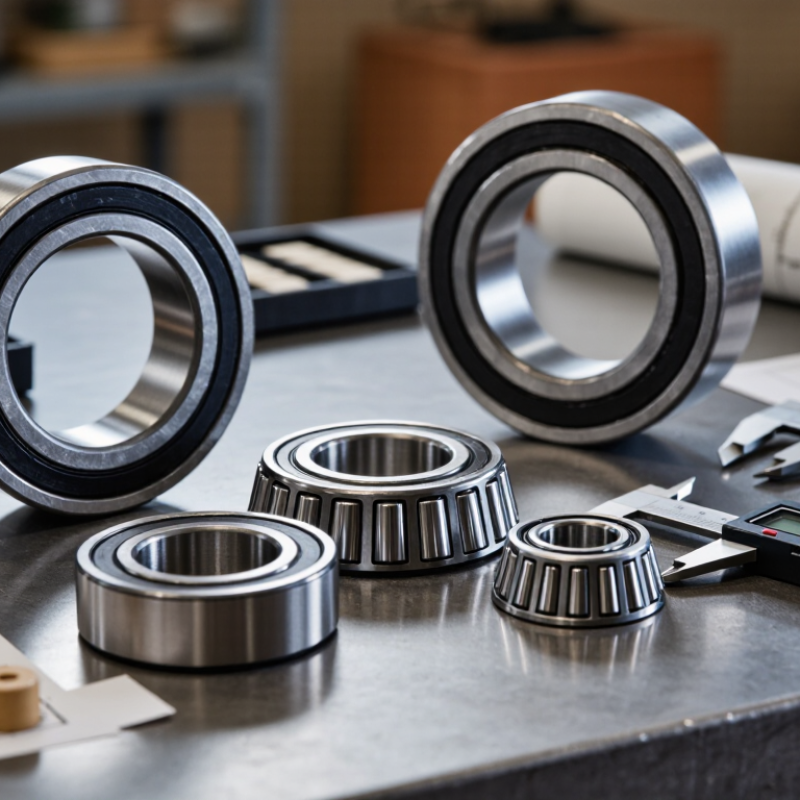
Understanding Non-Standard Bearings and Their Applications
Non-standard bearings are components whose bore, outside diameter, width, material, seals, or internal geometry differ from catalog dimensions. They are not automatically exotic. A machine may need a thin section for a compact gearbox, a corrosion-resistant cage near washdown zones, or a special bore for an older agricultural shaft. Fit comes first. Document tolerances, load direction, speed, temperature, lubrication, and contamination before sourcing. Even a small change can affect clearance and heat.
ISO 281:2007 sets the basic rating-life method for rolling bearings. Its L10 life represents the point at which 90% of a sufficiently large bearing group is expected to survive under stated conditions. This is a statistical estimate, not a promise for one machine. ISO 492:2023 specifies tolerance classes for radial bearings, helping engineers define dimensional and running-accuracy requirements. When reviewing a custom proposal, compare its load and life assumptions with the actual duty cycle, including starts, shock loads, and idle periods. A common mistake is requesting tighter tolerances without checking whether the shaft and housing can hold them. Non-standard design can solve packaging or operating problems, but added features may raise costs and complicate replacement. The specification is sometimes the weak link.
Defining Technical Requirements and Custom Specifications
Defining technical requirements is the most useful step in buying a non-standard bearing. Record the shaft and housing dimensions, including fits and allowable tolerances. State radial and axial loads, operating speed, temperature range, and expected duty cycle. A bearing that runs slowly in a clean room may need different materials and lubrication from one exposed to dust or frequent washdowns. Small details matter. Note the mounting method and available space, too.
Tip: Send a dimensioned drawing with units clearly marked. Add photos of the assembly and identify which surfaces locate the bearing. If the drawing is incomplete, say so; an unconfirmed dimension can lead to a part that fits on paper but not on the machine.
For custom specifications, separate essential requirements from preferences. Identify any limits on noise, corrosion resistance, sealing, or maintenance access, and explain how the bearing will be inspected. Ask the supplier to flag assumptions before production, then review the proposed drawing and tolerances. This takes time, and we may be tempted to skip it when a machine is down. Still, rushing an unclear specification often creates more delay later. Keep a record of approved changes, even small ones, so the next order does not rely on memory.
Assessing Materials, Manufacturing Quality, and Compliance
For non-standard bearings, material selection should match the actual load, speed, temperature, and operating environment. Ask for the steel grade and heat-treatment records, not just a generic material description. Hardness readings from several points can reveal uneven treatment. Small details matter. If corrosion is a concern, check the specified coating or stainless grade against the real exposure, including washdown chemicals and humidity.
Manufacturing quality is easier to judge with evidence from the production lot. Request dimensional inspection results for bore, outside diameter, width, and runout; compare them with the drawing tolerances. A sample that fits perfectly may not represent a later batch, so keep approved samples and record how they were measured. We have seen buyers focus on the drawing and overlook packaging, which can allow moisture or grit to reach finished surfaces. That is easy to miss. Check supplier traceability, inspection methods, and change-control practices before placing a repeat order. Compliance documents should match the bearing’s intended destination and application, and should be verified with the relevant technical or regulatory specialist. A certificate alone does not prove that every delivered part matches the approved specification.
7 Non Standard Bearing Buying Tips for Global Buyers - Assessing Materials, Manufacturing Quality, and Compliance
| Buying Tip | What to Assess | Useful Evidence to Request | Why It Matters |
|---|---|---|---|
| 1. Define the application and operating conditions | Specify loads, speed, duty cycle, shock or vibration, operating temperature, lubrication, contamination, and required service life. Identify whether the load is mainly radial, axial, or combined. | A completed application questionnaire, operating-condition summary, and documented design assumptions for any proposed bearing calculation. | Non-standard dimensions alone do not establish suitability. Operating conditions affect bearing type, internal design, lubrication, clearances, and expected performance. |
| 2. Control the drawing and interface dimensions | Define bore, outside diameter, width, shoulder dimensions, fits, runout, chamfers, mounting features, and any special geometry. State units, datum references, and revision level. | A controlled drawing with tolerances, a revision history, and a dimensional inspection report for agreed critical characteristics. | Clear, revision-controlled specifications reduce ambiguity between the bearing, shaft, housing, and mating components. |
| 3. Verify material and heat-treatment requirements | Specify the required material grade and condition for rings, rolling elements, and cage where relevant. Confirm hardness range, heat-treatment requirements, and any corrosion-resistance needs. | Material test certificates traceable to the supplied lot, heat-treatment records, and hardness results where these are part of the approved specification. | Material and heat treatment influence fatigue resistance, hardness, dimensional stability, and suitability for the operating environment. Equivalent grades should be approved rather than assumed. |
| 4. Evaluate manufacturing and inspection controls | Review controls for machining, grinding, cleanliness, assembly, lubrication, and protection against contamination. Agree on inspection methods and acceptance criteria before production. | A quality-control plan, sample inspection report, lot identification method, and documented process for handling nonconforming parts. | Special dimensions may require dedicated tooling or inspection methods. Agreed controls help ensure repeatability from sample approval through production lots. |
| 5. Confirm performance calculations and validation | Ask how load capacity, speed limits, fit, clearance, lubrication, and temperature have been assessed for the actual design. Identify any prototype or application testing needed. | Calculation assumptions and results, test plan or test report when applicable, and written confirmation of the design configuration being assessed. | Standardized calculation methods, such as those described in ISO 281 for rolling-bearing load ratings and rating life, may support evaluation when applicable; they do not replace application-specific validation. |
| 6. Check market and application compliance | Identify the destination market and any applicable requirements for the complete product or its components, including chemical-substance restrictions, declarations, and customer-specific rules. | Relevant declarations or test documentation for the specified material and product configuration. For example, assess REACH or RoHS requirements only where they apply to the product, market, and intended use. | Compliance obligations depend on jurisdiction, product category, and application. A general quality-system certificate, such as ISO 9001 certification, is not by itself proof that a specific bearing meets every legal or customer requirement. |
| 7. Agree on traceability, packaging, and change control | Set lot and serial identification needs, preservation method, packaging, storage conditions, delivery quantities, lead-time assumptions, and approval requirements for changes to materials or processes. | A purchase specification covering traceability and packaging, sample labels or records, and a written change-notification and approval process. | Traceability supports investigation of quality issues, while suitable packaging and controlled changes help protect parts and maintain consistency during storage, transport, and repeat orders. |
Comparing Suppliers, Samples, and Total Purchase Costs
For non-standard bearings, a low unit price can hide costly differences. Compare suppliers against the same drawing, material, tolerance, load, and operating-temperature requirements. Ask how each measurement is checked, and request inspection records for critical dimensions. A clear answer matters. If a quote leaves out cage design or lubrication, request clarification before comparing prices.
Samples help reveal details a spreadsheet cannot. Check the bore and outside diameter with suitable measuring tools, then test fit using the intended housing and shaft. Note noise, rotation smoothness, and any visible damage after handling. A sample is not proof that every production batch will match. Ask how the supplier controls repeatability, and whether approval samples can be retained as a reference. This step can feel slow, but rushing it may cost more.
Compare the full purchase cost, not just the quoted bearing price. Include tooling or setup charges, sample fees, packaging, freight, insurance, import charges, and likely inspection costs. Confirm lead time and minimum order quantity in writing. A cheaper offer with a long delivery window may disrupt maintenance plans or production. There is no perfect comparison: forecasts can change, and small orders sometimes carry awkward fees. Record your assumptions beside each quote so the decision can be reviewed later.
7 Non-Standard Bearing Buying Tips for Global Buyers
Compare suppliers, samples, and total purchase costs—not just the quoted unit price.
Example comparison for a 1,000-piece order with the same specification. Costs are illustrative estimates in USD, not market benchmarks. Include sample and testing fees, tooling, freight, and inspection or rework allowances when comparing quotes. Confirm actual costs, lead times, tolerances, and sample performance with each supplier.
Planning Global Shipping, Documentation, and After-Sales Support
A bearing purchase does not end when the order leaves the factory. Global shipping plans should account for route length, handling, and local storage conditions. Ask how each bearing will be packed, especially if it may cross humid ports or sit in a warehouse. Sealed wrapping, sturdy crates, and clear orientation marks can reduce avoidable damage. Small details travel. Confirm the crate dimensions and gross weight before booking freight; a small mismatch can affect handling costs or delay collection.
Documentation deserves the same attention as the product itself. Request a packing list, commercial invoice, certificate of origin when applicable, and inspection records matched to the shipment. Check that quantities, descriptions, and part numbers agree across every document. Keep copies. Import requirements vary by destination, so buyers should verify current instructions with their freight forwarder or customs adviser. Do not assume a familiar shipment uses identical paperwork.
After delivery, agree on a practical support process before problems arise. Ask what evidence is needed for a claim, such as crate photos, batch details, or installation records. Set a realistic response window and identify one contact for technical questions. Retain the labels and packaging until the goods are checked. I would still ask who pays for return freight; it is an easy detail to overlook, and the answer may not be obvious from the quotation. A simple receiving checklist helps, though it cannot replace careful inspection.
