How to Choose the Right Electric Winch?
Choosing an Electric Winch is not just a matter of buying the strongest model. A winch must match the load, operating conditions, and expected duty cycle. Grand View Research estimated the global material handling equipment market at USD 221.7 billion in 2023, with continued growth projected through 2030. Its Material Handling Equipment Market Size, Share & Trends Analysis Report provides useful context: equipment selection increasingly sits within demanding, productivity-focused operations. That broader figure is not a winch-market estimate. It does, however, underline why dependable handling equipment matters.
Start with the actual load, not the most impressive number on a product page. Rated line pull can change as cable builds up on the drum, while a steep slope, mud, or a rolling load can raise resistance. Small differences matter. Check the winch’s first-layer pulling capacity, rope or cable type, drum size, mounting strength, and power supply. Then consider duty cycle, braking, weather exposure, and access to service parts. A compact unit may fit neatly on a trailer but struggle during repeated pulls.
Industry market analyses, including Grand View Research’s Winch Market Size, Share & Trends Analysis Report, cover applications across sectors such as construction, marine, and industrial work. Those applications do not share one ideal specification. This guide turns the choice into practical checks, from estimating load to comparing controls and safety features. No chart can replace the real setup. A careful margin for uncertainty is sensible, though it should never excuse exceeding the manufacturer’s ratings.
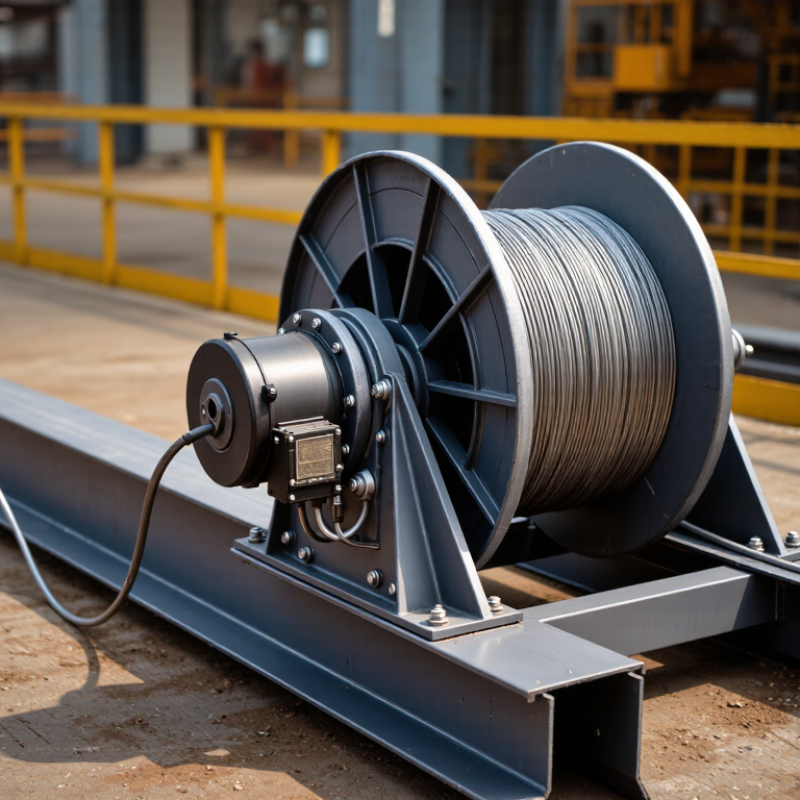
Define the Job and Load: Vehicle Recovery, Marine, or Industrial Use
How to Choose the Right Electric Winch?
Define the job before comparing pull ratings. Vehicle recovery, marine work, and industrial lifting place different demands on a winch. For a 2,500 kg vehicle, a common recovery-planning screen is 1.5 times gross vehicle weight: about 3,750 kgf, or 8,270 lbf, of line pull. Treat this as an initial estimate, not a guarantee. Mud, steep slopes, and buried wheels can raise the required force sharply. Also check the rating at the rope’s outer layers; available pull often falls as more rope leaves the drum. The rated-load and inspection framework in ASME B30.7-2016 is a useful reference for winch selection.
Marine use adds salt spray, water exposure, and changing load direction. Choose corrosion-resistant components and confirm the unit’s duty rating suits repeated pulls. Industrial jobs need a different check: verify the load path, mounting structure, braking system, and duty cycle. A winch’s line-pull figure alone does not establish that a lifting setup is safe. The rope inspection and discard guidance in ISO 4309 can help inform wire-rope maintenance. Small details matter.
Tips: Write down the load, slope, surface, and expected pull duration before buying. Leave a margin for poor conditions, but don’t assume a larger winch fixes weak anchors or unsuitable rigging. That part is easy to overlook.
How to Choose the Right Electric Winch
Define the job and load before choosing a winch. The chart compares illustrative working loads with example minimum line-pull targets calculated using a 1.5× planning factor.
How to use this: These are example scenarios, not universal specifications. Vehicle recovery loads depend on vehicle weight and recovery conditions; marine winch loads depend on the anchor, rode, vessel, and environmental forces; industrial loads depend on the pulling task. Check the winch’s rated line pull and consult applicable manufacturer guidance before selecting equipment.
Size Rated Line Pull: Use the Common 1.5× GVWR Recovery Rule
Start with the vehicle’s GVWR, not its empty curb weight. GVWR is the maximum loaded weight listed on the door label or in the owner’s information. Multiply it by 1.5 to estimate a practical minimum rated line pull.
For a vehicle with a 6,000-pound GVWR, that means at least 9,000 pounds. It is a rule of thumb, not a guarantee. Added cargo, larger tires, and recovery equipment can increase the vehicle’s actual weight. Deep mud or a steep, uneven track can add substantial resistance.
Check how the winch’s rated pull is measured. Ratings commonly refer to the first rope layer on the drum; as more rope winds on, pulling capacity can decrease. A recovery plan should also account for the anchor point, rope, and connecting hardware, each of which must be suitable for the load. Keep people clear of a tensioned line, and use the equipment according to its instructions. Leave room for uncertainty. A weighbridge reading can reveal that a modified vehicle is heavier than expected, while a careful look at the recovery route may show that the 1.5× estimate needs more margin.
Check Layer-Based Capacity: Line Pull Ratings Drop as Rope Builds Up
When comparing electric winches, read the line-pull chart by drum layer, not just the headline rating. The maximum figure is commonly measured on the first rope layer, where the drum radius is smallest. As rope builds up, the effective radius increases, so the winch pulls with less force. That difference matters. A load below the headline rating may still challenge the winch when the rope is nearly fully wound.
Check the manufacturer’s capacity for each layer and the rope length available at that rating. For example, a recovery that needs several metres of line may place the working section on an outer layer, not the first one. Don’t assume the reduction follows a universal percentage; drum dimensions and winch design vary. It is easy to overlook this when comparing two models by their largest numbers alone.
Estimate the load realistically, including rolling resistance, slope, and mud or sand. Then compare it with the rating for the layer you expect to use, while leaving a sensible margin. Keep the rope evenly wound and avoid piling it on one side of the drum. A neat-looking spool is not proof of enough pulling capacity. The chart deserves a second look before the line comes under tension.
Match Power and Duty Cycle: Choose 12 V or 24 V for the Application
A 12 V winch can suit a vehicle with a 12 V electrical system, but high pull loads demand substantial current. At an illustrative 3,000 W input, P = V × I gives about 250 A at 12 V and 125 A at 24 V. This is an idealized calculation; real current rises with electrical losses and changing load. The U.S. Department of Energy’s Electricity 101 guidance explains the power relationship. Lower current can reduce cable heating and voltage drop, provided cables and connections are correctly sized.
Duty cycle matters as much as voltage. A short recovery followed by a cooling pause differs greatly from repeated pulls on a work site. Check the winch’s rated line pull, permitted operating intervals, and cooling instructions; SAE J706 sets a recognized framework for rating winches. A 24 V system may make sense for sustained heavy work, but only when the vehicle’s supply and charging system support it. Do not assume voltage alone creates more pulling capacity.
In practice, watch the battery voltage during a loaded pull and inspect cable terminals for heat afterward. Hot connectors are a warning. A bigger battery is not always the fix. The right choice depends on load, cable length, and recovery frequency, and the duty-cycle estimate can be imperfect. That deserves a second look.
Verify Rope, Mounting, and Protection: Compare Diameter, Load Rating, and IP Code
Choose rope by both diameter and rated line pull. The rope must fit the drum and fairlead without rubbing or bunching. A thicker rope is not automatically safer; it may not seat correctly. Check the winch’s rated pull at the drum layer you expect to use, since capacity can fall as rope builds up. ISO 4309:2017 gives inspection and discard criteria for wire ropes, including broken wires, corrosion, wear, and diameter reduction. Appearance alone is a weak test.
Mounting matters just as much. The winch plate, fasteners, and supporting frame must handle the expected pull and its direction; ASME B30.7 covers winch construction, installation, and operation. For weather exposure, read both digits of the IP code under IEC 60529: IPX4 indicates protection against splashing water, while IPX5 covers water jets. The first digit also matters: 5 means dust-protected, and 6 means dust-tight. A high water rating does not automatically mean full dust protection.
Tips: Measure rope diameter at several points and compare it with the winch manual. Check the mounting surface for flex or cracked welds. Don’t guess the IP rating from a sealed-looking housing; verify the code on the equipment label.