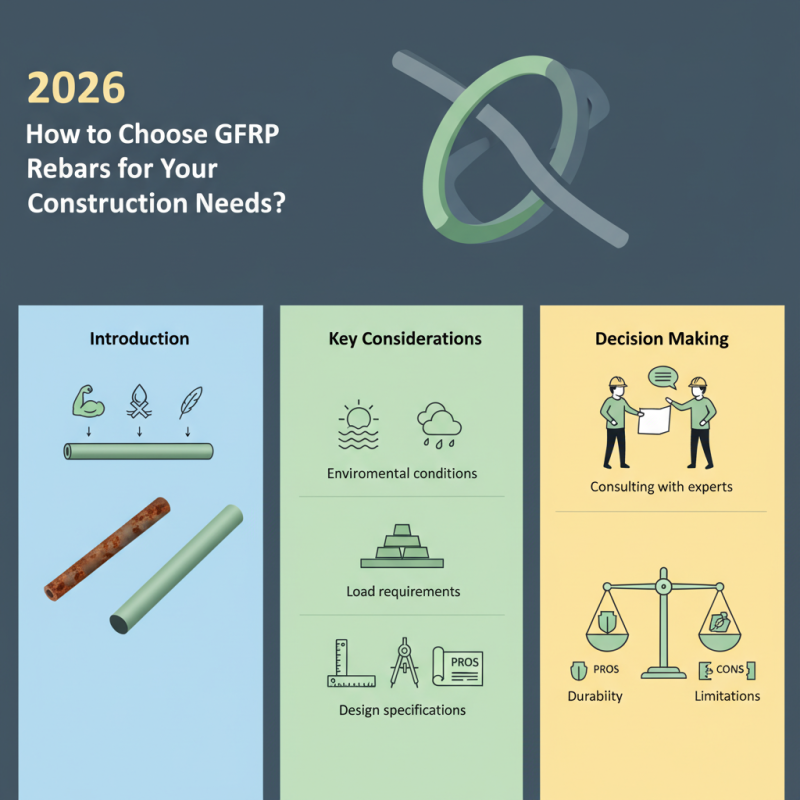
2026 How to Choose GFRP Rebars for Your Construction Needs?
Choosing the right gfrp rebars is crucial in construction. These materials are becoming popular due to their durability and resistance to corrosion. They are lightweight and offer excellent tensile strength, making them a good choice for various applications.
When selecting gfrp rebars, consider the project’s specific needs. Factors like environmental conditions, load requirements, and design specifications cannot be overlooked. Not every project will benefit from using GFRP rebars, so it’s essential to weigh the pros and cons.
Consulting with experts in the field can offer valuable insights. Their knowledge can guide you in making informed decisions. Keep in mind that while GFRP rebars have advantages, there are limitations. Take the time to understand these factors for a successful construction outcome.
Understanding GFRP Rebars: Definition and Properties
GFRP rebars, or Glass Fiber Reinforced Polymer rebars, are becoming increasingly popular in construction. These materials offer several advantages over traditional steel. GFRP rebars are lightweight and resistant to corrosion. They are well-suited for environments where moisture and chemicals can cause damage. This durability can extend the lifespan of structures.
When considering GFRP rebars, it’s essential to understand their unique properties. They possess high tensile strength, making them effective in load-bearing applications. Their low thermal conductivity keeps them stable in temperature variations. However, these rebars may require special placement techniques. They are not as forgiving as steel, and improper handling can lead to performance issues.
Furthermore, the price of GFRP rebars can be a concern. While they may save on maintenance costs in the long run, initial expenses can be high. It’s important to analyze the cost-benefit ratio before making a decision. Thorough research into project needs and environmental conditions will aid in the proper selection of GFRP rebars.
Advantages of GFRP Rebars over Traditional Materials
GFRP (Glass Fiber Reinforced Polymer) rebars offer significant advantages over traditional steel reinforcement in construction. One major benefit is their resistance to corrosion. Unlike steel, GFRP is not affected by moisture or chemicals, making it ideal for harsh environments. Projects near water or chemical plants can greatly benefit from this property.
When selecting GFRP rebars, consider the weight. They are lighter than steel, simplifying handling and installation. This factor can lead to reduced labor costs and faster project timelines. Additionally, GFRP is non-magnetic and non-conductive. This quality is useful for structures that require electromagnetic neutrality, such as hospitals and laboratories.
Tip: Always assess your project requirements thoroughly. Conduct tests to ensure the GFRP's compatibility with your construction materials. It's crucial to understand how different fibers influence performance. Don't overlook environmental impact. GFRP may require specialized disposal methods, an aspect often neglected in planning.
2026 How to Choose GFRP Rebars for Your Construction Needs? - Advantages of GFRP Rebars over Traditional Materials
| Feature | GFRP Rebars | Traditional Steel Rebars |
| Corrosion Resistance | Excellent | Poor |
| Weight | Lightweight | Heavy |
| Electrical Conductivity | Non-conductive | Conductive |
| Thermal Conductivity | Low | High |
| Cost | Higher initial cost | Lower initial cost |
| Environmental Impact | Lower | Higher |
| Fatigue Resistance | High | Moderate |
Key Factors to Consider When Selecting GFRP Rebars
When selecting GFRP rebars for construction, several key factors should be considered. One crucial aspect is the environment where the structure will be located. GFRP rebars excel in corrosive conditions, which makes them suitable for coastal and chemical environments. Their lightweight nature provides ease in handling, yet their tensile strength can be comparable to that of steel.
Another important factor is the specific structural requirements of the project. Consider the load-bearing capacity and the design specifications. GFRP rebars may not perform well under very high temperatures or extreme loads. Understanding these limitations can help ensure that the right choice is made without overspending or compromising safety.
Furthermore, consider the experience and expertise of the suppliers. Not all manufacturers adhere to the same quality standards. It’s essential to choose suppliers known for reliable products. Seek out data and certifications that confirm a supplier’s reputation and product reliability. Always reflect on how these choices align with your project’s goals. A deeper understanding of GFRP rebars can guide you to make informed decisions for a successful construction outcome.
Applications and Suitability of GFRP Rebars in Construction
When selecting GFRP rebars for construction, understanding their applications is crucial. Glass Fiber Reinforced Polymer (GFRP) rebars stand out due to their excellent corrosion resistance. According to a recent industry report, structures using GFRP can last significantly longer than those with traditional steel bars, reducing repair costs over time. Many projects, such as marine environments or bridges, benefit from this durability.
GFRP rebars are also lightweight. This characteristic simplifies transportation and installation. A study from the Concrete Reinforcing Steel Institute indicates that GFRP materials weigh about 75% less than steel, easing the burden on cranes and labor. However, it is essential to consider the load-bearing capabilities of GFRP. Although they offer high tensile strength, the bending resistance may not match that of steel. Designers must calculate these factors carefully.
The suitability of GFRP also extends to environments prone to chemical exposure. They resist alkalis and acids, making them ideal for industrial constructions. However, their performance in extreme temperatures can be a concern. Engineers should assess this aspect in their design plans. Knowledge of the specific project environment enhances material selection. As GFRP technology evolves, continuous learning and adaptation are vital in making informed choices.
Cost Analysis: Budgeting for GFRP Rebars in Projects
When budgeting for GFRP (Glass Fiber Reinforced Polymer) rebars, understanding their cost implications is essential. The International Journal of Structural Engineering reports that GFRP rebars can range from $2.50 to $3.50 per linear foot. This is a considerable investment compared to traditional steel alternatives, which typically cost $0.50 to $1.50 per linear foot. However, the benefits often outweigh the upfront costs.
In project planning, consider long-term savings. GFRP rebars have a lifespan that can exceed 75 years, significantly reducing maintenance costs. In contrast, steel rebars often require replacements due to corrosion and deterioration. A case study from the American Concrete Institute indicates that using GFRP can lead to lower lifecycle costs, even though initial spending is higher.
Also, be aware of potential budget constraints. Should the project scope change, it might impact GFRP usage. Cost overruns are a risk, especially if material prices fluctuate. Therefore, ensure a clear analysis of project requirements before committing to GFRP, balancing immediate costs with long-term benefits.