What Are the Different Types of Forklift Pallets?
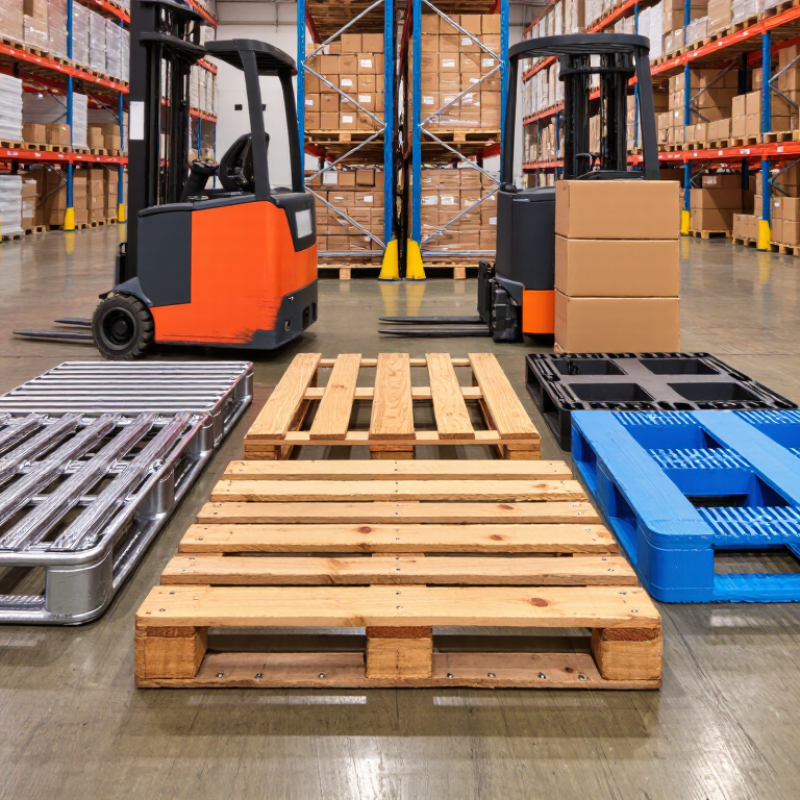
Forklift Pallets do more than lift goods from one place to another. Their material, design, and condition affect load stability, storage, and handling. A wooden stringer pallet may suit a familiar warehouse load, while a plastic block pallet can offer a consistent shape for repeated use. Metal pallets serve specialized environments where strength or heat resistance matters. The right choice depends on the job, not just the price tag.
Dr. Mark White, a researcher in packaging and unit-load design, has studied how pallets perform within broader load systems. A practical summary of that perspective is: “Choose the pallet as part of the complete load, not as a standalone platform.” That is a guiding principle, not a verbatim quotation. It matters when a forklift’s forks meet a pallet: fork spacing, entry direction, deck gaps, and load balance all affect handling. Small details count.
This guide explores common pallet types, including wood, plastic, metal, stringer, and block designs. It also considers how construction, capacity, and reuse needs shape a sensible choice. A pallet that looks sturdy may still flex under a poorly distributed load. And a familiar design is not automatically the safest fit. The comparison is useful, but real warehouse conditions can be messier than a neat checklist suggests. Examine the actual load and handling setup before deciding.
How Forklift Pallets Support Loads and Material Handling
A forklift pallet is more than a platform; it transfers a load’s weight to the forks and keeps goods stable while they move. Stringer pallets use long supports beneath the deck, while block pallets have supports at several points. Both designs can allow different fork-entry directions. That matters in tight aisles. Plastic and metal pallets may suit repeated washing or demanding environments, but their performance depends on the exact design and load rating.
Load ratings need careful attention. A pallet’s safe capacity can change when weight is uneven, goods sit beyond its edges, or the pallet is lifted rather than stored on a rack. Check the stated rating and match it to the handling method. A dense stack of boxed parts can look steady, yet shift when a forklift stops sharply. Secure the load, keep it centered, and avoid assuming that a heavier-looking pallet is automatically stronger.
Fork spacing and entry direction also affect support. The forks should extend far enough beneath the pallet, with their spacing suited to its openings. Before use, look for cracked boards, loose blocks, bent sections, or contamination that could reduce grip. Small defects are easy to overlook during a busy shift. Real floors are not always smooth, either, so operators should move slowly over uneven patches and reassess loads that wobble. A little caution can prevent damage, though it cannot replace a suitable pallet.
How Pallets Are Classified by Material
What Are the Different Types of Forklift Pallets?
How Pallets Are Classified by Material
Pallets are commonly grouped by the material that forms their deck and supports. Wood remains the workhorse. A 2016 NWPCA–Virginia Tech study, The Use of Wood Pallets in the United States, found that wood made up more than 90% of U.S. pallets. Wood pallets are widely available, repairable, and suited to many warehouse loads. But splintered boards, loose nails, and damp corners need regular attention. The report reflects U.S. use, not every industry or shipping route.
Plastic pallets offer consistent dimensions and smooth surfaces that are easier to wash. They can suit repeated handling, though damage may be harder to repair and replacement costs can be higher. Metal pallets, often steel or aluminum, serve heavy-duty or specialized operations; weight, price, and exposure to corrosive conditions matter. Corrugated and pressed-wood pallets are lightweight options for one-way shipments, but their load capacity and moisture resistance may be limited. No material wins in every aisle.
Tip: Match the pallet to the load and handling conditions. Check fork-entry clearance, rated capacity, and exposure to water or chemicals. A pallet that looks sturdy may still flex under an uneven load. Review supplier specifications and inspect samples under real operating conditions before changing a fleet.
Common Forklift Pallet Designs and Their Features
Forklift pallets are shaped around how forks enter, where loads rest, and how much support the product needs. Stringer pallets use long runners beneath the deckboards. Forks usually enter from two sides, though notched runners can allow limited four-way access. Block pallets place solid blocks between the top and bottom decks. This often gives forks access from all four sides and can make handling easier in crowded aisles. Check the actual openings, not just the pallet’s name.
Deck design matters too. Open deckboards leave gaps that reduce material use and let moisture drain, but narrow cartons may sag between boards. Solid-deck pallets offer a flatter surface for small packages, yet can be heavier and harder to clean. Single-face pallets have a top deck only; double-face designs add a bottom deck for extra support or repeated use. Plastic pallets are often lighter and resist moisture, but their surfaces can be slippery when wet. Small details matter. A pallet that fits the load may still clash with fork spacing or rack supports. Measure the load and handling equipment together; choosing by appearance alone is an easy mistake to make.
Pallet Entry Styles and Deck Configurations
Forklift access begins with pallet entry style. A two-way pallet admits forks from opposite sides, while a four-way design allows entry from all four sides. That extra access can simplify turning in tight aisles, but only when fork spacing and load position match the pallet. Stringer pallets may have notches for side entry; block pallets generally provide clearer access around the perimeter. Forklift clearance is unforgiving. Virginia Tech’s 2016 national pallet study estimated about 1.8 billion pallets in circulation in the United States, a reminder that warehouses handle many formats—not one universal design.
Deck configuration changes how a load sits and how the pallet behaves. A single-face pallet has a top deck only; a double-face pallet has decks on both sides. Reversible designs can support loads on either face, while nonreversible versions have a designated top. Open-deck boards leave gaps that help shed debris, but small boxes may sag between them. Close-board or solid decks offer more support, though they can add weight and complicate cleaning. In practice, measure the load’s footprint and inspect where its weight concentrates. A pallet that looks sturdy may still flex under a narrow, heavy crate. This is easy to overlook. Select entry and deck styles together, then test the actual load, forks, and rack interface before ordering at scale.
How to Match a Pallet Type to a Forklift and Load
What Are the Different Types of Forklift Pallets?
How to Match a Pallet Type to a Forklift and Load
Pallet choice starts with the load and the way the forklift approaches it. Stringer pallets often have two-way entry, while block pallets commonly allow access from four sides. That difference matters in tight aisles. Check the pallet’s entry openings against the fork length, width, and spacing. A pallet that looks sturdy may still be awkward to pick up. Plastic, wood, and metal pallets also differ in weight, grip, and resistance to moisture or repeated handling.
Tips: Check the forklift’s capacity plate and the load’s weight, including packaging. Confirm the load is centered and stable, and keep its dimensions within the pallet edges. If the forks or pallet openings feel like a close fit, stop and reassess rather than forcing entry. Small clearances matter.
A heavy, compact load may need a reinforced pallet; a light, bulky load can create a different problem by shifting or catching nearby objects. Consider where the pallet will travel, too: warehouse floors, racking, and delivery vehicles may each have different support requirements. I would not rely on material or appearance alone. Even familiar pallets can be damaged, uneven, or poorly suited to a particular load. Check condition and compatibility before use, and follow workplace handling procedures.
What Are the Different Types of Forklift Pallets?
Compare common pallet footprints to help match pallet size with forklift fork spacing and load dimensions.
How to choose: Check that the forks can enter the pallet in the intended direction and support the load evenly. Confirm the pallet’s rated capacity and the forklift’s capacity at the actual load center; footprint dimensions alone do not determine safe load capacity. Dimensions shown are nominal and may vary slightly by pallet design.