How to Choose the Right Fiberglass Mat for Your Project?
Choosing the right Fiberglass Mat for your project is crucial. Whether you're building boats, automotive parts, or insulation, the right material can impact the overall success. Industry expert Dr. Richard Haines, a veteran fiberglass engineer, once stated, “Every project demands a different type of fiberglass mat to achieve optimal results.” His advice resonates deeply in the industry.
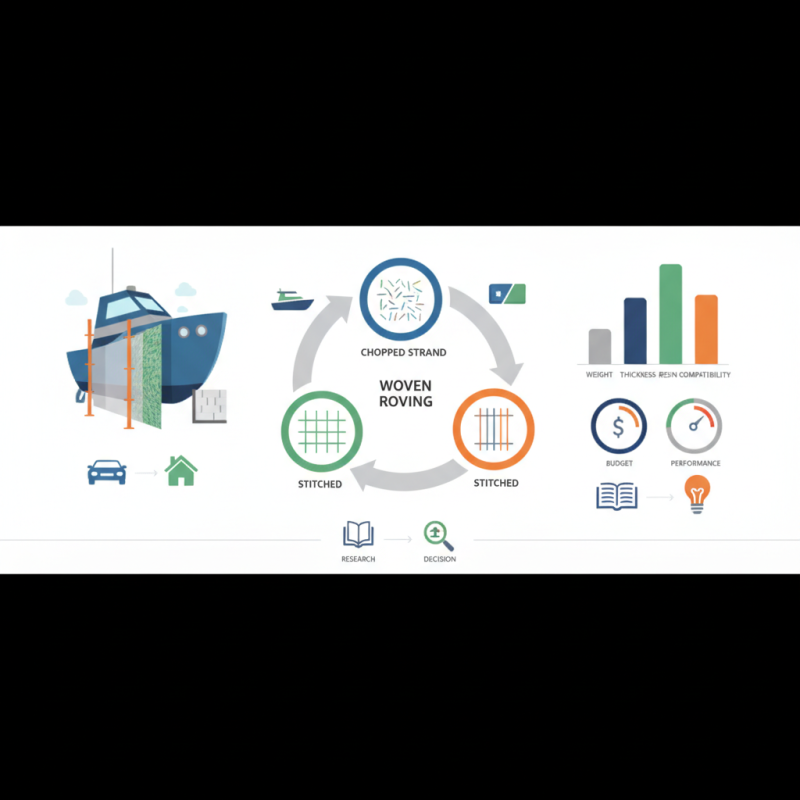
Fiberglass mats come in various types, including chopped strand, woven roving, and stitched. Each type serves specific purposes and applications. For instance, chopped strand mats provide excellent bonding and coverage. They are commonly used in boat hull constructions. However, using the wrong mat can lead to structural weaknesses.
Understanding the specifications is vital. Consider the mat's weight, thickness, and resin compatibility. Not all fiberglass mats are suitable for every project. Factors like budget and performance also play a role. Reflecting on past projects can guide decisions. Mistakes often stem from inadequate research. Choosing the right fiberglass mat requires careful thought and evaluation.
Understanding Different Types of Fiberglass Mats Available on the Market
Choosing the right fiberglass mat for a project can be daunting. Various mats cater to different applications, making understanding their types essential. Woven roving, for instance, offers strength for high-performance needs. This type has a fabric-like structure that enhances durability in composites. Industry data shows that woven roving can withstand significant stress, making it ideal for marine applications.
Chopped strand mats are another popular option. They offer versatility and excellent resin absorption. This type is widely used in the automotive industry due to its lightweight properties. Reports indicate that chopped strand mats contribute to overall cost savings in production without compromising quality. Their stability during curing makes them reliable for manufacturers.
However, every type of fiberglass mat comes with its limitations. Woven roving may not offer as much flexibility as chopped strands. It's crucial to consider the specific requirements of your project. Seeking expert advice can clarify which mat aligns with your goals. Balancing strength, weight, and cost is vital when making a selection.
Key Factors to Consider When Selecting a Fiberglass Mat for Projects
When selecting a fiberglass mat for your project, there are key factors to consider. The type of resin used is crucial. It affects adhesion and durability. Polyester, vinylester, and epoxy resins all offer different benefits. Understanding these will help you make an informed decision.
Another important aspect is the mat thickness. Thicker mats provide strength but can be harder to work with. A thinner mat may offer flexibility but could sacrifice strength. It’s essential to match the mat thickness to the project's specific demands. Test samples before making the final decision.
Tips: Always review technical data sheets before purchasing. This will guide you in understanding the mat's properties. Consider the environmental conditions the fiberglass will face. Sometimes, a slight change can lead to a significant impact on performance. Don’t hesitate to consult with experts if uncertainties arise. This could save time and resources in the long run.
Choosing the Right Fiberglass Mat: Key Factors
Evaluating the Strength and Durability of Fiberglass Mats
When selecting fiberglass mats for a project, strength and durability are paramount. These mats are made up of glass fibers, which provide considerable tensile strength. A well-made mat can withstand tension and impact, making it critical for construction and automotive applications. Look for specifications that highlight tensile strength ratings and recommended usage conditions.
Evaluating durability involves understanding the mat's resistance to environmental factors, such as moisture and UV exposure. Some mats are better suited for outdoor projects, while others excel indoors. It’s essential to consider the lifespan under expected project conditions. Subpar materials can lead to premature failure.
Sometimes, achieving the perfect balance between weight and strength can be challenging. Lightweight mats may seem appealing, but they might compromise durability. Thus, testing different options is advisable. Always analyze specific project requirements before making a decision. The goal is not just to meet initial strength parameters but also to ensure long-term reliability in various conditions.
Applications: Choosing the Right Fiberglass Mat for Specific Uses
Choosing the right fiberglass mat for specific applications is crucial for project success. Fiberglass mats vary in type, weight, and resin compatibility. For instance, a report from the Composites Industry Association highlights that 40% of composite failures relate to inappropriate material selection. Understanding application requirements can significantly reduce the chance of failure.
For automotive applications, a lightweight mat is often preferred. Typically, these mats need a weight of 100-200 g/m². In contrast, construction applications may require heavier mats, commonly between 300-450 g/m², to support structural integrity. An industry study reported that the right mat can enhance durability by up to 30%. Without careful selection, a project may suffer from costly repairs and delays.
It’s essential to analyze the specific need. The environment plays a key role in fiberglass mat selection. Chemical resistance, moisture exposure, and temperature fluctuation can impact performance. Neglecting these factors can lead to potential project failures. Professionals must evaluate the end-use requirements meticulously for optimal results.
How to Choose the Right Fiberglass Mat for Your Project?
| Application | Type of Fiberglass Mat | Thickness (mm) | Weight (g/m²) | Recommended Resin |
| Automotive Parts | Chopped Strand Mat | 1.5 | 450 | Polyester |
| Marine Applications | Woven Roving | 2.0 | 600 | Vinylester |
| Construction | Mat + Tissue | 1.0 | 300 | Epoxy |
| Sporting Goods | Continuous Filament Mat | 1.2 | 450 | Polyester |
| Wind Energy | Multi-Axial Fabric | 2.5 | 800 | Epoxy |
Cost-Benefit Analysis of Fiberglass Mats for Your Project Needs
When evaluating fiberglass mats for your project, a cost-benefit analysis is essential. Fiberglass mats offer durability and strength, crucial for many applications. In the construction industry, for instance, fiberglass composites can reduce overall material weight by up to 40% while maintaining structural integrity.
However, initial costs can be high, often ranging from $2 to $5 per square foot, depending on the type and quality of the mat. This figure can exceed the costs of other materials like plywood or metal. Yet, this expense is offset by the long lifespan of fiberglass, often surpassing 25 years, resulting in lower long-term maintenance costs. Therefore, a project may initially seem more costly but will yield savings over time.
Despite these advantages, the choice isn't always clear-cut. Some projects may require frequent alterations. Fiberglass, while durable, can be challenging to modify. This could lead to additional costs and effort if you need to make adjustments later. Evaluating the specific needs of your project and potential future requirements is vital. An informed decision can lead to better resource allocation and project success.