How to Choose the Right Bracket Spring for Your Needs?
Choosing the right Bracket Spring is crucial for various applications, from automotive to industrial machinery. According to industry reports, the spring market is projected to reach $6 billion by 2026. This emphasizes the need for precision and reliability. Selecting the wrong spring can lead to equipment failure, increased costs, and safety hazards.
Bracket Springs are essential components that provide support and tension. Their design varies based on load capacity and application requirements. A study from the International Spring Association shows that improper spring selection contributes to 25% of equipment malfunctions. It's important to critically evaluate your needs before making a choice.
Many may overlook details such as material type and coil diameter. These factors can significantly affect performance. Seek expert advice to mitigate risks and enhance efficiency. In a world where precision matters, understanding the nuances of Bracket Springs can make all the difference.
Understanding the Different Types of Bracket Springs and Their Applications
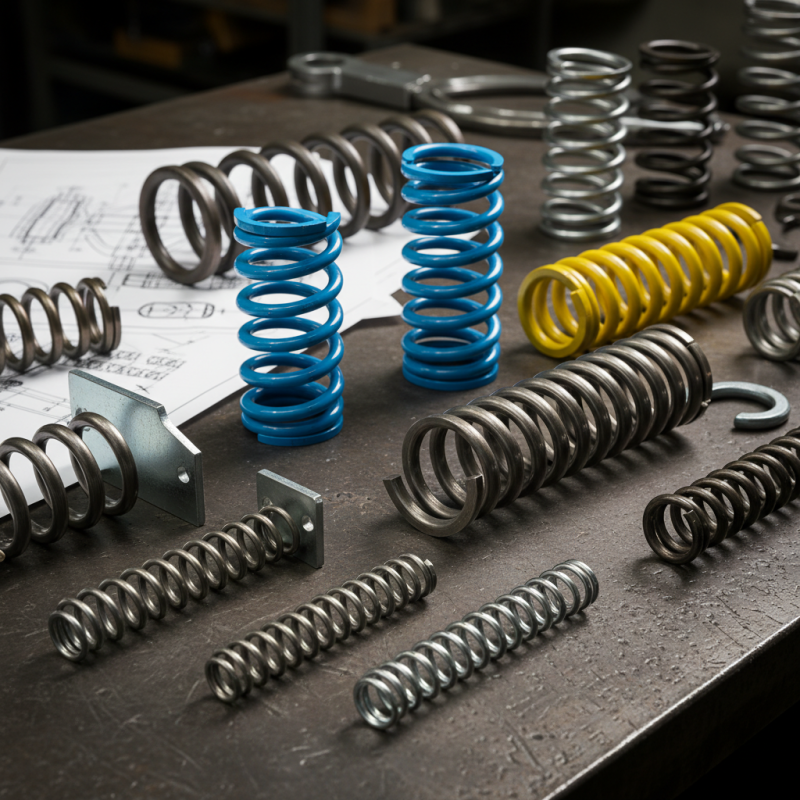
When choosing a bracket spring, understanding the different types is crucial. Bracket springs vary in design, application, and material. The most common types include compression springs, tension springs, and torsion springs. Each serves specific purposes. Compression springs are ideal for shock absorption, while tension springs handle pulling forces. Torsion springs provide torque in rotating applications.
Tips for selecting the right spring is essential. First, assess the load requirements. Ensure that the spring can handle the maximum force without failure. Material choice also matters. Stainless steel offers corrosion resistance, while carbon steel is cost-effective for less demanding environments.
Another key factor is the spring's dimensions. Measure your installation space carefully. Springs that are too large or too small can lead to issues. Additionally, consider fatigue life. Springs experience wear over time, and choosing the right one can save replacement costs. It's wise to keep potential challenges in mind. Sometimes, manufacturers provide standard options, but customized designs may yield better results for specific needs.
How to Choose the Right Bracket Spring for Your Needs? - Understanding the Different Types of Bracket Springs and Their Applications
| Type of Bracket Spring | Material | Load Capacity (lbs) | Common Applications | Notes |
| Compression Spring | Stainless Steel | 300 | Automotive, Industrial Equipment | Offers high resistance to fatigue |
| Extension Spring | Music Wire | 150 | Clothing, Exercise Equipment | Requires proper attachment to function |
| Torsion Spring | High Carbon Steel | 200 | Door Hinges, Clothespins | Good for rotational applications |
| Leaf Spring | Composite Materials | 600 | Vehicles, Trailers | Provides load distribution |
Key Factors to Consider When Selecting Bracket Springs for Specific Uses
Choosing the right bracket spring involves various factors important for specific applications. First, consider the load capacity needed. Each spring is rated for a certain weight. Exceeding this limit can lead to failure. Verify the weight of your application to choose an appropriate spring.
Next, examine the spring material. Different materials offer unique benefits. They vary in strength and corrosion resistance. For instance, stainless steel can resist rust, which is essential for outdoor applications. A poorly chosen material may result in premature wear or failure.
Lastly, look at the spring dimensions. Length, width, and coil thickness all play a role in performance. A wrong size can hinder functionality. Always measure your spaces accurately before making a selection. Sometimes, the right fit requires custom solutions that align with your needs. It's okay to seek professional help when in doubt.
Material Selection: Comparing Steel, Composite, and Specialty Alloys in Springs
Choosing the right bracket spring requires careful material selection. Steel, composite materials, and specialty alloys all have unique properties. Understanding these differences can help you make informed choices.
Steel springs are known for their strength and durability. They can resist heavy loads and provide reliable tension. However, they can also be prone to corrosion without proper treatment. This could be a vital drawback in certain environments.
Composite materials offer lighter options with excellent resistance to environmental factors. Their flexibility makes them suitable for applications where weight is a concern. However, they may not always withstand heavy loads as effectively as steel. Specialty alloys can provide a middle ground. They combine the benefits of steel and composites, offering both strength and resistance to corrosion. Yet, they can be more expensive and may not be necessary for all applications.
Assessing your specific needs and applications is crucial. All materials have pros and cons in real-world scenarios. Taking the time to evaluate these factors will lead to better, more reliable choices.
Analyzing Load Requirements: How to Determine Spring Strength and Capacity
When selecting the right bracket spring, understanding load requirements is essential. Every application demands specific strengths and capacities. A spring's ability to support weight directly influences its performance. Consider the maximum load the spring will endure. If the load exceeds its capacity, the spring may fail or deform. This brings into question whether the chosen spring can handle unexpected stresses.
To accurately determine spring strength, gather data about your project. Document the weight it must support. Factor in safety margins, as these will guide you toward an appropriate selection. Shorter springs often can handle heavier loads compared to longer ones, but they may not fit all designs. Evaluate other factors: temperature and environment can also affect performance.
Sometimes, estimations fall short. Testing is necessary to guarantee that the selected spring meets real-world conditions. A spring that seems ideal on paper may not perform well under stress. If doubts arise, consulting experts can offer invaluable insights. Different applications demand varied solutions, and learning from prior experiences is critical.
Maintenance and Longevity: Ensuring Optimal Performance of Bracket Springs
When maintaining bracket springs, understanding their performance over time is crucial. Reports indicate that nearly 30% of mechanical failures arise from neglected maintenance. Regular lubrication can extend the life of these springs significantly. A study found that properly lubricated bracket springs last up to 40% longer than those without maintenance.
Monitoring wear and tear is essential. Signs like rust or deformation can indicate that a spring needs replacement. Neglecting these signs can lead to larger issues, including system failure. Industry data suggests that early detection of spring fatigue can prevent up to 50% of potential breakdowns. Regular inspections can help identify problems before they escalate.
It’s vital to consider the working environment of the brackets. Extreme temperatures, humidity, and corrosive factors can degrade spring quality. Using materials that match your environment can greatly enhance longevity. Ensuring the right fit and application can improve overall performance too. Choosing the appropriate bracket spring is not just about current needs, but also about future reliability and safety.