
How to Choose the Right Absorbent Core in 2026?
Choosing the right Absorbent Core in 2026 requires more than comparing total fluid capacity. A high-capacity core can still fail when liquid spreads slowly, pressure increases, or the wearer changes position. In real production, small differences matter. A delayed acquisition layer may create surface wetness. Uneven superabsorbent polymer distribution can cause gel blocking. Too much fluff pulp may improve intake but increase thickness and material use.
Dr. S. K. Chatterjee, a recognized absorbent-technology researcher, once stated, “Absorbency is not a single number; it is a balance between intake, retention, distribution, and comfort.” That principle remains useful for today’s product developers. The best choice depends on the product’s purpose, target users, fluid volume, wearing time, and manufacturing equipment. Baby diapers, adult incontinence products, feminine hygiene products, and medical pads need different core structures. They should not share one default formula.
This guide examines the practical criteria behind core selection. It considers basis weight, SAP-to-fluff ratio, acquisition speed, retention under pressure, rewet performance, thickness, sustainability, and cost stability. Laboratory results are important. So are production trials and user feedback. A core that performs well in a dry test may behave differently after folding, compression, or extended wear.
There is no perfect design.
Some decisions remain compromises. However, careful testing can expose weak assumptions before they become expensive failures. In 2026, responsible selection means measuring performance clearly, documenting results, and choosing the Absorbent Core that delivers reliable protection in real conditions.
What an Absorbent Core Is and Why It Matters in 2026
How to Choose the Right Absorbent Core in 2026?
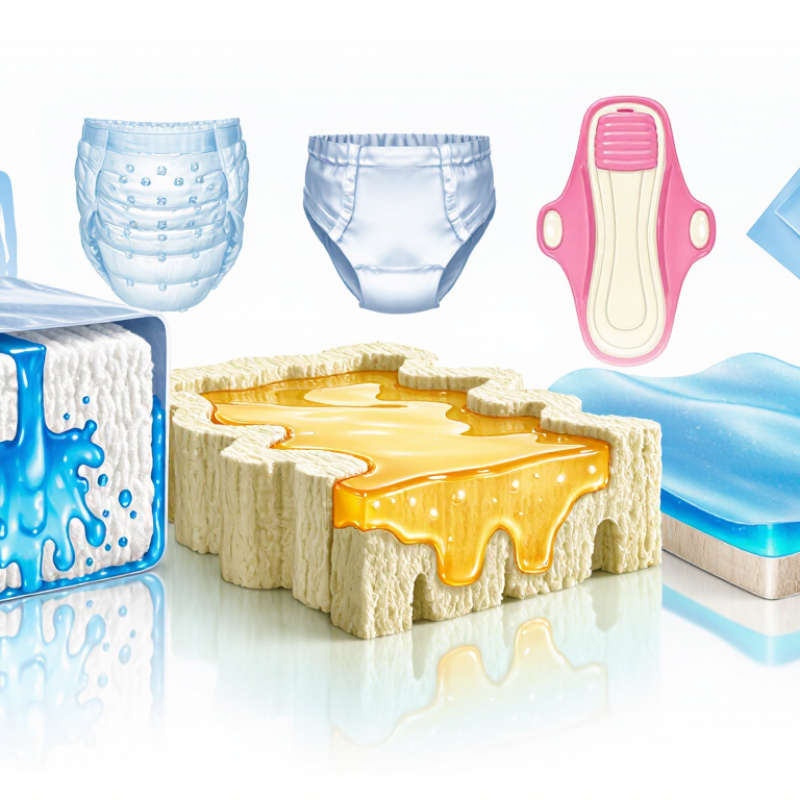
An absorbent core is the working center of a hygiene product. It receives fluid, spreads it, and locks it away. Most cores combine cellulose fibers with superabsorbent polymer particles. The fiber network supports quick intake. The polymer stores liquid under pressure. This balance affects dryness, comfort, leakage protection, and product thickness.
Performance depends on more than absorption capacity. Test fluid intake speed, retention after compression, rewet, and edge leakage. A core may absorb quickly but release moisture during movement. That is a real weakness. Consider the user’s needs, too. Overnight products require strong retention. Products for active users need flexible distribution and reliable protection around the edges. For sensitive skin, softness and airflow deserve equal attention.
In 2026, material choices also carry greater weight. Lower material use can reduce bulk and transport impact, but thinner designs may sacrifice resilience. Recycled or plant-based fibers can support responsible sourcing when quality remains consistent. Ask for documented test methods, supplier traceability, and batch-level performance data. Do not trust capacity numbers alone. A practical check is simple: apply fluid gradually, add pressure, then inspect the surface and edges. No core is perfect. The right choice is the one that performs reliably in real conditions, not only in a laboratory report.
How to Choose the Right Absorbent Core in 2026? - What an Absorbent Core Is and Why It Matters in 2026
| Evaluation Dimension | Fluff-Pulp-Dominant Core | Balanced Pulp–SAP Core | High-SAP Core | Channelled or Bonded Core |
|---|---|---|---|---|
| Typical composition by dry weight | Fluff pulp: approximately 80–100%; SAP: 0–20% | Fluff pulp: approximately 55–80%; SAP: 20–45% | Fluff pulp: approximately 20–55%; SAP: 45–75% | SAP: approximately 30–65%, with adhesive, tissue, nonwoven, or structural bonding elements |
| Typical core thickness before compression | Approximately 4–12 mm | Approximately 3–9 mm | Approximately 2–6 mm | Approximately 2–7 mm, depending on bonding and channel design |
| Main absorption mechanism | Capillary absorption and temporary liquid storage within cellulose fibers | Capillary absorption combined with polymer swelling and liquid immobilization | Primarily polymer swelling and liquid immobilization, supported by a thinner fiber network | Controlled acquisition, distribution, and immobilization through engineered pathways |
| Indicative SAP free-swell capacity | Not applicable or limited by the low SAP content | Typically 25–45 g/g for the SAP component | Typically 25–45 g/g for the SAP component | Typically 25–45 g/g, depending on polymer grade and test liquid |
| Initial liquid acquisition | Good when the core is thick and evenly formed; may require more volume | Generally good for repeated or moderate fluid loading | Moderate to good; performance depends strongly on the acquisition and distribution layer | Good when channels and bonding are correctly engineered |
| Rewet control after pressure | Moderate; free liquid can remain in the fiber network | Good when SAP is well distributed and the core is adequately compressed | Very good when high-retention SAP and an effective distribution layer are used | Good to very good; depends on channel stability and polymer immobilization |
| Risk of gel blocking | Low | Low to moderate | Moderate to high if liquid distribution, SAP particle size, or core compression is poorly controlled | Low to moderate when channels maintain open fluid pathways |
| Shape retention during use | Moderate; can become bulky or shift when heavily wet | Good with suitable tissue or nonwoven wrapping | Moderate to good; requires effective stabilization because SAP expands during wetting | Very good when bonding and channel geometry remain stable under compression |
| Best suited applications | Low to moderate fluid loads, thicker products, and applications requiring rapid initial uptake | General-purpose hygiene products requiring a balance of capacity, comfort, and cost | Thin products, extended wear, and products requiring high total retention | High-performance products requiring thinness, fluid distribution, and improved structural integrity |
| Primary advantages | Fast wicking, simple construction, and lower sensitivity to polymer distribution | Balanced performance, broad processing window, and reliable comfort | High capacity per unit thickness and potentially lower material mass | Improved fluid routing, shape stability, and targeted absorption zones |
| Main limitations | Greater thickness, lower total retention, and possible wet-core deformation | Usually thicker than high-SAP designs and may require careful pulp–polymer blending | Higher sensitivity to gel blocking, uneven distribution, and pressure-dependent performance | More complex converting, tighter process tolerances, and potentially higher testing requirements |
| Key 2026 selection checks | Check acquisition speed, wet bulk, leakage resistance, and product thickness | Check total capacity, rewet, repeated insult performance, and comfort | Check absorbency under load, gel blocking, rewet, and SAP distribution uniformity | Check channel stability, flex performance, compression recovery, and fluid distribution |