How to Choose the Best Spout Pouch for Your Packaging Needs?
Choosing the best Spout Pouch for your packaging needs can be daunting. According to Sarah Johnson, a leading expert in flexible packaging, “The right spout pouch can elevate a product's market presence.” Her insight highlights the importance of thoughtful selection in the spout pouch industry.
Spout pouches come in various shapes and sizes. They can enhance user experience through convenience and functionality. However, not every spout pouch fits every product. A clear understanding of the product’s requirements is essential. Too often, brands choose based on aesthetics rather than practicality. This misstep can lead to wasted resources and dissatisfied customers.
Consider the product’s viscosity, shelf life, and target audience when selecting a spout pouch. It’s crucial to balance design with functionality. Even minor details, like the spout size, can impact user experience significantly. Reflecting on these factors may uncover opportunities for improvement. The ideal spout pouch not only serves its practical purpose but also strengthens brand identity.
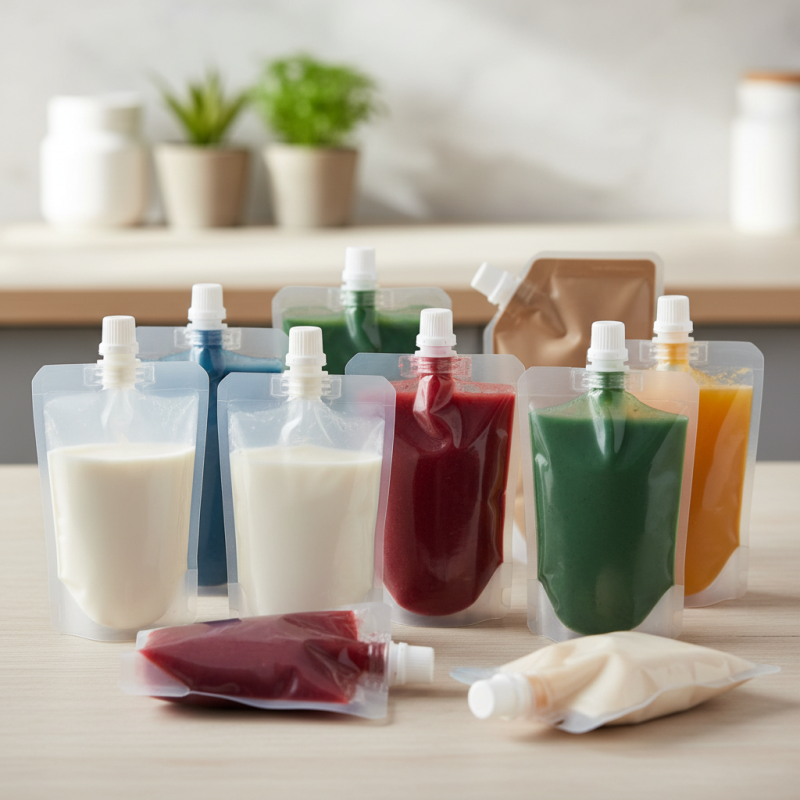
Understanding Spout Pouches: Types and Materials Available
Spout pouches have become a popular choice for packaging liquids and semi-liquids. They are versatile, lightweight, and user-friendly. Understanding the types and materials available is crucial for selecting the best spout pouch for your needs.
There are several types of spout pouches, including stand-up pouches, flat bottom pouches, and flat pouches. Stand-up pouches are often preferred for retail display due to their ability to stand on shelves. Flat bottom pouches provide stability, while traditional flat pouches are suitable for various applications. Choosing the right type depends on your product’s viscosity and your marketing strategy.
Material plays a significant role in pouch functionality. Common options include polyethylene, polyester, and nylon. According to industry reports, around 70% of pouches are made from multi-layer materials, enhancing barrier properties and extending shelf life. However, it’s essential to consider recyclability. Many consumers now prefer eco-friendly options.
Tip: Always request samples before making a bulk order. This lets you assess the quality and suitability for your product.
Consider the pouch's sealing method and spout design. A robust spout prevents leaks, which is critical for liquid products. Reflect on your packaging needs continually. As market preferences change, so should your packaging approach.
Assessing Your Product: Size, Volume, and Shelf Life Considerations
When choosing the right spout pouch, understanding your product's characteristics is crucial. Size matters a lot. A pouch that is too big can lead to waste, while one that is too small may compromise the product’s integrity. Consider the dimensions that best suit your product. For instance, if you're packaging liquids, choose a spout pouch that allows easy pouring.
Volume is another key factor. Many products have specific volume requirements for optimal storage. If your product has a short shelf life, opt for a material that protects against moisture and air. This choice can significantly enhance freshness.
**Tips:** Always calculate the exact volume needed for your products. Test various pouch sizes with your actual product. Consider user convenience during the entire process, from filling to dispensing. Remember, minimal waste during packaging can improve sustainability. Adjusting your pouch choice based on these parameters reflects thoughtfulness and awareness of market demands.
Evaluating Closure Options: Zipper, Cap, and Spout Mechanisms
When selecting a spout pouch, closure options significantly affect usability and shelf life. Zipper closures are convenient for resealing, making them ideal for products needing repeated access. They provide a secure seal and keep contents fresh. However, some users may find them harder to open, especially with thicker materials.
Cap closures offer a different experience. They allow for easy pouring and can create a tight seal to prevent leaks. Users often appreciate the precision of a cap for liquid products. However, improper application during manufacturing might result in inconsistent quality. Careful design can mitigate this issue, but not all manufacturers prioritize it.
Spout mechanisms combine functionality and innovation. These designs facilitate controlled dispensing and ideal for thick liquids. However, they may not provide the same level of security against tampering compared to other options. Regular assessments during product development can ensure that the spout fits tightly and performs as expected. Each closure type has its benefits and challenges. Therefore, evaluating your product's specific needs is essential to make an informed decision.
Comparing Closure Options for Spout Pouches
Design and Branding: Customization for Market Appeal
In today's competitive marketplace, design and branding play vital roles in packaging choices. Customization is important for creating appeal. According to a report by Smithers Pira, over 70% of consumers prefer products with unique packaging designs. This highlights the impact of aesthetics in driving purchase decisions. Eye-catching spout pouches can enhance brand identity, making products memorable.
Customization goes beyond visuals. Consider colors, fonts, and materials. A study by Packaging Strategies reveals that 65% of consumers associate quality with packaging design alone. Brands that invest in unique designs often observe a significant increase in sales. However, many companies overlook the balance between creativity and functionality. It's essential to ensure the pouch design is user-friendly, as complicated packaging can deter potential buyers.
Reflecting on industry trends, businesses may find it challenging to meet consumer expectations. Sustainability is another crucial factor. More than 50% of consumers prefer eco-friendly packaging. Yet, balancing sustainability with design complexity requires careful thought. Companies must explore innovative materials while maintaining brand recognition. This ongoing challenge highlights a need for brands to consistently evaluate their packaging strategies and adapt.
Sustainability Factors: Eco-friendly Solutions in Packaging Choices
Choosing the right spout pouch should align with sustainability goals. The global shift towards eco-friendly packaging is gaining momentum. According to a recent study, 72% of consumers prefer brands that prioritize sustainable practices. This presents an opportunity for businesses to align packaging choices with customer values.
Materials used in spout pouches play a vital role. Companies can opt for biodegradable or recyclable options. The use of post-consumer recycled materials can reduce waste significantly. A report from the Flexible Packaging Association indicates that flexible packaging has a lower carbon footprint compared to traditional packaging. This technology promotes sustainability while preserving product integrity.
While many companies are making strides, challenges remain. The cost of eco-friendly materials can be a barrier for some. Additionally, the industry often lacks standardized definitions of sustainability. Understanding these nuances is crucial. It reflects a commitment to genuine change rather than simply following trends. Engaging with customers on sustainability efforts can foster trust and loyalty.