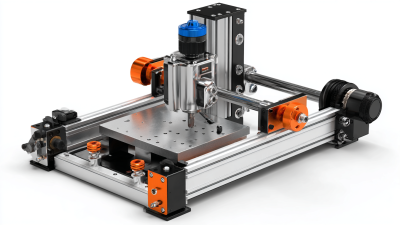
How to Choose the Best CNC Router Table in China?
Choosing the best Cnc Router Table in China starts with the work it must perform. A cabinet shop cutting plywood has different needs from a workshop carving hardwood or machining plastic. Material, sheet size, cutting depth, and daily production volume should guide the search. A machine that looks impressive in a catalog may still be poorly matched to your floor space or workload.
Compare the frame, spindle, drive system, and control software against your actual jobs. Ask for the working area, positioning accuracy, spindle power, and supported file formats in writing. Request a demonstration using material similar to yours, and check the finished edges for tear-out or uneven cuts. Small details matter. Also consider dust collection, tool changes, operator training, and access to replacement parts. A low purchase price can become less attractive if setup takes weeks or maintenance support is difficult to reach.
When evaluating suppliers in China, verify the manufacturer’s experience and ask for clear specifications, inspection records, and service terms. Video calls can help, but they do not replace a detailed acceptance checklist. Even experienced buyers can overlook a small mismatch between the advertised working area and the usable cutting area. I would not treat a polished catalog as proof of quality. Compare several machines, confirm what is included, and leave room for questions. The right choice is not necessarily the largest or fastest model; it is the one that reliably fits your materials, operators, budget, and production plans.
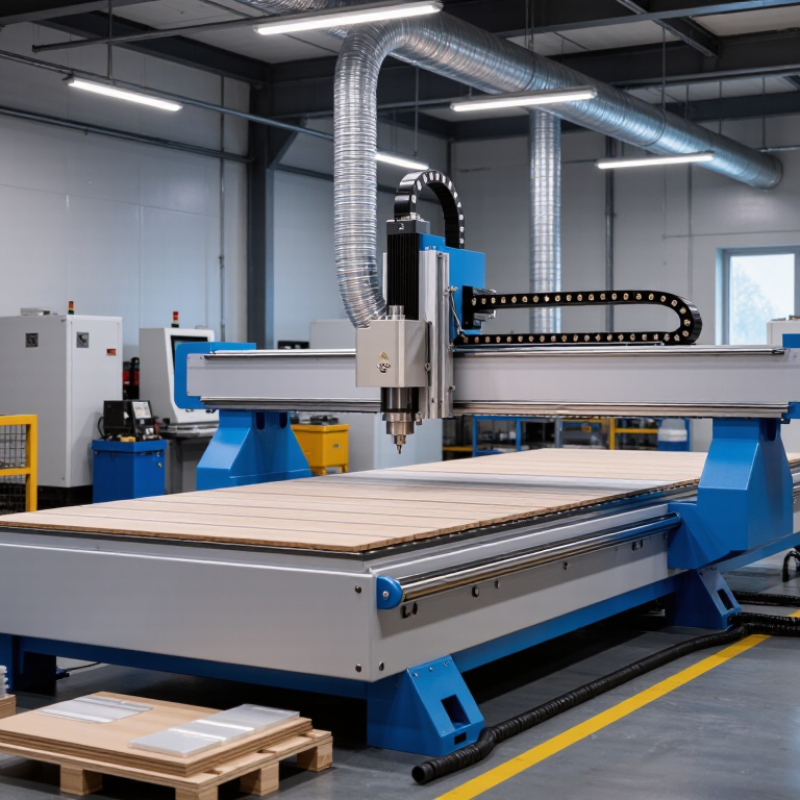
Classify CNC Router Tables by Material, Workload, and 4 × 8 ft (1220 × 2440 mm) Format
Choose a CNC router table by the material it must cut every day. Wood and MDF suit a rigid gantry, dust extraction, and a spindle matched to sheet thickness. Plastics need controlled heat and sharp tooling to reduce melting and rough edges. Aluminum calls for a stiff frame, secure workholding, and conservative feed settings. One machine may handle several materials, but changeovers can cost time. Fit matters. Grand View Research valued the global CNC machine market at US$101.22 billion in 2023 and forecast 10.3% annual growth from 2024 to 2030. This broad market figure signals investment, not a guarantee that any router suits your shop.
For workload, compare daily cutting hours, batch size, and required accuracy—not just spindle power. A cabinet shop cutting full sheets has different needs from a sign workshop making short runs. Check frame rigidity, drive type, service access, and dust collection capacity. For 4 × 8 ft sheets, the common nominal size is 1220 × 2440 mm. Confirm usable travel, not just the advertised bed size; clamps, tool offsets, and edge clearance can reduce the cut area. A slightly larger working envelope may prevent awkward repositioning.
Tip: Ask the supplier for a sample cut using your material and thickness. Inspect edge quality, repeatability, and setup time. Then check whether the test reflects your real workload; it may not.
Compare Table Travel, Z Clearance, and Positioning Accuracy (e.g., ±0.05 mm)
When choosing a CNC router table in China, match table travel to the largest panel you actually process. A 1,300 × 2,500 mm work area may suit standard sheet goods, but clamps and tool paths reduce usable space. Measure your longest toolpath, not just the workpiece. Leave room for fixturing. Z clearance matters too: include material thickness, spoilboard, clamp height, and tool length. A tall gantry can help with deep parts, though it may reduce rigidity; that trade-off is easy to overlook.
Positioning accuracy is not the same as repeatability. ISO 230-2:2014 sets out test methods for determining both on numerically controlled axes, so ask for the test conditions and results, not only a brochure figure. A stated ±0.05 mm can be a useful purchasing target, but confirm whether it applies across the full travel, under what load, and at what temperature. Request a laser-interferometer test report where available, and check results at several positions. Small details matter. I would also verify repeatability after returning to the same point; a machine can hit a location once and still drift during production.
Match Spindle Power (3–9 kW) and Tooling to Materials and Cutting Depth
How to Choose the Best CNC Router Table in China?
Match spindle power to the material, cutter, and depth you actually need. A 3 kW spindle can handle wood panels, plastics, and shallow cuts in some non-ferrous metals when feeds and tooling are suitable. For dense hardwood or repeated production, 6–9 kW may provide more torque and reduce strain. More power is not automatically better. A small cutter can still overheat or break if the feed rate, chip load, or tool geometry is wrong. For deep profiles, use several passes instead of forcing the tool through the full depth at once.
Tips: Ask the supplier to cut a sample using your material and intended bit. Check the edge finish, chip shape, and spindle load. Confirm collet sizes, tool availability, and the machine’s stated duty cycle. A neat sample is useful, but it does not prove consistent results over a full shift.
When comparing CNC router tables in China, request spindle specifications at operating speed, not only the maximum power figure. Match the table’s rigidity and Z-axis clearance to your largest workpiece and cutting depth. For example, a thick hardwood sign may need a longer tool and multiple passes, while sheet goods usually need less reach. Verify voltage, installation support, and replacement-part access before ordering. These details are easy to overlook, and I would still test them in writing.
How to Choose the Best CNC Router Table in China? - Match Spindle Power (3–9 kW) and Tooling to Materials and Cutting Depth
| Material |
Practical Spindle Power Range |
Suggested Cutter and Diameter |
Typical Axial Depth per Pass |
Setup Considerations |
| Plywood |
3–6 kW |
Compression or carbide spiral bit; 6–12 mm diameter |
3–8 mm |
Use a compression cutter when clean edges are needed on both faces. Secure the sheet evenly and maintain effective chip extraction. |
| MDF |
3–6 kW |
Carbide spiral or compression bit; 6–12 mm diameter |
4–8 mm |
MDF produces fine dust, so use suitable extraction. Reduce depth or feed if the cutter overheats or the edge becomes discolored. |
| Hardwood |
4–9 kW |
Sharp carbide up-cut, down-cut, or compression bit; 6–12 mm diameter |
2–5 mm |
Begin with conservative passes, especially in dense or figured wood. A rigid table, short tool stickout, and secure workholding help limit vibration and tear-out. |
| Softwood |
3–6 kW |
Carbide spiral bit; 6–12 mm diameter |
4–8 mm |
Softwood can splinter or compress. Choose up-cut or down-cut geometry according to chip removal and the required edge finish. |
| Rigid foam or model board |
3–4 kW |
Single- or two-flute spiral bit; 6–12 mm diameter |
10–25 mm |
These materials generally allow deeper passes, but the workpiece must be supported to prevent movement. Use a tool geometry suited to the foam density. |
| Engineering plastics (such as HDPE or PVC) |
3–6 kW |
Single-flute polished carbide bit; 4–8 mm diameter |
2–6 mm |
Favor chip clearance and avoid heat buildup. If chips melt or weld back onto the cut, adjust feed, spindle speed, and pass depth. |
| Acrylic |
3–6 kW |
Single-flute polished carbide bit; 3–8 mm diameter |
1–4 mm |
Use a sharp cutter and stable workholding. Excessive heat can soften the material and leave a poor edge; test settings on a scrap piece first. |
| Aluminum sheet or plate |
6–9 kW preferred for sustained production; a rigid 3–6 kW setup may suit light cuts |
Single-flute carbide aluminum-cutting bit; 3–8 mm diameter |
0.3–1.5 mm |
Use conservative cuts, strong clamping, and effective chip removal. Aluminum cutting depends heavily on machine rigidity, tool geometry, and spindle runout. |
Selection note: Depths are typical starting ranges per pass, not guaranteed limits. Full-width slotting usually requires a shallower pass than side milling. Actual capacity depends on cutter diameter and flute design, feed rate, spindle speed, tool stickout, workholding, machine rigidity, and material condition. Check the cutter maker’s recommendations and run a test cut before production.
Check Accuracy Test Methods Under ISO 230-2 and Applicable Safety Standards
When comparing a CNC router table in China, request a positioning test report based on ISO 230-2. This standard provides methods for checking the positioning accuracy and repeatability of machine-tool axes. Ask whether the X, Y, and Z axes were tested separately, and whether results include both forward and reverse movements. Check the measuring instrument’s calibration, test conditions, and stated uncertainty. A table measured only when cold may behave differently after hours of cutting. Details matter.
Do not treat an ISO 230-2 report as proof of overall machine quality or safety. Confirm that the test setup reflects the machine’s delivered configuration, including its table, control system, and operating conditions. For safety, ask for a documented risk assessment and clear evidence of suitable guarding, emergency stops, electrical protection, and dust-control provisions. Check which safety standards and regulations apply in your destination market; requirements may vary by machine design and location. A tidy report can still leave questions unanswered, so request supporting records and inspect the actual safeguards.
Tips: Ask for raw test data, not only a pass statement. Confirm acceptance limits in writing before ordering, and keep a copy of the signed test report.
Assess China Suppliers by Warranty, Service, Lead Time, and Total Cost
When choosing a CNC router table in China, compare the support behind the machine, not only its cutting area or quoted price. Ask for warranty terms in writing, including coverage for the spindle, controller, and electrical components. Check who pays for replacement parts and shipping. “One-year warranty” can mean different things. Request examples of common faults and the steps used to resolve them.
Service matters once the machine is installed. Ask whether technicians can guide setup remotely, and what response time they target. A clear parts list helps; vague promises do not. Check the lead time for production, testing, and packing separately. Request dated milestones and confirmation that a test run is included. Delays happen, so allow some buffer.
Calculate total cost, including crating, freight, import charges, installation, training, and any tooling needed to start work. Compare the same configuration across suppliers. A low quote may exclude useful items, such as dust collection fittings or a spare tool holder. Put every assumption on one sheet. It may feel tedious. But that sheet can expose gaps before a deposit is paid.