
7 Tips for Choosing the Best Car Garage Lift
A Car Garage Lift can make routine repairs easier, free up floor space, and provide better access beneath a vehicle. But choosing one is not just a matter of comparing prices or picking the model with the highest capacity. The lift must suit your vehicles, garage, and planned work. Small details matter. A low ceiling, narrow bay, or uneven concrete floor can rule out an otherwise appealing option.
These seven tips focus on practical checks buyers can make before committing. Compare lift styles and rated capacity, then consider vehicle weight distribution, door clearance, and the space needed to open doors or position lift arms. Read the manufacturer’s installation requirements carefully; a lift’s rating alone does not confirm that your garage floor is suitable. When concrete specifications are unclear, ask a qualified installer to assess the site. A tape measure helps, but it cannot answer every structural question.
It is easy to focus on convenience and overlook how often you will use the lift. That is worth reconsidering. Think about daily access, storage, maintenance, and the tools you need nearby. Inspect the locking system, controls, warranty terms, and availability of replacement parts. This guide explains what to check and why each choice matters. A little extra planning can prevent an expensive mismatch. Even careful buyers can miss a clearance issue, so verify your measurements before ordering.
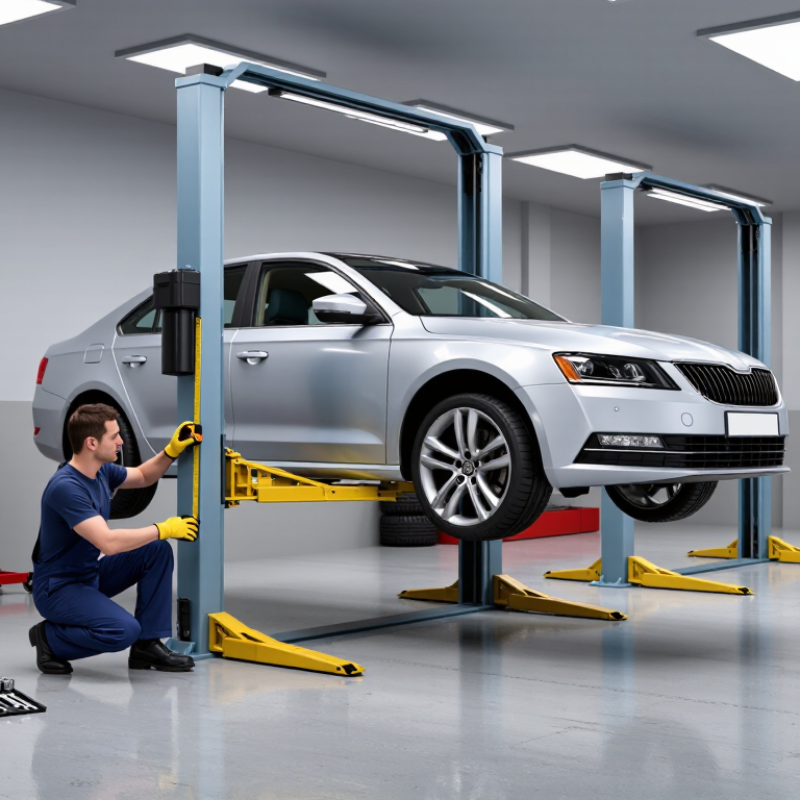
Assess Your Vehicle Types and Garage Needs
Start with the vehicles you actually own, not the lift that looks most convenient. EPA’s 2024 Automotive Trends Report puts the average new light-duty vehicle at about 4,329 pounds for model year 2023. That average can hide a heavier pickup, electric vehicle, or loaded SUV. Check each vehicle’s manual for weight and approved lifting points, then compare the heaviest vehicle with the lift’s rated capacity. Leave room for accessories and vehicles you may own later. Averages are only a starting point.
Measure the garage before comparing lift styles. Record ceiling height, door clearance, bay width, and the space needed to walk around a raised vehicle. A tape measure beats a guess. Also check the installation requirements for the floor and concrete slab; the Automotive Lift Institute’s lift-safety guidance emphasizes proper installation and vehicle positioning. A two-post lift can offer open access underneath, while a four-post design may suit storage and parking needs. Neither is automatically right. I would not treat one measurement as gospel: roof racks, tire changes, and future vehicles can shift the fit. Note those details before choosing.
Compare Lift Designs, Capacity, and Vehicle Compatibility
A lift’s design should match the work and the space. A two-post lift gives access to wheels and underbody components, but its arms must reach the vehicle’s approved lifting points. A four-post lift supports the tires and can suit storage or routine service; ramps and crossbars may limit underbody access. Scissor lifts save floor space, though some designs leave less room beneath the vehicle. Measure ceiling height, door clearance, and floor space with the lift fully raised. Small details matter.
Capacity needs more than a guess. The U.S. Environmental Protection Agency’s 2024 Automotive Trends Report lists average new-vehicle weight at 4,329 pounds for model year 2023. That is an average, not a safe capacity target: trucks, vans, accessories, and uneven weight distribution can push a particular vehicle much higher. Select a lift rated above the heaviest vehicle you expect to service, and follow its load-positioning limits. Check model-specific lift-point guidance, arm reach, wheelbase, track width, and ground clearance before buying. I would also verify the floor and installation requirements with a qualified professional; a strong-looking slab is not proof of suitability. A little uncertainty here deserves a second check.
Measure Garage Space and Plan Installation Requirements
Measure the clear floor area, ceiling height, and door opening before comparing lifts. Include the car’s full length and width, then leave room to open doors and walk around it. The U.S. Environmental Protection Agency’s 2023 Automotive Trends Report puts the average new-vehicle footprint at about 49.5 square feet. That figure measures wheelbase multiplied by track width, not the vehicle’s full body size or the space a lift needs. Measure your own vehicle. A tape measure beats an average.
Look above the planned lift, too. Account for garage-door tracks, openers, lights, beams, and the vehicle’s raised height. Mark the lift posts on the floor with tape; check that doors, tool cabinets, and the path to the exit remain usable. Then verify the slab’s thickness, condition, and strength against the lift’s installation requirements. The Automotive Lift Institute’s ANSI/ALI ALIS standard covers lift installation, inspection, and maintenance; slab suitability should not be guessed from appearance alone. A cracked corner matters. So does an old repair.
Power supply and anchoring also affect placement. Have a qualified installer assess the site and confirm the required clearances before drilling or pouring concrete. I would measure twice, then recheck with the vehicle parked in position. It feels fussy. That is the point.
Check Safety Features, Build Quality, and Certifications
Check the lift’s rated capacity against the heaviest vehicle you service, not an average car. Read the capacity label and confirm the lift’s arm positions match the vehicle’s approved lifting points. Look for automatic safety locks, visible lock engagement, arm restraints, and a reliable emergency-lowering procedure. Test controls and listen for uneven movement during a supervised inspection. Small details matter.
The Automotive Lift Institute’s Certified Lift Inspector program has reported that about one-quarter of inspected lifts fail inspection. That figure applies to inspected equipment, not every lift in service, but it shows why condition checks matter. Examine welds, cables, hydraulic lines, and anchor points for cracks, leaks, fraying, or corrosion. A glossy finish proves little. Ask for maintenance records and arrange inspection by a qualified professional; I would not rely on a quick visual check alone.
Verify that the exact lift model carries recognized third-party certification, such as certification to ANSI/ALI ALCTV requirements. Match the model number on the equipment to its documentation; a certificate for a similar model is not enough. Check that installation instructions specify the required concrete thickness and strength, then confirm the shop floor meets them. Keep the manual nearby. Certification supports confidence, but it cannot compensate for poor installation, skipped maintenance, or incorrect use.
Compare Total Costs, Warranty, and Maintenance Needs
A low purchase price can hide expensive installation, electrical work, freight, and floor preparation. Compare written, like-for-like quotes, including these items and any required accessories. Ask what the warranty excludes: labor, travel, wear parts, and damage from missed maintenance can change its real value. Read the exclusions. A longer warranty is useful only if parts and qualified service are available when the lift is down.
Budget for inspections and routine checks, not just repairs. The Automotive Lift Institute’s ANSI/ALI ALOIM:2020 standard calls for automotive lifts to receive periodic inspection, including an annual inspection by a qualified lift inspector. Confirm inspection costs locally and follow the lift’s maintenance manual for checks such as locks, cables, anchors, and hydraulic leaks. For a labor-cost reference, the U.S. Bureau of Labor Statistics reported a $49,670 median annual wage for automotive service technicians and mechanics in May 2024; that is not a lift-service rate, but it shows why technician time belongs in the ownership estimate. A spreadsheet can still miss downtime. Add a realistic allowance for delays and parts, even if the estimate feels a little uncomfortable.
