
How to Choose the Best Barbed Wire for Sale?
Choosing barbed wire for sale is not simply a matter of comparing prices per roll. The right choice depends on the site, the intended use, and how long the fence must withstand weather and strain. A dry farm boundary and a damp coastal perimeter place different demands on wire coatings. Details matter.
Industry data offers useful context, but it must be read carefully. Grand View Research estimated the global fencing market at USD 31.5 billion in 2022 and projected growth through 2030. That report covers fencing broadly, not barbed wire alone. Its figures suggest continuing investment in fencing, but they cannot tell buyers which product will perform best on a particular property. That distinction is easy to overlook.
A practical comparison should start with wire gauge, steel strength, coating type, barb spacing, and roll length. Check product specifications and ask suppliers for coating or quality documentation where available. Then consider installation conditions: uneven ground, long fence runs, and tension requirements can affect durability and upkeep. For livestock or general property boundaries, match the product to the task and plan for safe handling during installation. A low price can be tempting. It may not reflect service life. Even experienced buyers can miss a detail, so confirm the dimensions and intended application before ordering.
Types of Barbed Wire and Their Key Differences
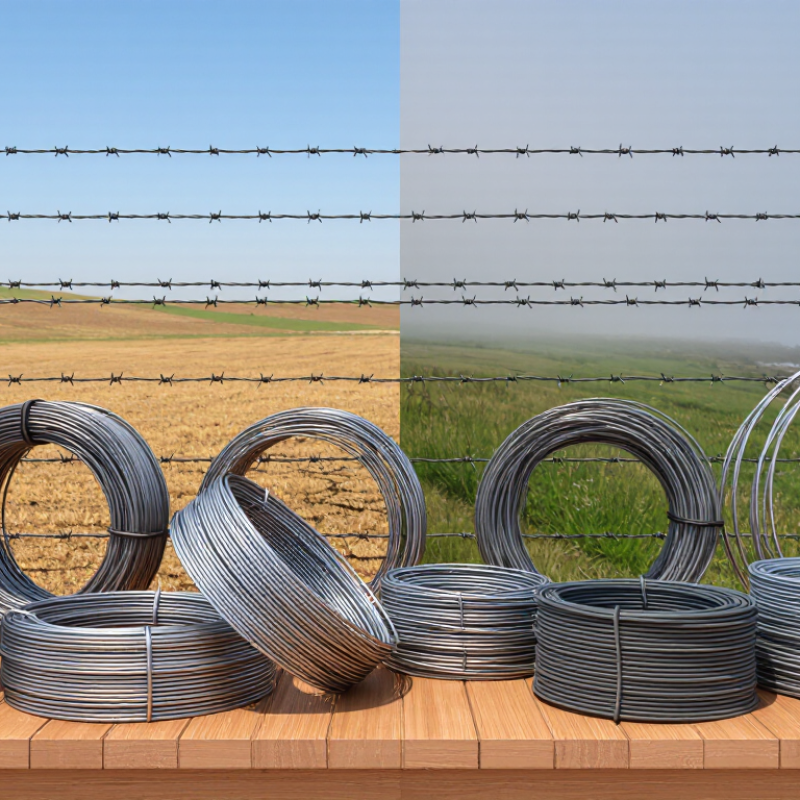
Barbed wire types differ by strand strength, barb shape, coating, and intended use. Two-point barbs are common for general livestock boundaries; four-point barbs create a more pronounced deterrent, but may increase injury risk if animals press against the fence. Mild-steel wire is easier to tension and repair. High-tensile wire can span longer distances, though it needs suitable posts and careful installation. Galvanized coatings help resist corrosion; coastal air and wet soil can still shorten service life. Not always obvious.
ASTM A121/A121M specifies requirements for zinc-coated steel barbed wire, including coating and wire characteristics; it is a useful purchasing reference, not a site-design guide. Montana Fish, Wildlife & Parks’ wildlife-friendly fencing guidance gives practical dimensions: keep the top wire at about 42 inches or lower, and the bottom wire at least 16 inches above ground, where appropriate.
These figures highlight a key difference: a strong livestock barrier may not be wildlife-friendly. I would check the actual terrain and animal movement before choosing a barb style; that part is easy to underestimate.
Ask suppliers for wire diameter, barb spacing, coating class, and tensile-strength documentation, then compare those details against the fence’s exposure and maintenance needs.
Assessing Site Conditions and Fencing Requirements
Start with the ground, not the product label. Walk the fence line after rain and note soft soil, steep slopes, drainage channels, and exposed corners. Wet ground changes everything. Posts may loosen where water collects, while uneven terrain can leave gaps beneath the wire. These details affect the number of strands, post spacing, and tension needed for a dependable fence.
Next, match the wire to its job. A boundary for large livestock may need different strand spacing and strength than a perimeter fence intended to discourage casual entry. Consider animal size and behavior, nearby footpaths, and how often the fence can be inspected. Sharp points near a busy access route may create avoidable hazards. Check local requirements before installation, especially where property lines or public access are involved.
Climate and maintenance matter, too. In damp or coastal areas, corrosion-resistant wire can help extend service life; inspect coatings and fittings for damage before buying. Ask how the wire will perform with your planned posts and tools, rather than comparing price alone. A tidy plan can still overlook a low spot. Recheck the site from both sides, and leave room for repairs, vegetation control, and safe gate access.
How to Choose the Best Barbed Wire for Sale? - Assessing Site Conditions and Fencing Requirements
| Site Condition | Fencing Requirement | Wire Option to Consider | Practical Selection Points |
|---|---|---|---|
| Typical agricultural boundary in a dry or moderately wet climate | Mark a property boundary or contain livestock such as cattle | Galvanized, twisted two-strand barbed wire | Check the wire and barb specifications, coating details, and compatibility with the planned posts and fittings. Strand count and spacing should suit the animals and local requirements. |
| Coastal areas, frequent rainfall, or other corrosive environments | Maintain the fence while reducing premature corrosion | Wire with a corrosion-resistant zinc coating; consider a suitable polymer-coated option where appropriate | Compare coating specifications rather than relying only on appearance. Inspect regularly, especially at cut ends, joints, and points where the wire contacts other materials. |
| Long fence runs with few corners or changes in direction | Build a strong boundary while limiting the number of line wires | High-tensile barbed wire, if the fence design and installation method support it | High-tensile wire needs suitable end assemblies, tensioning, and compatible fittings. Follow the wire maker’s installation guidance and avoid excessive tension. |
| Uneven, sloping, or frequently changing terrain | Keep the fence aligned and supported across rises and dips | A wire type suited to the chosen fence layout and terrain | Plan post locations, brace assemblies, and wire runs for the land profile. Post spacing depends on terrain, wire type, tension, and fence design; do not assume one spacing fits every site. |
| Horse paddocks or areas used by animals prone to entanglement | Contain animals while reducing the risk of injury | Consider a non-barbed livestock fencing system instead | Barbed wire can injure animals that press against or become caught in it. Ask a qualified fencing professional or veterinarian about safer options for the animals and site. |
| Public paths, roadsides, or property with frequent human access | Mark a boundary without creating an avoidable contact hazard | Use barbed wire only where permitted and appropriate | Check local rules on placement, height, setbacks, and warning signs. Consider a less hazardous fence design near gates, walkways, and neighboring properties. |
| Sites with a specific security or access-control need | Discourage climbing or unauthorized entry | A purpose-designed security fence system; barbed wire only where legally permitted | Assess the full fence system, not just the wire. Local regulations, visibility, warning signage, liability, and professional installation may all affect the design. |
Selection note: Wire gauge, barb spacing, coating, strand count, and installation details vary by product and region. Confirm specifications against the intended use, local regulations, and the supplier’s installation guidance before purchasing.
Comparing Wire Materials, Coatings, and Durability
How to Choose the Best barbed wire for sale?
Comparing Wire Materials, Coatings, and Durability
Material and coating determine how barbed wire performs after years outdoors. Low-carbon steel is flexible and economical, while higher-carbon steel can offer greater tensile strength but may be less forgiving during installation. The American Galvanizers Association’s Zinc Coating Life Predictor uses field data and atmospheric exposure categories to estimate coating life. Its key lesson is practical: service life varies sharply with humidity, salt, and industrial pollution. A coastal fence faces a different test from a dry pasture. Hot-dip galvanized wire generally suits exposed sites; lighter zinc coatings may wear sooner, especially where wire rubs against posts. PVC-coated wire adds a barrier, but cuts and scratches can expose the steel beneath.
Tips: Check the coating specification, wire diameter, and barb spacing together. ASTM A121 covers zinc-coated steel barbed wire, giving buyers a useful benchmark for comparing product specifications. Ask for documented coating weight and tensile-strength figures, not just a “heavy-duty” label. Inspect a cut end and a sample twist; small flaws matter.
Stainless steel can resist corrosion well, but its higher price may not suit every fence. Compare the expected exposure, repair access, and replacement cost—not purchase price alone. Keep in mind that published coating-life estimates are not guarantees for a particular fence. Soil contact, installation damage, and neglected repairs complicate the picture. A little less certainty is honest.
Checking Dimensions, Strength, and Installation Compatibility
When comparing barbed wire for sale, check the full dimensions rather than relying on a product photo. Confirm wire gauge, strand count, barb spacing, and roll length. Gauge descriptions can vary, so compare the stated measurement and units across product specifications. A tape measure helps. A spec sheet may look clear, yet one missed unit can affect the fit.
Tips: Measure the fence line and post spacing before ordering. Check whether the wire suits your corner posts, tensioning tools, and existing fence structure. Keep the product details handy during installation.
Strength matters, but higher tensile strength is not automatically the best choice. Match the rating to the intended fence design and the support posts. Check coating details too, especially if the wire will face frequent rain or damp ground. Installation compatibility is easy to underestimate; weak bracing or unsuitable fittings can cause sagging, even with strong wire. Follow the supplier’s installation guidance, and do not tension the wire beyond its stated limits. Recheck measurements before purchase. It is a small step, but one I would not skip.
How to Choose the Best Barbed Wire for Sale?
Compare representative wire diameters and tensile strengths before choosing a fence wire. Strength values shown are midpoints of commonly published ranges: approximately 350–550 MPa for low-carbon wire and 1,200–1,400 MPa for high-tensile wire. Actual specifications vary by product; check the supplier’s datasheet.
Low-carbon wire is a common choice for general fencing. High-tensile wire offers greater tensile strength, but requires suitable end posts, secure bracing, and compatible tensioning equipment. Check the wire diameter, barb spacing, post layout, and installation requirements against your fence design before purchase.
Evaluating Suppliers, Safety Standards, and Local Regulations
When choosing barbed wire for sale, evaluate the supplier as carefully as the product. Ask for written specifications covering wire gauge, strand construction, coating, and intended use. A reliable supplier should explain how the material performs in your climate and provide clear product documentation. Details matter. Be cautious of vague claims or missing inspection records, even when the price looks attractive.
Check the safety standards and local rules that apply to your site before ordering. Requirements can differ by location and property type, especially near roads, shared boundaries, public paths, or wildlife areas. Contact the relevant local authority or a qualified fencing professional to confirm height, setback, warning-sign, and installation requirements. Rules vary. Consider who may come near the fence, including workers, visitors, and animals. A compliant fence can still create avoidable hazards if poorly placed.
Tips: Request a sample or inspect a nearby installation before buying in bulk. Confirm delivery details, warranty terms, and how damage claims are handled. Use trained installers and suitable protective equipment, and keep the work area controlled during installation. I would not rely on a supplier’s verbal assurances alone; save the specifications and local guidance with your project records.
