
Why Choose Conveyor Belt Beam Cutting Press Factories?

Choosing Conveyor Belt Beam Cutting Press Factories is not only about comparing quoted prices. The right supplier can help match press capacity, cutting area, and operating speed to your materials and workload. For a belt workshop, these choices affect edge quality, material waste, and the consistency of repeated cuts. Small differences show.

A sound evaluation starts with practical evidence: sample cuts, machine specifications, control-system details, and a realistic demonstration. Ask how the press handles your belt thickness, die size, and expected shift pattern. Check pressure consistency, frame stability, operator safeguards, and how easily workers can change dies. Factories should also explain installation, training, spare parts, and technical support response times. Specific answers matter.

A polished brochure cannot prove that a machine will suit your production line. Where possible, request a trial using representative belt material, then inspect the cut edges and repeatability—not just cutting speed. No factory is perfect. Even a capable supplier may need time to understand unusual materials or tooling, so discuss those needs early. This guide explores factory capabilities, machine selection, quality checks, and after-sales support. The aim is to help buyers compare suppliers with less guesswork and choose equipment that fits real production requirements.
Why Choose Conveyor Belt Beam Cutting Press Factories?

What Is a Conveyor Belt Beam Cutting Press Factory?

Why Choose Conveyor Belt Beam Cutting Press Factories?

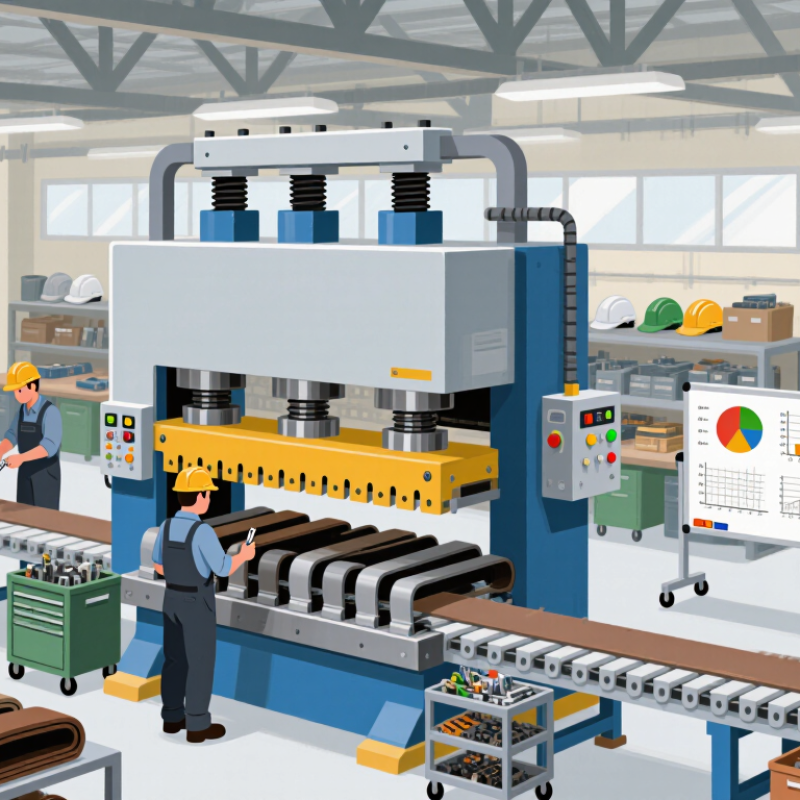
A conveyor belt beam cutting press factory designs and assembles presses that cut belt materials with shaped dies. It is not a factory that makes conveyor belts. The press typically combines a rigid frame, moving beam, cutting bed, hydraulic or mechanical drive, and safety controls. The beam applies pressure across the die, helping produce repeatable cuts from rubber, fabric, or layered stock. That distinction matters. Factory capabilities vary: some build standard machines, while others adapt bed size, cutting force, or controls to a buyer’s material and production needs.

When assessing a factory, ask how it verifies cutting force, alignment, guarding, and repeatability. Request a trial using material close to your own belt stock; a clean sample cut can reveal issues that a brochure will not. Grand View Research’s Conveyor Belt Market report estimated the global market at USD 6.9 billion in 2023 and projected a 4.7% compound annual growth rate from 2024 to 2030. This is market context, not a measure of press sales. One weakness in many comparisons is treating general market growth as proof of machine suitability. It isn’t. Check maintenance access and spare-part availability, too. Details count.

How Does a Conveyor Belt Beam Cutting Press Work?

A conveyor-belt beam cutting press feeds sheet material beneath a moving cutting head. The operator positions leather, foam, rubber, or textiles on the belt, then places a shaped steel-rule die over the target area. The head descends and applies pressure, forcing the die through the material onto a cutting board. After the stroke, the head rises and the belt advances the sheet to the next position. Sensors and controls coordinate feeding, positioning, and cutting. A small detail. Accurate alignment matters: even slight belt drift can leave parts uneven or waste usable material.

Automation is growing across manufacturing, but that does not make every press equally productive. The International Federation of Robotics’ World Robotics 2024 report recorded 4,281,585 industrial robots operating worldwide at the end of 2023, a 10% increase from 2022. The report also counted 541,302 new installations in 2023. These figures describe industrial robotics overall, not conveyor presses specifically; they indicate the wider shift toward automated production. For a press line, the practical gains depend on matching belt speed, cutting force, die size, and material thickness. Faster cycles may help, but poor setup can increase scrap or strain the equipment. Operators still need to inspect cuts, clear offcuts safely, and adjust settings when materials vary. One overlooked wrinkle is that softer stock may shift under the die, even when the belt appears correctly aligned.

Which Components and Capabilities Define These Factories?

A capable conveyor-belt beam cutting press factory builds more than a strong frame. Inspect the cutting beam, platen, conveyor belt, drive system, and control cabinet as one production line. The frame should resist deflection under repeated loads. The belt needs stable indexing, while sensors must detect misfeeds and stop unsafe motion. Small details matter. Ask how the factory verifies cutting force, feed accuracy, and performance across your actual material thicknesses.

Automation is increasingly relevant, but robot figures do not prove a press is precise. The International Federation of Robotics’ World Robotics 2024 report records 541,302 industrial robot installations worldwide in 2023. That is useful context for factory automation, not a benchmark for cutting-press output. Ask whether a supplier can document cycle time, tool-change procedures, guarding, and maintenance intervals. Request a demonstration using your material; watch the belt track and the cut edge, not only the machine’s display. Frankly, published specifications can hide setup limits. A reliable factory should explain those limits, provide inspection records, and show how operators access wear parts without disturbing alignment.

Why Choose Conveyor Belt Beam Cutting Press Factories?

Which components and capabilities define these factories?

The chart groups nine commonly used machine components by function. Counts are the number of examples listed for each system, not market statistics; machine configurations vary. Key capabilities include cutting, material handling, power and control, and operator safety.

Why Choose a Specialized Factory for Beam Cutting Presses?

A specialized factory understands that conveyor belt beam cutting is not just a matter of applying force. Belt thickness, surface texture, and reinforcement can affect how a press cuts and how the material feeds. Engineers who work with these machines can help match cutting force, stroke, and bed dimensions to the intended production task.

Look closely at the testing process. A capable factory can run representative material through the press, check cut consistency, and discuss practical setup details. Ask how operators adjust the feed, change cutting dies, and clean the work area. Small details matter. A stable conveyor, accessible controls, and clear maintenance instructions can save time during daily production. Ask for measured results, not only a polished demonstration.

Specialists may also be better equipped to adapt a machine to a particular workflow, though customization can add cost and lead time. No setup is perfect on the first attempt. Material behavior varies, and a sample cut may not reflect every production shift. A useful supplier will discuss those limits openly and help define a realistic test plan before the equipment is specified. That conversation is often more valuable than a long list of features.

How to Evaluate and Select a Conveyor Belt Beam Cutting Press Factory?

Why Choose Conveyor Belt Beam Cutting Press Factories?

Evaluate a factory by measured performance, not polished brochures. The International Federation of Robotics’ World Robotics 2024 report counted 4.28 million industrial robots operating worldwide in 2023. That figure reflects broader factory automation, but it does not prove a press supplier can meet your production needs. Ask how the factory controls beam travel, cutting pressure, and repeatability. Request recorded test results, machine specifications, and maintenance schedules. Ask for proof. Check whether operators can access emergency stops and guarded areas during normal work.

Test your own material. Bring belt samples with your actual thickness and reinforcement, then observe several cuts. Measure edge quality, dimensional consistency, and cycle time; record the settings so results can be repeated. Ask whether the factory uses calibrated measuring equipment and can provide a documented acceptance test. Check spare-part availability, technician response times, and training details in writing. A sales demonstration may use unusually easy material. That matters. Factory visits take time, and I might still miss a small issue, so speak with a current customer if possible. Compare written test evidence and support terms before choosing a conveyor belt beam cutting press factory.

Why Choose Conveyor Belt Beam Cutting Press Factories? - How to Evaluate and Select a Conveyor Belt Beam Cutting Press Factory?
Evaluation Dimension Why It Matters What to Verify Practical Evaluation Method Suggested Weight
Application and material fit Cutting results depend on the belt material, thickness, hardness, reinforcement, and die design. Confirm the factory can assess the actual belt samples, cutting dies, required shapes, and production conditions. Send representative samples and request a trial cut using the proposed setup. Inspect edge quality, dimensions, and material deformation. 15%
Working area and machine capacity The cutting area, available pressure, and machine configuration must suit the largest die and the materials being processed. Check the usable cutting area, maximum cutting force, stroke, daylight, feed arrangement, and any stated material-thickness limits against your requirements. Compare the technical specification with your largest die and thickest intended material. Ask the factory to explain any operating limits in writing. 12%
Conveyor and feeding system Consistent material positioning and smooth feeding affect cutting accuracy, handling effort, and production flow. Review belt width, feed direction, speed control, indexing method, positioning accuracy, and compatibility with the planned line layout. Observe a feed-and-cut cycle with your material. Check whether the belt tracks consistently and whether operators can make adjustments safely. 12%
Cutting quality and repeatability Repeatable cuts help control scrap and reduce downstream fitting or assembly problems. Request stated tolerances and the conditions under which they apply, including material, die, setup, and measurement method. Run multiple consecutive cuts and measure key dimensions with suitable calibrated instruments. Record variation and inspect cut edges. 12%
Safety and regulatory compliance Beam presses and conveyors have moving and high-force components that require suitable risk controls. Review guarding, emergency stops, two-hand controls or other applicable safeguards, electrical documentation, and compliance requirements for the installation location. Request a risk-assessment summary and safety documentation. Verify the delivered configuration against applicable local regulations before operation. 12%
Build quality and maintainability Accessible components and clear maintenance procedures can reduce downtime over the machine’s service life. Inspect the frame, beam guidance, hydraulic or mechanical components, electrical enclosure, lubrication points, and access to wear parts. Review the machine in operation and request maintenance schedules, parts lists, and recommended inspection intervals. 10%
Factory engineering and quality control A capable manufacturer should be able to document design choices, inspection steps, and machine-specific testing. Ask how design changes are controlled, which components are inspected, and how assembly and final testing are recorded. Review sample inspection records, drawings, test procedures, and factory acceptance criteria for the proposed machine. 8%
Installation, training, and technical support Correct installation and operator training support safe startup and reliable use. Confirm installation scope, training format, manuals, language availability, response process, and remote or on-site service options. Request a written service plan identifying responsibilities, expected response arrangements, and the information needed for troubleshooting. 8%
Delivery, warranty, and total cost Purchase price alone does not show the full cost of installation, tooling, operation, maintenance, and downtime. Compare scope of supply, delivery terms, warranty coverage and exclusions, spare-parts costs, utilities, and any commissioning charges. Use a like-for-like quotation checklist and request written confirmation of delivery milestones, warranty terms, and included accessories. 6%
Suggested selection approach: Score each factory against the same requirements, validate performance with your own material where possible, and treat safety, application fit, and documented specifications as essential checks rather than price-only comparisons. 100%