How to Choose the Best Small Water Pump for Your Needs?
Choosing the right small water pump can be overwhelming. With many options, it's important to make an informed choice. Industry expert John Smith, a hydraulic engineer with over 15 years of experience, notes, "Selecting the right pump is crucial to ensuring efficiency and longevity."
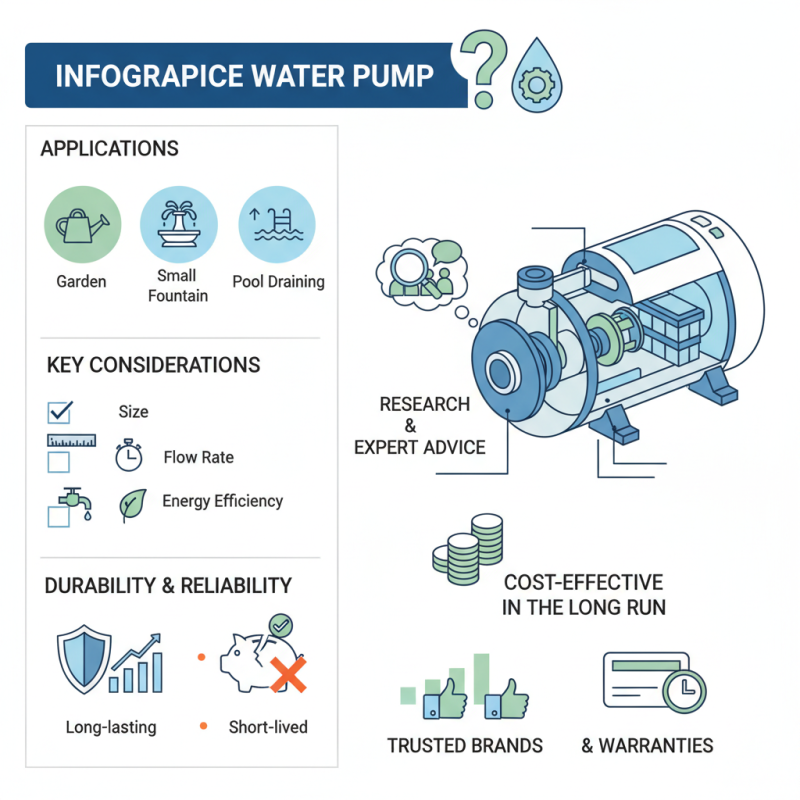
When considering a small water pump, think about your specific needs. Are you using it for a garden, a small fountain, or draining a pool? Each application requires different specifications. Size, flow rate, and energy efficiency should all be on your checklist. It’s also vital to consider the pump's durability. Some can last for years, while others may falter within months.
Remember that not all pumps are created equal. You might find cheaper options that seem appealing but may lack reliability. Doing your research can save you time and money in the long run. Trustworthy brands often have better reviews and longer warranties. Speak to experts and read user feedback before making a decision. The right small water pump will meet your needs without breaking the bank.
Understanding Your Water Pump Requirements
Choosing the right small water pump requires understanding your specific needs. Start by evaluating what tasks you will use the pump for. Are you draining a small pond, or maybe watering a garden? Knowing the purpose is essential. Different pumps serve various functions, and one size does not fit all.
Next, consider the water flow rate. This measurement is crucial because it indicates how much water the pump can move per minute. If you need to clear water quickly, aim for a higher flow rate. Also, think about the total head, which is the height the pump needs to lift water. Some pumps excel at shallow tasks, while others can handle greater lifts.
Don’t overlook portability. If you need to move the pump often, lightweight options are better. Check the pump's power source as well. Electric pumps are convenient for stable setups, but battery-operated ones offer flexibility. Lastly, research user reviews for insights on reliability. Understanding these aspects will guide you to a pump that meets your needs, avoiding the frustration of a poor choice.
Types of Small Water Pumps Available on the Market
When selecting a small water pump, understanding the types available is crucial. Generally, three main types dominate the market: submersible, centrifugal, and diaphragm pumps. Submersible pumps function underwater, providing efficient drainage for wells or flooded areas. According to a recent market analysis, submersible pumps hold a significant market share due to their versatility and energy efficiency.
Centrifugal pumps are another popular choice, utilizing rotational energy to move water. They are ideal for high flow rates and continuous supply in garden irrigation or swimming pools. Industry reports indicate that centrifugal pumps are favored in residential applications, thanks to their simple design and ease of maintenance.
Diaphragm pumps operate differently, using a flexible diaphragm to move fluids. These pumps are effective for transferring water with particulates or chemicals. They are often used in aquaculture or industrial applications. In fact, experts highlight their durability and reliability, making them suitable for tough environments.
Tips: Always consider pump capacity matched to your specific needs. Assess the total head and flow rate required for your application. It’s essential to investigate energy efficiency ratings to avoid higher operational costs. Reflect on the pump’s noise level; some users underestimate its impact on neighborhood harmony. Choosing the right pump may seem straightforward, but minor miscalculations can lead to future challenges.
How to Choose the Best Small Water Pump for Your Needs?
Key Features to Consider When Selecting a Water Pump
When selecting a small water pump, several key features should be prioritized. Flow rate is essential. It indicates how quickly the pump moves water. Industry reports suggest that the ideal flow rate depends on your specific needs. For instance, gardening may require 500 to 1,000 gallons per hour. In contrast, small-scale irrigation systems could demand higher rates.
Consider the pump's power source. Electric pumps are often more efficient for residential use, while gasoline-powered pumps provide portability. According to the U.S. Energy Information Administration, electric pumps can save consumers up to 30% on energy costs, benefiting long-term operations. Weight and portability also matter. A heavier pump may imply robust construction, but it limits ease of transport.
Durability is another critical factor. Look for materials that resist corrosion, especially if the pump handles dirty water. Pumps made from stainless steel or thermoplastic are often favored. Yet, pay attention to the warranty offered; it can indicate the manufacturer's confidence in their product. Reflect on potential maintenance challenges as well. Easy-to-replace parts might save you time and hassle in the long run.
Assessing the Power and Flow Rate Needed for Your Application
When choosing a small water pump, understanding power and flow rate is crucial. The flow rate, measured in gallons per minute (GPM), directly affects how quickly water can be moved. Many reports indicate that a pump with a flow rate of around 10-20 GPM is suitable for most household tasks. This range is efficient for gardening, draining pools, or providing water for irrigation systems.
Power requirements vary depending on the application. Typically, pumps range from 1/4 to 2 horsepower. For instance, a 1/2 HP pump usually delivers satisfactory performance for situations like backyard water features. However, underestimating power can cause inefficiency and frequent breakdowns. Industry experts suggest calculating the total dynamic head, which is the total energy required to move water vertically. This measure helps select the right power level.
In certain scenarios, even a small difference in specifications can impact performance. If the pump is too weak, it may struggle to meet water demands. If it's too powerful, energy costs can skyrocket. Currently, about 30% of users do not accurately assess their needs. This can lead to dissatisfaction with pump performance. Proper analysis is essential to ensure the pump meets your unique requirements without overspending on unnecessary power.
How to Choose the Best Small Water Pump for Your Needs?
| Pump Type | Power (Watts) | Flow Rate (GPH) | Max Head (Feet) | Application |
| Submersible Pump | 250 | 800 | 20 | Draining and Irrigation |
| Diaphragm Pump | 300 | 500 | 15 | Chemical Transfer |
| Centrifugal Pump | 400 | 1000 | 25 | Water Supply |
| Inline Pump | 350 | 750 | 18 | Aquarium and Pond |
| Fountain Pump | 200 | 600 | 12 | Decorative Fountains |
Maintenance Tips for Optimal Performance of Your Water Pump
Regular maintenance is crucial for the longevity of your small water pump. According to the National Pumping Association, pumps can lose up to 30% efficiency without proper upkeep. Cleaning filters and removing debris significantly enhances performance. Check for leaks or wear in hoses regularly. A simple weekly inspection can prevent larger issues down the road.
Lubrication matters too. The American Society of Mechanical Engineers highlights that well-lubricated parts can last 50% longer. Use the recommended grease and avoid over-lubrication, which can attract dust and dirt. Always refer to the manufacturer’s guidelines for the right intervals. Remember, attention to these details ensures reliable operation.
Monitoring pump vibrations is essential. Excessive vibrations often indicate problems. In fact, studies show that 70% of pump failures stem from misalignment or wear. If you notice unusual noises, troubleshooting should be immediate. Neglecting these signs can lead to costly repairs. Regular checks help maintain efficiency and identify issues early, which is key to optimal performance.