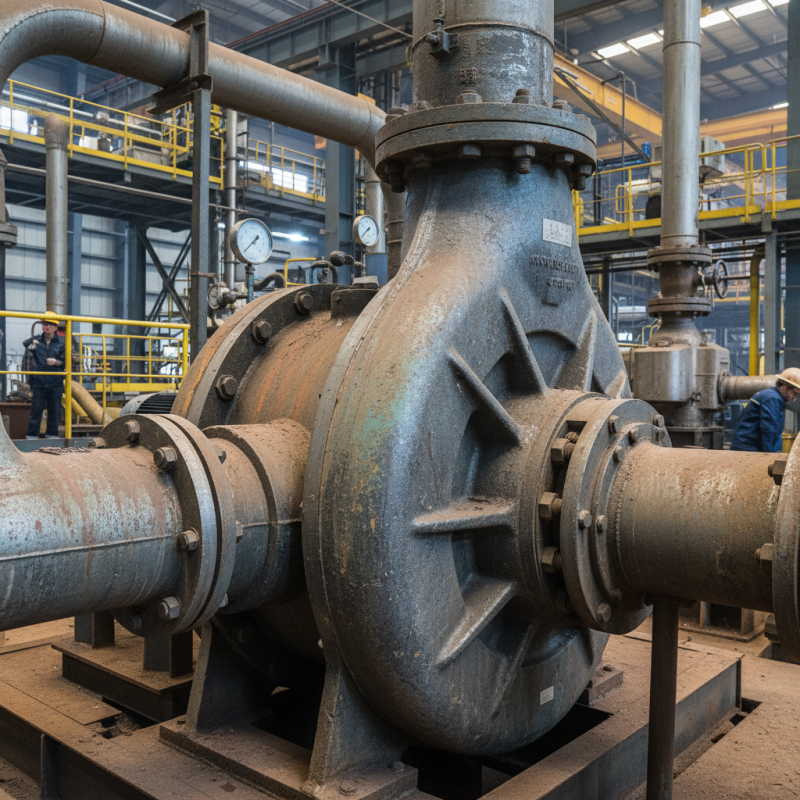
How to Choose the Best Heavy Duty Slurry Pump for Your Needs?
Choosing the best heavy duty slurry pump can be challenging. The right pump makes a big difference in efficiency and durability. Different applications require different features. Therefore, understanding your specific needs is crucial.
When selecting a heavy duty slurry pump, consider the materials you'll be pumping. Some slurries are abrasive and can cause wear. Others might be corrosive, requiring specific materials for the pump. It's important to know these details upfront.
Inadequate research can lead to costly mistakes. A pump that isn't suited for your application could fail prematurely. Reflect on the long-term implications. Investing time in understanding your requirements pays off, ensuring reliable performance for years.
Identifying Your Slurry Pump Requirements and Application
Choosing the right heavy-duty slurry pump begins with understanding your specific requirements and application. Slurry pumps are critical in industries like mining, construction, and wastewater management. The first step is to assess the type of slurry. Is it more liquid or solid? The consistency significantly influences the pump's design and efficiency. According to a report by Research and Markets, handling slurries with a solid concentration exceeding 30% may require specialized pumps.
Next, consider the flow rate and the head requirements. Heavy-duty slurry pumps function well within specific ranges. For instance, if you need to transport slurry over long distances, opt for pumps that can maintain high pressure without loss of efficiency. Be wary of pumps that promise too much. Many struggle with wear and tear over time, especially with abrasive materials. A study from the American Society of Mechanical Engineers (ASME) indicates that improper sizing can lead to 30% reduced efficiency.
It's also essential to evaluate the hydraulic design. A well-designed impeller can make a significant difference. Some pumps have open impellers, while others use closed designs. Open impellers handle larger solids but may have lower efficiency. Closed designs improve efficiency but struggle with bigger particles. Reflect on your particular needs. Each choice comes with trade-offs that could impact your operations. Thus, detailed analysis of your requirements is crucial to avoid costly mistakes.
Understanding the Key Features of Heavy Duty Slurry Pumps
When selecting a heavy-duty slurry pump, understanding its key features is crucial. Slurry pumps are designed to handle abrasive and corrosive materials. According to industry data, over 75% of slurry pumps fail due to inadequate material selection. It’s essential to consider the pump's construction material. Common choices include cast iron, stainless steel, and high-chrome alloys.
Another important factor is the pump's capacity. It's vital to choose a pump that meets or exceeds your operational needs. Many reports indicate that pumps should ideally have a flow rate of at least 1,000 GPM for effective performance in heavy-duty conditions. However, not every application requires such high capacity. Assess your specific use case carefully.
Also, pay attention to the wear parts of the pump. These components endure significant stress, leading to wear over time. Some research shows that proactive maintenance can extend the lifespan of these parts by up to 50%. Frequent inspections and timely replacements are necessary for optimal functioning. A well-chosen slurry pump saves money in the long run, but the selection process can be daunting. Be aware of your requirements and the environmental impact. Balancing performance with sustainability might require deeper reflection.
Evaluating Pump Materials and Durability for Harsh Environments
When selecting a heavy-duty slurry pump, the choice of materials is crucial. The pump must withstand harsh environments. Corrosion-resistant materials are often essential. Stainless steel and high chromium alloys are popular choices. They offer durability against abrasive particles. However, not all materials are suitable for every application. It’s essential to assess the specific conditions of your site.
Additionally, consider the pump's design. Some pumps have reinforced casings. They provide extra protection in extreme situations. Look for features that minimize wear and tear. This can prolong the life of the equipment. However, even the best materials cannot eliminate failures completely. Regular maintenance is essential to address wear issues. Neglecting this can lead to costly breakdowns.
Finally, evaluate the pump's performance under real conditions. Test it in environments similar to your worksite. Theoretical specifications are helpful but can be misleading. Real-world performance can differ significantly. Don't overlook the importance of feedback from users. Their experiences can reveal weaknesses not seen in product brochures.
Comparing Pump Capacities and Performance Ratings
When selecting a heavy-duty slurry pump, understanding pump capacities is crucial. Different pumps handle varying volumes of slurry. Assess your project's needs closely. Will you be moving thick sludge or light slurry? Each type requires a specific pump capacity for optimal performance.
Performance ratings vary significantly. They indicate how well a pump operates under pressure and flow. A pump with high capacity may not work well if its performance rating is low. It's essential to look at pressure ratings alongside flow rates. Sometimes, a medium-capacity pump with excellent performance can outperform a larger pump with mediocre ratings.
Take note of the materials used in the pump design. They affect durability and efficiency. If you're dealing with corrosive materials, specific pumps will handle that better. Inconsistencies in these factors might lead to pump failure. It’s worth securing the right one to avoid costly mistakes.
Considering Maintenance Needs and Long-term Costs
When selecting a heavy-duty slurry pump, maintenance needs and long-term costs are vital considerations. Regular maintenance is crucial for sustained performance. Think about how often you will need to service the pump. Some models may demand frequent attention. This can lead to unexpected downtime. Having a clear maintenance plan can mitigate these issues. Evaluate whether you have the resources to perform this upkeep.
Long-term costs go beyond the initial purchase price. Consider repair costs, replacement parts, and power consumption. A cheap pump may cost more in repairs later. It’s essential to strike a balance between price and durability. Sometimes, investing more upfront can save money over time.
Assess your specific needs and usage scenarios. A pump that’s too small may lead to inefficiencies. Conversely, an oversized pump can waste energy and money. Make sure to analyze these elements carefully.