China Top 10 Mount Motor Manufacturers for Global Buyers
Choosing a reliable Mount Motor supplier is not just a price comparison. Buyers need to match motor type, mounting arrangement, operating conditions, and service support to the equipment on site. A unit bolted beneath a conveyor, for example, faces different vibration, dust, and access demands than one installed inside a pump assembly. Small details matter.
The International Energy Agency’s 2011 report, Energy-Efficiency Policy Opportunities for Electric Motor-Driven Systems, estimated that these systems consume 43–46% of global electricity. The figure is broad and not China-specific, but it shows why efficiency ratings, correct sizing, and realistic duty-cycle data deserve careful review. A low purchase price can look attractive. It may not tell the whole story.
This guide introduces ten Chinese manufacturers for global buyers, with attention to product range, manufacturing capability, export experience, customization, and documentation. These are practical comparison points, not a substitute for factory audits or sample testing. Buyers should verify current certifications, test records, lead times, and mounting dimensions directly with each supplier. Claims can change. That deserves a second look. The shortlist is intended as a starting point, since public information may not reveal every difference in quality control or after-sales response.
What Mount Motors Are and How They Serve Industrial Applications
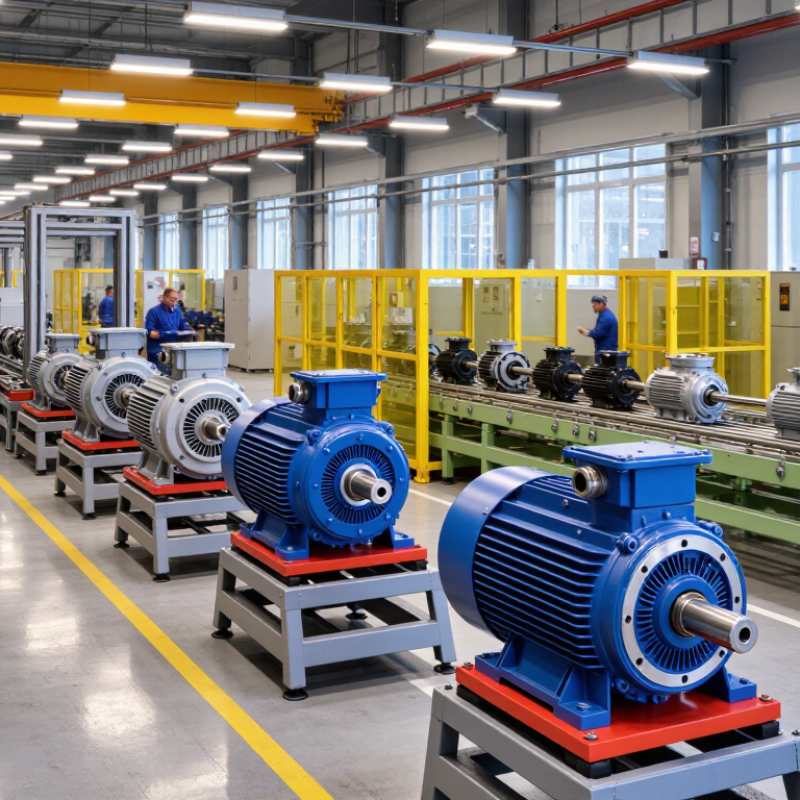
A mount motor is an electric motor supplied with a mounting arrangement that lets it connect to a machine or support structure. Depending on the design, it may attach by a base, face, or flange. The terminology is not perfectly consistent across suppliers, so buyers should check drawings rather than rely on a label alone. Small details matter. A mounting pattern must match the equipment, while shaft dimensions and rotation direction must suit the driven load.
In factories, mounted motors power conveyors, pumps, fans, mixers, and packaging equipment. A conveyor motor, for example, must deliver suitable torque at the required speed and remain aligned under changing loads. For a pump, installation position and exposure to moisture or dust can affect service life. Engineers also consider duty cycle, available voltage, cooling, and access for maintenance. A motor that fits physically may still be a poor choice if it overheats or transfers excessive vibration. Site conditions are easy to underestimate. Reviewing operating data and mounting clearances before ordering helps reduce avoidable installation changes.
China’s Mount Motor Industry: Manufacturing Strengths and Export Reach
China’s motor-mount industry combines metalworking, elastomer processing, and assembly under one manufacturing base. Suppliers may produce stamped brackets, cast housings, bonded rubber-metal parts, and custom mounting assemblies. This range helps buyers match designs to different loads, vibration levels, and installation spaces.
Production scale is only part of the story. A reliable supplier should explain its material controls, dimensional checks, and validation methods. Ask how samples are tested for load, vibration, temperature, and fatigue, and request records tied to the product specification. Small details matter: a hole offset by a few millimeters can complicate installation. That matters.
Export experience also shapes how orders move. Many manufacturers can prepare export packaging, technical drawings, and shipment documents, but lead times and communication quality still vary. Confirm tooling ownership, sample approval steps, and change-control procedures before placing a large order. Capacity alone is not proof of fit. Factory audits and test reports offer useful evidence, though they cannot replace clear engineering requirements. I have seen buyers focus heavily on unit price; that can leave service life and replacement costs underexamined. A careful comparison should include both.
How Global Buyers Can Evaluate Mount Motor Manufacturers
When evaluating mount motor manufacturers in China, look beyond catalog photos and quoted prices. A reliable supplier should explain its design choices, production controls, and testing methods in clear terms. Ask for drawings that show mounting dimensions, shaft details, and permitted tolerances. Compare them with your equipment before requesting a sample. Small mismatches can cause costly delays.
Request test records for vibration, temperature rise, noise, and operation under the load your application requires. Check whether sample results can be linked to production batches. A neat catalog is not proof. Ask how incoming materials are inspected, how defects are recorded, and who handles corrective actions. If answers stay vague, pause.
Communication matters too. Send the same technical questions to each candidate and note how directly they respond. Ask about lead times, order quantities, packaging, spare parts, and warranty terms in writing. A factory visit or live video walkthrough may help you verify equipment and workflow, though neither replaces independent checks. I would also order a small pilot batch before scaling up. This takes time. It may still reveal assembly variation, unclear instructions, or packaging that fails during transit. Judge suppliers by evidence, consistent follow-through, and their willingness to discuss limitations—not by confident promises alone.
Profiles of 10 Chinese Mount Motor Manufacturers
Profiles of 10 Chinese Mount Motor Manufacturers
A useful profile of each manufacturer should show more than a product photo. Compare motor type, mounting dimensions, rated output, speed range, and available materials. Some suppliers focus on compact assemblies for limited spaces. Others offer heavier housings, custom shaft layouts, or machining for specific equipment. These differences matter when a motor must fit an existing frame without costly redesign.
Production details help buyers judge consistency. Look for information about incoming material checks, dimensional inspection, load testing, and order traceability. Ask whether drawings can be reviewed before production and whether sample units are available. A polished profile alone is not proof of performance; specifications and test records should support its claims. Supplier descriptions can also leave gaps, so confirm unclear details directly.
Tips: Send a dimensioned drawing and operating conditions. Ask for tolerances, test criteria, lead time, and packaging details in writing. Compare like with like. A low quoted price may omit useful service or inspection steps.
Comparing Products, Certifications, Customization, and Overseas Support
Mount motor suppliers should be compared by operating fit, not headline power alone. Check torque, speed, duty cycle, voltage, and mounting dimensions against your equipment. A motor that fits the bracket may still run hot under continuous load. Ask for test data covering temperature rise, noise, and expected service conditions. Fit matters.
Certifications deserve careful checking. Confirm that documents match the exact motor model and intended market; a general certificate may not cover every configuration. For customization, clarify shaft size, gear ratio, connector type, insulation, sample approval, and production lead time. Keep the approved drawing on file. Small revisions can create real assembly problems. Overseas support also matters: ask about response times, spare-part availability, troubleshooting, and clear technical documents. A polished catalog is useful, but it cannot replace specific answers.
Tips: Send suppliers your load, speed, voltage, installation space, and operating schedule before requesting a quote. Compare written specifications and support commitments side by side. If a requirement remains unclear, pause and verify it; I would not assume a similar-looking model performs the same way.