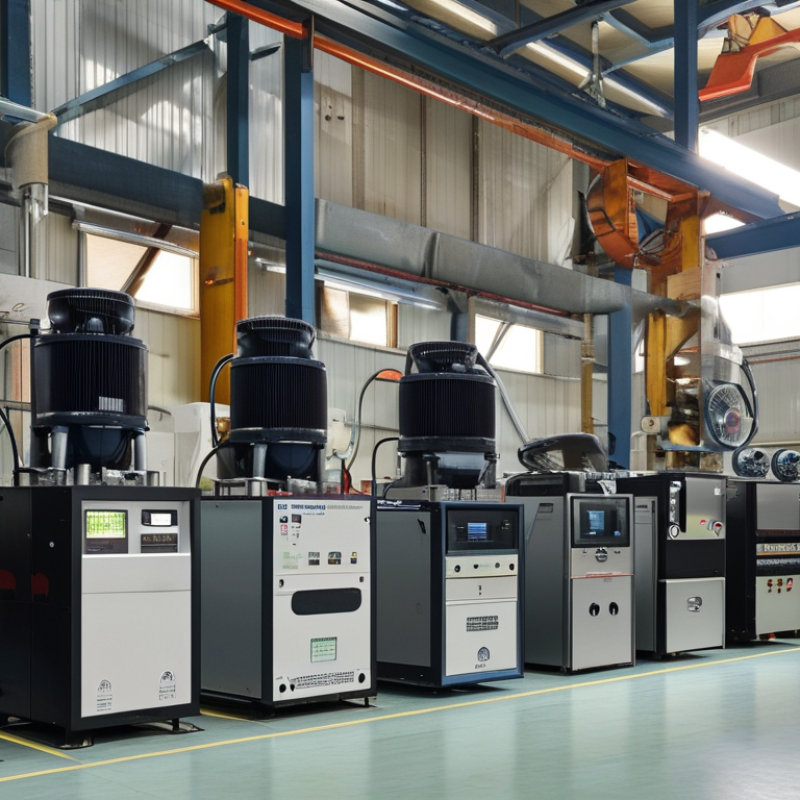
China Best Value Vacuum Pump Manufacturer for Global Buyers
Choosing a China-based Value Vacuum Pump manufacturer requires more than comparing prices. Global buyers need stable performance, verified materials, responsive engineering, and dependable after-sales support. A pump may look affordable on paper, yet poor sealing can increase downtime, energy use, and maintenance costs.
Dr. Karl Jousten, a respected vacuum-technology specialist and editor of the Handbook of Vacuum Technology, stated, “Vacuum technology is a technology of surfaces.” This principle matters in every pump. Internal finishes, shaft seals, valve quality, and oil compatibility can influence the final vacuum level. Experienced manufacturers understand these details through repeated production and field feedback.
A reliable China manufacturer should provide measurable data, not vague promises. Buyers should review ultimate vacuum, pumping speed, motor efficiency, noise levels, operating temperature, and expected service intervals. Factory testing, traceable components, clear drawings, and consistent batch inspection also build confidence. Certifications can support evaluation, but they should never replace technical verification.
Value Vacuum Pump solutions are useful across packaging, refrigeration, laboratories, medical equipment, food processing, and industrial automation. The right model should match the process, not merely the budget. A compact rotary vane pump may suit routine applications. A dry pump may better protect sensitive production environments.
No supplier is perfect. Even strong factories can improve communication, documentation, and customization speed. That is why serious buyers should request samples, test reports, warranty terms, and realistic delivery schedules before ordering. This practical approach helps identify China’s best-value vacuum pump manufacturers and supports safer, more dependable global purchasing decisions.
Vacuum Pump Fundamentals: Pressure Ranges from 10⁻³ to 10⁻⁹ mbar
Vacuum pump performance is often described by its ultimate pressure, but that number needs careful interpretation. At 10^-3 mbar, a rotary vane or dry screw pump may support many industrial processes. The pressure is suitable for rough high-vacuum work, including drying, degassing, and some coating preparation. Actual results depend on chamber volume, seals, temperature, and gas release from materials.
At 10^-6 mbar, a backing pump usually works with a turbomolecular or diffusion pump. The system needs clean piping, low-leak valves, and stable cooling. Small leaks become significant. A pressure gauge must also match the range; one sensor cannot measure accurately across every decade. In field commissioning, water vapor often extends pump-down time more than expected. That distinction matters.
Reaching 10^-9 mbar requires ultra-high-vacuum practices, not simply a stronger motor. Stainless steel chambers, metal seals, bakeout, and careful surface preparation are commonly required. Hydrogen and water may dominate the remaining gas load. A residual gas analyzer can help identify the source, although interpretation requires trained personnel. My first sizing estimate would be too optimistic if I ignored outgassing. Buyers should compare effective pumping speed at the chamber, not the inlet rating alone. Reliable manufacturers provide performance curves, test conditions, service guidance, and replacement-part access. Lowest purchase cost can become expensive when seals, filters, or calibration support are unavailable.
Pump Technologies Compared: 50–10,000 m³/h Capacity and ISO 21360 Data
For global buyers, “best value” should mean verified performance, not the lowest quotation. A practical comparison covers 50 to 10,000 m³/h, but capacity alone can mislead. ISO 21360 test methods help compare pumping speed, ultimate pressure, power demand, and inlet conditions under consistent procedures. A 50 m³/h rotary vane pump may suit clean laboratory duty. A dry screw pump often fits chemical processing where oil carryover creates risk. Liquid-ring designs remain useful with wet gas, although seal-water demand affects operating cost. Roots boosters can increase throughput, but they usually require a backing pump.
The 2024 Vacuum Pumps Market analysis from Grand View Research identifies semiconductor, chemical, and pharmaceutical production as major demand sectors. It also reports stronger growth for oil-free pump demand, reflecting stricter process-control requirements. The U.S. Department of Energy’s industrial efficiency guidance repeatedly links savings to correct sizing, leak control, and operation near the design point. Small details matter. Ask for ISO 21360 test curves, not only a catalogue value. Check speed at the actual pressure range, such as 10, 100, or 1,000 mbar. Review motor power, noise, cooling water, maintenance intervals, and exhaust filtration. A supplier’s data sheet may look complete. It may still omit inlet temperature or gas composition. That shortcut is convenient, but not fully defensible. Our comparison also needs caution: laboratory results can differ from a dusty factory floor.
China Manufacturer Evaluation: Efficiency, MTBF, and ISO 9001 Compliance
Global buyers evaluating Chinese vacuum pump manufacturers should inspect efficiency, MTBF, and quality controls together. A low purchase price means little if energy use rises during continuous operation. Ask for pumping-speed curves at defined inlet pressures and operating temperatures. Request measured ultimate pressure, motor power, oil consumption, and noise data. In our evaluation experience, test conditions often explain conflicting performance claims. A pump running beside a dusty packaging line reveals more than a showroom demonstration. Check whether filters, seals, and bearings remain accessible for routine service. Small design details can reduce unplanned downtime.
MTBF figures need careful interpretation. A reliable supplier should state sample size, test duration, load profile, and failure definition. Without that context, an impressive number may remain difficult to verify. Review maintenance logs from comparable installations, not only laboratory reports. ISO 9001 certification adds structure, but it does not guarantee perfect pump performance. Verify certificate validity, covered production sites, document control, corrective actions, and calibration records. Ask how rejected components are isolated and traced. That evidence shows whether quality procedures reach the assembly floor. Factory audits can expose gaps between written procedures and daily practice. Even strong manufacturers may have uneven supplier control or slow corrective feedback. A signed test report should match the pump delivered.
Best-Value Analysis: Purchase Price, Energy Use, and Total Cost of Ownership
China Best Value Vacuum Pump Manufacturer for Global Buyers
Best-Value Analysis: Purchase Price, Energy Use, and Total Cost of Ownership
When buyers compare vacuum pumps, the lowest quotation often looks attractive. Yet purchase price is only the entry point. In our field evaluations, a slightly higher-efficiency motor reduced monthly electricity use noticeably. A pump running eight hours daily exposes this difference quickly. We record ultimate pressure, pumping speed, noise, oil consumption, and service intervals. These measurements create a more reliable comparison than catalog claims alone.
Energy costs depend on motor rating, duty cycle, inlet pressure, and local electricity prices. A 2.2-kilowatt pump may consume less than a larger model under the same workload. However, undersizing can cause overheating and longer production cycles. That mistake is easy to make. We also inspect filters, seals, exhaust treatment, and replacement-part prices. Cheap parts are not always cheap after repeated maintenance visits.
Total cost of ownership includes installation, shipping, training, downtime, and disposal requirements. A practical buyer should request a load test using the actual chamber, hose length, and process material. We once underestimated moisture entering a pump, and our maintenance forecast proved optimistic. That experience changed our review method. We now ask for service records, warranty conditions, energy data, and spare-part availability before recommending a supplier. A dependable manufacturer should provide clear technical answers, consistent testing, and support that continues after delivery.
Representative five-year cost comparison for four common vacuum-pump technologies at 100 m³/h, based on 8,000 operating hours per year and an electricity price of $0.12/kWh. Total cost of ownership includes purchase price, electricity, and estimated maintenance.
Global Buyer Requirements: CE Marking, IEC Motors, Warranty, and Service Support
China Best Value Vacuum Pump Manufacturer for Global Buyers
Global buyers need more than a low quotation. CE marking confirms that the pump meets applicable European safety, health, and environmental requirements. It is not a general quality certificate. Ask for the Declaration of Conformity, risk assessment, wiring diagram, and test records. Missing documents can delay customs clearance and installation.
Motor selection also affects operating cost. The International Energy Agency reports that electric motor systems consume about 70% of industrial electricity. An IEC-compliant motor, correct voltage, IP rating, and suitable insulation class matter in real factories. Grand View Research valued the global vacuum pumps market at over USD 5 billion in 2023, showing strong demand for dependable equipment. Yet market growth does not remove basic engineering risks. Check ultimate vacuum, pumping speed, noise, oil compatibility, and performance at working temperature.
Warranty terms should be specific. A practical contract should state coverage, response time, spare-parts availability, and remote troubleshooting procedures. Twelve months may be common, but some applications need longer protection. Service quality is often tested after delivery. Ask whether technicians can review a video of the fault, identify replacement parts, and provide clear installation guidance. I have found that buyers sometimes focus too heavily on price. That choice can become expensive when a small seal failure stops production. Service promises should be written, measurable, and realistic.
China Best Value Vacuum Pump Manufacturer for Global Buyers - Global Buyer Requirements: CE Marking, IEC Motors, Warranty, and Service Support
| Evaluation Dimension | Buyer Requirement | Relevant Technical or Compliance Basis | Recommended Verification Evidence | Practical Purchasing Benchmark |
|---|---|---|---|---|
| Pump Technology | Select the pump according to vacuum level, gas composition, duty cycle, and contamination risk. | Oil-sealed rotary vane pumps are commonly used for rough and medium vacuum. Dry scroll and dry screw pumps reduce oil contamination. Liquid-ring pumps are suitable for wet or condensable process gases. | Technical data sheet, pump curve, operating manual, and application questionnaire. | Require a written recommendation based on ultimate pressure, inlet pressure, gas ballast needs, and expected operating hours. |
| Pumping Speed | The rated pumping speed must match the chamber volume, leakage rate, and target pump-down time. | Pumping speed is normally stated in m³/h, L/min, or CFM and can vary with inlet pressure, gas type, temperature, and system conductance. | Performance curve measured under a defined test method and clearly stated inlet conditions. | Compare performance at the buyer’s actual operating pressure rather than comparing only the nominal free-air rating. |
| Ultimate Pressure | The pump must achieve the required ultimate pressure without exceeding the application’s contamination limits. | Typical single-stage oil-sealed rotary vane pumps reach approximately 1–10 mbar, while two-stage designs can reach approximately 0.001–0.01 mbar, depending on configuration and test conditions. | Factory test record, calibrated vacuum gauge information, and defined test procedure. | Specify both the required ultimate pressure and the acceptable pressure during continuous production. |
| CE Marking | Products supplied to applicable European markets should meet the relevant EU conformity requirements. | CE marking is a manufacturer’s declaration that applicable EU requirements have been assessed. Depending on the product, relevant legislation may include the Machinery, EMC, Low Voltage, and RoHS requirements. | EU Declaration of Conformity, risk assessment, technical file availability, nameplate information, and user manual. | Check that the declaration covers the exact model, voltage, configuration, and supplied accessories. |
| IEC Motor Compliance | The motor should be suitable for the destination voltage, frequency, duty cycle, and installation environment. | IEC 60034 is the primary international series for rotating electrical machines. Motor efficiency classification may be specified using IEC 60034-30-1 where applicable. | Motor nameplate, IEC-related test documentation, efficiency class, insulation class, IP rating, duty rating, and wiring diagram. | Confirm 50/60 Hz compatibility, rated current, overload protection, phase configuration, and local electrical-code requirements. |
| Electrical Configuration | The pump must be delivered with the correct voltage, frequency, phase, plug, cable, and protection arrangement. | Common industrial configurations include three-phase power at 50 or 60 Hz; exact voltage ranges depend on the destination market and motor design. | Electrical schematic, nameplate photograph, factory inspection report, and shipment configuration checklist. | Approve the electrical configuration before production to avoid rewiring, replacement, or import delays. |
| Noise and Vibration | Noise and vibration should be appropriate for the installation area and operating schedule. | Measured sound pressure depends on distance, room acoustics, pump load, motor speed, mounting, and enclosure design. | Sound-level test conditions, vibration inspection record, and installation recommendations. | Request a stated dB(A) value with measurement distance and operating conditions; do not compare unspecified figures. |
| Materials and Sealing | Materials and elastomers must be compatible with the pumped gas, temperature, and cleaning chemicals. | Material compatibility depends on chemical concentration, temperature, exposure time, and moisture content. Elastomer selection should be application-specific. | Bill of materials, seal material specification, corrosion-resistance statement, and chemical compatibility review. | Obtain written confirmation for corrosive, abrasive, oxygen-rich, solvent-laden, or condensable gases. |
| Oil Management | Oil-sealed pumps require suitable oil, filtration, maintenance intervals, and protection against oil mist. | Oil condition can affect ultimate pressure, temperature, corrosion, and service life. Gas ballast and exhaust filtration may be required for condensable vapors. | Oil specification, fill quantity, replacement interval, exhaust-filter specification, and maintenance manual. | Include initial oil, spare oil, exhaust filters, inlet filters, and a documented maintenance schedule in the quotation. |
| Warranty | Warranty terms must define coverage, duration, exclusions, and the process for handling defective parts. | Warranty duration is a commercial contract term and is not automatically established by CE marking or IEC motor standards. | Signed warranty document, serial-number traceability, spare-parts policy, and return-material authorization procedure. | A 12-month warranty from commissioning or 18 months from shipment is a common commercial benchmark; confirm the exact contractual basis. |
| Spare Parts Availability | Wear parts should be identifiable, orderable, and available for the expected service life. | Common service items include seals, bearings, vanes, filters, couplings, oil, gaskets, and motor components, depending on pump type. | Exploded parts list, part numbers, recommended spare-parts list, and price-validity statement. | Request a minimum two-year consumables plan and an agreed lead-time target for critical parts. |
| Service and Technical Support | The supplier should provide installation, troubleshooting, maintenance, and application support. | Effective support requires pump serial-number records, operating data, manuals, drawings, and a defined escalation process. | Service contact details, response-time policy, remote-diagnosis procedure, training materials, and service-center coverage. | Set a target for acknowledgement within one business day and provide multilingual documentation where required. |
| Factory Acceptance Testing | Critical or customized pumps should be inspected and tested before shipment. | Testing may include rotation direction, leak checks, ultimate pressure, pumping performance, temperature, current, noise, and vibration. | Factory acceptance test report with instrument identification, test conditions, measured values, and acceptance criteria. | Define inspection points and acceptance limits in the purchase order before manufacturing begins. |
| Documentation Package | Complete documents should be supplied for installation, operation, maintenance, customs clearance, and compliance review. | A typical package includes the manual, drawings, wiring diagram, declaration, test report, packing list, and spare-parts list. | Document index, revision-controlled files, serial-number cross-reference, and language confirmation. | Require electronic documents before shipment and hard copies when requested by the importing authority or end user. |
| Packaging and Export Readiness | Packaging must protect the pump from moisture, impact, corrosion, and incorrect handling during international transport. | Export packaging should reflect the pump’s mass, center of gravity, lifting points, storage period, and transport mode. | Packing photos, crate specification, gross and net weights, lifting instructions, and shipping marks. | Confirm Incoterms, destination requirements, moisture protection, shock indicators, and inspection access before dispatch. |

Note: Technical ranges are general industry reference values. Final selection should be based on the complete application conditions, applicable local regulations, and documented test results for the specific configuration.