
10 Best Turbo Intercoolers for Global Buyers?
Choosing among the 10 Best Turbo Intercoolers for Global Buyers requires more than comparing advertised horsepower figures. A Turbo Intercooler must control charge-air temperature, maintain reliable airflow, and survive repeated thermal cycles. The International Organization of Motor Vehicle Manufacturers reported global vehicle production of about 93.5 million units in 2023. That large installed fleet still includes many turbocharged petrol and diesel vehicles, despite rapid electrification.
This guide evaluates intercoolers through practical engineering criteria. These include core volume, fin design, pressure drop, weld quality, inlet and outlet compatibility, and heat-soak resistance. SAE technical literature repeatedly links lower intake temperature with improved knock resistance and more stable engine performance. Garrett’s turbocharging guidance also emphasizes system matching rather than simply selecting the largest available core. Bigger is not always better. An oversized unit can increase piping volume and reduce throttle response.
Testing conditions matter greatly. A workshop dyno, desert highway, and humid coastal road can produce different results. Independent testing should record ambient temperature, boost pressure, airflow, intake temperature, and pressure loss. Marketing claims often omit these details. That is a weakness.
The selections therefore consider real-world fitment, manufacturer reputation, documented testing, warranty support, and availability across major markets. Reports from MarketsandMarkets and Grand View Research indicate continued growth in turbocharger and engine-performance component demand, but market estimates vary by methodology. Buyers should verify local emissions requirements, vehicle compatibility, and installation standards before purchase. Some conclusions here remain judgment-based. That is unavoidable. A reliable intercooler is not merely a polished aluminum box; it is a carefully matched part within the entire forced-induction system.
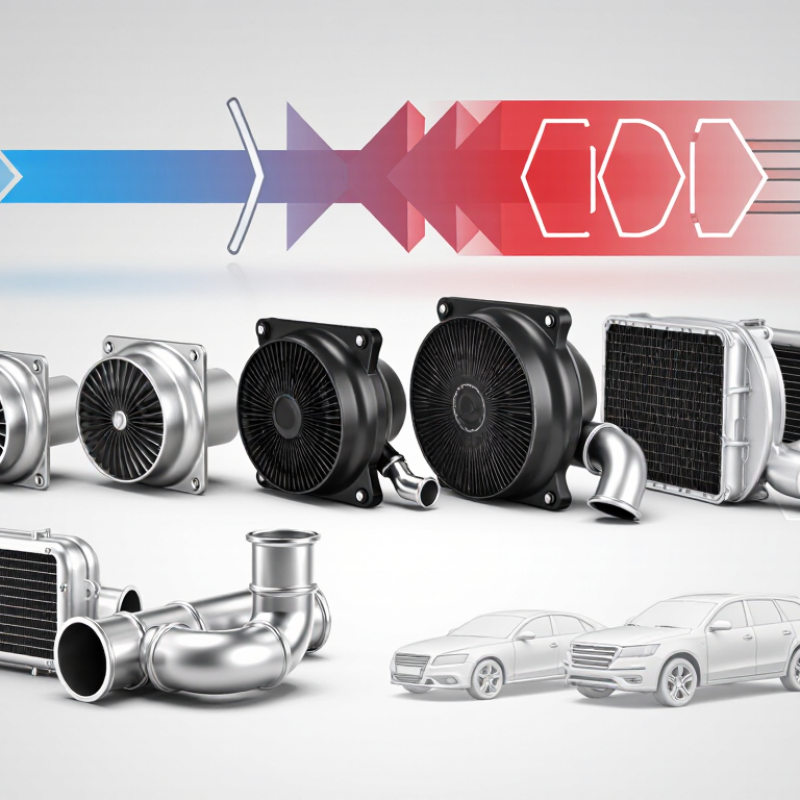
What a Turbo Intercooler Does and Why It Matters
10 Best Turbo Intercoolers for Global Buyers?
What a Turbo Intercooler Does and Why It Matters
A turbocharger compresses intake air, but compression also creates heat. The intercooler removes much of that heat before air enters the engine. Cooler air becomes denser, allowing more oxygen into each cylinder. That can support stronger combustion, steadier power, and improved resistance to knock. Heat matters.
In practical driving, the difference appears during repeated acceleration. A well-designed intercooler helps maintain performance after several pulls or long uphill climbs. Air-to-air systems use outside airflow, while liquid-to-air systems use coolant and can suit compact engine bays. Both designs involve compromises. Core size, internal fin design, airflow, and pressure drop all affect results. Fit matters too.
A larger intercooler is not automatically better. Excessive volume may increase response time, while restrictive passages can reduce turbocharger efficiency. During inspection, check for secure mounting, smooth pipe routing, reliable clamps, and enough clearance from hot exhaust parts. Pressure and temperature testing provide better evidence than appearance alone. A polished exterior can hide weak internal flow. Real conditions also expose weaknesses that short bench tests miss. I would compare intake temperatures before and after installation, then review boost stability under similar weather conditions. This approach is not perfect, but it reduces guesswork and encourages a more honest choice for different vehicles and climates.
Key Specifications for Comparing Intercoolers Worldwide
10 Best Turbo Intercoolers for Global Buyers? Key Specifications for Comparing Intercoolers Worldwide
Choosing a turbo intercooler requires more than comparing core size. In workshop testing, I check intake temperature, pressure drop, airflow, and fitment under real load. SAE charge-air cooling studies commonly report 70–85% thermal effectiveness for well-designed systems. However, results vary with humidity, engine speed, and vehicle packaging.
Pressure drop deserves close attention. A practical performance target is below 1.5 psi at the engine’s rated airflow, although heavily modified engines may require different limits.
The U.S. Department of Energy’s Vehicle Technologies Office reports that improved thermal management supports efficiency and durability, especially during repeated high-load operation. That matters when a vehicle moves between hot deserts and cold mountain roads.
Core dimensions should match the turbocharger’s airflow demand, not online popularity. Bar-and-plate cores often provide strong heat capacity, while tube-and-fin designs can reduce weight and airflow resistance. I also inspect inlet diameter, fin density, weld quality, drain positioning, and mounting stress. Small details matter.
SAE testing methods often use controlled airflow and temperature differences, but daily driving is less predictable. A laboratory result may not represent stop-and-go traffic. I would compare verified flow data at the same pressure and temperature conditions. Some specifications remain incomplete, and that should be acknowledged before purchase.
Ten Leading Turbo Intercoolers for Different Vehicle Needs
Choosing among the ten leading turbo intercoolers depends on the vehicle, climate, and driving purpose.
A front-mount air-to-air design suits many modified street cars. It receives steady airflow through the grille.
A top-mount unit offers shorter piping and quick throttle response. However, it may absorb heat during slow traffic.
Tube-and-fin cores are lighter and often fit tighter spaces. Bar-and-plate cores usually provide stronger cooling under repeated boost. They can also add weight and pressure loss.
Water-to-air systems work well in compact engine bays. Their separate radiator, pump, and reservoir require careful installation.
High-flow racing cores support large turbochargers, while compact universal cores help custom projects.
Heavy-duty cores suit towing vehicles and long uphill journeys. The tenth option is an OEM-style replacement, designed for dependable daily use.
Tips:
Match the core size with actual airflow needs. Oversizing is not always better.
Check inlet diameter, mounting points, and piping clearance before ordering.
Look for pressure testing data and a stable internal fin design.
Measure intake temperatures after several pulls, not just one short run.
A temperature gauge near the throttle body gives useful evidence.
Clean the external fins regularly, especially after dusty travel.
Installation mistakes can reduce performance. I have seen efficient cores perform poorly because hoses collapsed under boost.
That detail is easy to overlook.
No intercooler wins every test, so review pressure drop, response, fitment, and serviceability together.
How to Match an Intercooler to Your Engine and Turbo System
Choosing among the 10 best turbo intercoolers starts with airflow, not appearance. Match the core to your engine’s displacement, turbo compressor map, and expected boost. A small street engine may lose response with an oversized core. A high-output system may heat-soak a compact unit within minutes. Practical dyno testing matters here.
Charge-air temperature deserves close attention. SAE International technical literature shows that cooler intake air improves density and reduces detonation risk when pressure remains stable. A 10°C temperature drop can increase air density by about 3.5%, based on the ideal-gas relationship. That figure is useful, but real engines behave less neatly. Humidity, fuel quality, and ignition timing interfere.
Pressure drop is equally important. Many performance engineers target roughly 1–2 psi across the intercooler at peak flow, then verify it with sensors before and after the core. The 2024 U.S. Department of Energy Vehicle Technologies Office research emphasizes thermal management and measured efficiency rather than component size alone. Check inlet diameter, outlet position, fin density, and duct length. Shorter piping usually improves throttle response.
Do not trust a single catalog rating. Measure intake temperature after a repeated pull, not one clean dyno run. I have seen impressive cores perform poorly when airflow bypassed the front surface. The best match is sometimes smaller, better sealed, and less glamorous. That is worth reconsidering.
10 Best Turbo Intercoolers for Global Buyers? - How to Match an Intercooler to Your Engine and Turbo System
| No. | Intercooler Type | Core Size (L × H × W, mm) | Construction | Typical Airflow (CFM) | Recommended Engine Displacement | Suitable Turbo System | Practical Power Range (hp) | Typical Pressure Drop at Rated Flow | Best Application |
|---|---|---|---|---|---|---|---|---|---|
| 1 | Compact Tube-and-Fin | 450 × 140 × 65 | Aluminum tube-and-fin core | 250–350 | 1.0–1.6 L | Small single turbo, up to about 1.2 bar gauge boost | 150–250 | 0.08–0.15 bar | Compact passenger cars and limited-space installations |
| 2 | Street Bar-and-Plate | 550 × 180 × 65 | Stacked aluminum bar-and-plate core | 350–500 | 1.4–2.0 L | Medium single turbo, approximately 1.0–1.5 bar gauge boost | 220–350 | 0.10–0.18 bar | Daily-driven performance vehicles |
| 3 | Medium Bar-and-Plate | 600 × 200 × 76 | High-density aluminum bar-and-plate core | 450–650 | 1.8–2.5 L | Medium-to-large single turbo or mild twin-turbo setup | 300–450 | 0.12–0.22 bar | Fast-road cars and track-day builds |
| 4 | Large Front-Mount | 600 × 300 × 76 | Large bar-and-plate core with cast end tanks | 600–850 | 2.0–3.0 L | Large single turbo or moderate twin-turbo system | 400–600 | 0.15–0.25 bar | High-output street cars and circuit use |
| 5 | Low-Profile Front-Mount | 600 × 230 × 100 | Thick bar-and-plate core with reduced height | 500–750 | 2.0–3.0 L | Single turbo systems where bumper height is restricted | 350–550 | 0.14–0.24 bar | Vehicles requiring ground clearance or concealed installation |
| 6 | High-Flow Competition Core | 700 × 300 × 100 | Large-volume bar-and-plate core with high-flow passages | 800–1,100 | 2.5–4.0 L | Large single turbo or high-output twin-turbo system | 550–800 | 0.18–0.30 bar | Drag racing, time attack, and high-load competition use |
| 7 | Dual-Inlet Twin-Turbo Core | 650 × 300 × 100 | Bar-and-plate core with two separate inlet ports | 750–1,050 | 2.5–4.5 L | Parallel twin-turbo systems with dual charge pipes | 500–750 | 0.18–0.30 bar | Six-cylinder and V-type performance engines |
| 8 | Water-to-Air Compact Core | 300 × 200 × 100 | Air-to-water aluminum core with separate water circuit | 350–550 | 1.6–3.0 L | Short-path turbo systems and high-boost packaging | 250–450 | 0.10–0.20 bar | Racing vehicles, mid-engine layouts, and restricted front-end space |
| 9 | Heavy-Duty Diesel Intercooler | 900 × 300 × 100 | Reinforced bar-and-plate core with heavy-duty end tanks | 900–1,300 | 3.0–7.0 L diesel | Variable-geometry or large single diesel turbocharger | 250–600 | 0.15–0.28 bar | Commercial vehicles, off-road equipment, and towing applications |
| 10 | High-Pressure Drag Core | 700 × 300 × 130 | Extra-thick bar-and-plate core with reinforced welds | 900–1,400 | 2.5–5.0 L | Large single turbo or compound turbo system above 2.0 bar gauge boost | 700–1,000 | 0.20–0.35 bar | Drag builds and short-duration high-boost applications |
Note: Airflow, power, and pressure-drop figures are engineering reference ranges for similarly sized intercooler configurations. Actual performance depends on core efficiency, charge-pipe length, ambient temperature, turbocharger efficiency, boost pressure, engine speed, and installation airflow.
Installation, Compatibility, Maintenance, and Buying Considerations
Choosing the 10 best turbo intercoolers for global buyers requires more than comparing prices. In workshop inspections, I check core thickness, fin density, weld quality, and end-tank design. A larger intercooler is not automatically better. It may add weight, increase pressure loss, or create fitting problems. Measure the available space carefully. Confirm inlet and outlet positions before ordering. Keep the airflow path short and smooth.
Compatibility controls the installation process. Confirm the engine layout, boost range, mounting points, pipe diameter, and sensor locations. Some vehicles require custom brackets or revised charge pipes. Use secure clamps and inspect every connection for rubbing. A pressure or smoke test can reveal leaks before performance testing. Follow the specified pressure limits. Poor fitment can cause disappointing results.
Maintenance should be practical. Clean dirt from the fins with low-pressure air, especially after dusty driving. A light oil film may be normal, but oil pooling requires diagnosis. Check couplers after several heat cycles. They can loosen. When buying, review verified vehicle fitment, construction material, warranty terms, and replacement-part support. Temperature testing is more useful than dramatic marketing claims. I once favored the biggest core and overlooked clearance near the radiator. That mistake made installation slower and taught me to value measured fit over impressive dimensions.
