
What Is the Best Steel Frame Shed to Buy?
Choosing the best Steel Frame Shed starts with the job it must do. A dry garden tool store has different needs from a workshop holding a workbench, mower, and stacked timber. Measure the site, check access, and consider wind exposure before comparing prices. A low sticker price can hide thin framing, weak connections, or a roof that leaves little headroom.
Look closely at the frame gauge, protective coating, bracing, fasteners, and warranty terms. Ask how the shed is anchored and whether the base must be perfectly level. Small details matter. So does assembly support. One honest caution: specifications can look impressive on paper, yet installation quality still shapes the result.
For a credible expert quotation, consult a named steel-building professional and verify the wording before publication; no source article or verified quotation was supplied here. This guide therefore focuses on practical checks, including usable space, corrosion resistance, door clearance, and maintenance. The best choice is not automatically the largest or cheapest. It is the shed whose documented specifications fit your site, climate, budget, and intended use.
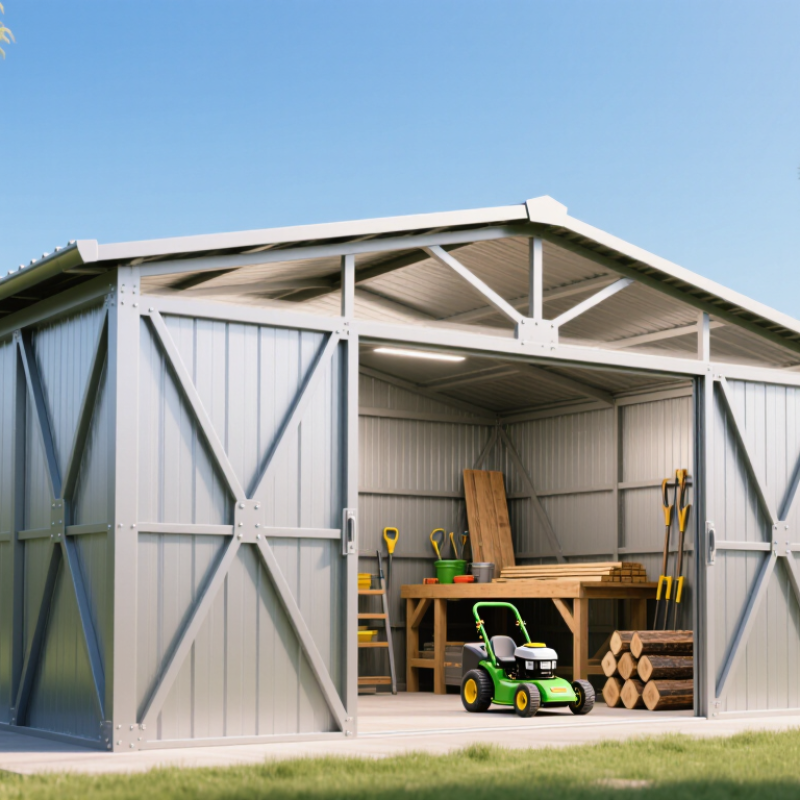
What Defines a Steel Frame Shed?
A steel frame shed is defined by its load-bearing skeleton, not simply by metal wall panels. Steel columns and roof members carry the structure’s weight and transfer it to the foundations. Wall and roof cladding usually protects the interior from weather but does not necessarily provide the main support.
That matters. A shed can look sturdy while relying on a lightweight frame.
In a well-designed structure, members are sized for the shed’s span and expected loads. Connections, such as bolts or welded joints, matter too. Check how the frame attaches to its base plates and how those plates are anchored to a suitable foundation.
Coatings, including galvanizing or paint, help limit corrosion, especially around cut edges and fasteners. Look closely there. Water can collect at roof edges or around poorly sealed joints.
Specifications should identify the steel thickness, frame spacing, connection type, and intended conditions. Wind and snow loads vary by location, so a general claim of “heavy duty” tells you little.
Not always. A thicker member alone does not guarantee a better shed if its joints or anchoring are weak.
I would compare the frame details with the cladding and foundation requirements, rather than judging by appearance. Some kit information can be vague; that is worth questioning before purchase.
What Types of Steel Frame Sheds Are Available?
Steel-frame sheds come in several practical forms. Light-gauge, cold-formed frames suit garden storage, small workshops, and equipment bays. Their parts are relatively light, and bolted kits can be easier to assemble on a prepared base. Check the coating and panel thickness, though; “steel frame” alone says little about corrosion resistance or strength.
Portal-frame sheds use larger structural members and create wide, mostly unobstructed interiors. That makes them useful for farm machinery, vehicles, or workshop benches. Clear-span layouts avoid interior posts, but wind exposure and snow loads affect the required frame size. Modular sheds offer another option: sections can be extended later, provided the original foundation and connections were designed for expansion. Lean-to sheds use less space, but attaching one to an existing wall needs careful detailing.
Look closely at the intended use. A dry storage shed needs different ventilation and insulation from a space used for regular work. Small details matter. Door width, roof pitch, anchor points, and drainage can be frustrating to change later.
The World Steel Association estimates that roughly 680 million tonnes of steel scrap are recycled annually, illustrating steel’s established recovery pathway. That figure is industry-wide, not a guarantee that every shed component will be recycled locally. Check the frame specification, finish, and site requirements before comparing prices.
Which Features Determine a Shed’s Quality and Suitability?
What Is the Best Steel Frame Shed to Buy?
A steel frame shed’s quality starts with its structure, not its finish. Check the frame thickness, joint design, and how the parts are fastened. Bolted connections should sit flush, without obvious gaps or loose movement. A glossy coating can look reassuring, but it cannot compensate for weak joints. Ask whether steel is galvanized or otherwise protected against corrosion, especially near the base, where rainwater and damp soil collect.
Suitability depends on what the shed must hold and where it will stand. Measure the usable interior, door opening, and height before buying; a wide doorway matters when storing a mower or workbench. Check the roof pitch and drainage path. Water that repeatedly pools at the eaves can shorten a shed’s life. Confirm that the stated wind and snow ratings fit local conditions, and plan suitable anchoring for the ground beneath it. Check the corners.
Ventilation is easy to overlook. Vents or small openings can reduce trapped moisture, which may affect tools and stored materials. Consider whether the doors open freely with your planned layout, and whether access remains practical in bad weather. A larger shed is not always a better choice: it may need more site preparation and anchoring. I would also inspect the assembly instructions before purchase. If the steps, hardware list, or foundation requirements are unclear, that uncertainty is worth taking seriously.
How Should Size, Materials, and Site Conditions Shape Your Choice?
Choosing a steel-frame shed starts with what must fit inside, not the largest model your budget allows. Measure bulky items, then leave room to walk around them and open doors. A mower may need a wider entrance than its dimensions suggest. Measure twice. For seasonal storage, a compact shed can work; a workshop needs space for benches, tools, and safe movement. Check the frame’s stated load capacity, especially if you plan to hang shelves or equipment.
Material details matter in changing weather. Thicker steel can resist dents better, but thickness alone does not guarantee a durable shed. Look for corrosion-resistant coatings, sealed fasteners, and clear information about frame connections. In coastal or persistently damp areas, corrosion protection deserves extra attention. A light frame may also need secure anchoring where strong winds are common. Ask how the shed is meant to be anchored, rather than assuming its weight will hold it in place.
The site can make a good shed frustrating. A level, well-drained base helps doors align and reduces standing water around the floor. Check the ground after heavy rain, not just on a dry afternoon. That matters. Leave enough clearance for assembly and maintenance, and confirm that the delivery route can accommodate long panels. I have seen careful size planning miss this practical detail. A little extra space around the shed is useful, though not always possible. If the site slopes, plan for a stable base before ordering; correcting it later can be awkward and costly.
What Is the Best Steel Frame Shed to Buy? - How Should Size, Materials, and Site Conditions Shape Your Choice?
| Shed Type | Typical Size | Frame and Cladding | Best For | Site and Foundation Considerations | What to Check Before Buying |
|---|---|---|---|---|---|
| Compact storage shed | About 6 × 8 to 10 × 12 ft (1.8 × 2.4 to 3 × 3.7 m) | Light-gauge galvanized steel frame with coated steel panels; confirm the panel and frame specifications for the exact model. | Garden tools, bicycles, bins, and seasonal equipment. | Needs a level, well-drained base. A prepared gravel pad or concrete slab may be suitable, depending on the manufacturer’s instructions and local conditions. | Check door opening dimensions, anchoring points, ventilation, and whether the floor is included. |
| Medium workshop or utility shed | About 10 × 16 to 20 × 24 ft (3 × 4.9 to 6.1 × 7.3 m) | A more substantial galvanized steel frame with coated steel wall and roof panels; thicker or reinforced components may be available as options. | A home workshop, lawn equipment, motorcycles, or general property storage. | A properly sized slab or engineered foundation can help support heavier use. Allow room for drainage, access, and door swing. | Confirm frame spacing, roof load documentation, clear interior height, and whether the proposed use requires a permit. |
| Vehicle or equipment shed | About 20 × 24 to 30 × 40 ft (6.1 × 7.3 to 9.1 × 12.2 m) | Engineered steel framing with corrosion-protected steel cladding; frame design and connections should be selected for the building span and local loads. | Cars, small tractors, trailers, or larger equipment requiring wide access. | Usually requires a designed foundation and secure anchoring. Check vehicle turning space, site access, runoff, and ground conditions. | Verify clear door width and height, structural drawings, local code compliance, and applicable wind and snow load ratings. |
| Large agricultural or storage shed | About 30 × 40 ft and larger (9.1 × 12.2 m and larger) | Project-specific engineered steel frame and cladding; protective coatings and connection details should suit the exposure and intended use. | Farm machinery, bulk storage, multiple vehicles, or commercial-scale storage. | Requires careful assessment of soil, drainage, access, and foundation design. Exposed or remote sites may need additional engineering review. | Request project-specific engineering, load calculations, corrosion protection details, installation requirements, and confirmation of permits and setbacks. |
How Can You Compare Prices, Warranties, and Installation Options?
When comparing steel-frame sheds, start with the full installed price, not the number on the first quote. Check whether it includes delivery, doors, windows, anchoring hardware, and site preparation. A low price can change quickly if the ground needs leveling or a concrete slab is required. Ask for an itemized estimate so you can compare the same shed size, steel thickness, roof style, and load ratings. Small differences matter.
Read the warranty carefully. Some cover the frame, while others apply to paint or corrosion for a different period. Look for exclusions related to standing water, scratches, coastal air, or missed maintenance. Ask how a claim is documented and whether replacement parts or labor are included. Fine print matters. I still find warranty language easy to skim, especially when several documents use different terms.
Installation options can shift both cost and risk. A kit may save money, but confirm the required tools, crew size, and estimated build time before choosing self-assembly. For professional installation, ask who handles permits, site access, and anchoring, and get those duties in writing. A narrow driveway or uneven pad can delay delivery. Compare written scopes, not just totals, and leave room for a surprise; estimates are not always perfect.
