
What Is the Best Plasma Laser Cutter for Global Buyers?
Choosing the best Plasma Laser Cutter for global buyers is not simply a matter of comparing prices. It requires careful attention to cutting performance, material compatibility, machine stability, service support, and total ownership costs. A model that performs well in a factory showroom may struggle with dust, voltage differences, limited training, or delayed spare parts overseas. Real purchasing decisions begin with actual working conditions.
This guide examines the practical factors that experienced buyers should evaluate before ordering. These include cutting thickness, power output, positioning accuracy, software compatibility, cooling systems, safety features, and operator access. We also consider shipping protection, installation guidance, warranty terms, and technical support across time zones. Small details matter. A damaged nozzle can stop production.
Reliable manufacturers should provide test-cut samples, clear specifications, inspection records, and realistic performance data. Buyers should ask how the machine handles mild steel, stainless steel, aluminum, and irregular workloads. Marketing claims can sound impressive. They still need evidence. In some cases, “laser” and “plasma” describe different cutting technologies, so terminology must be checked carefully before payment.
No machine fits every market. A compact unit may suit a workshop, while a high-powered system may serve continuous industrial production. The right choice depends on budget, local electrical standards, operator skill, maintenance access, and expected workload. Some recommendations may need revision after testing. That is normal. Careful comparison, independent verification, and honest evaluation offer a safer path to long-term value.
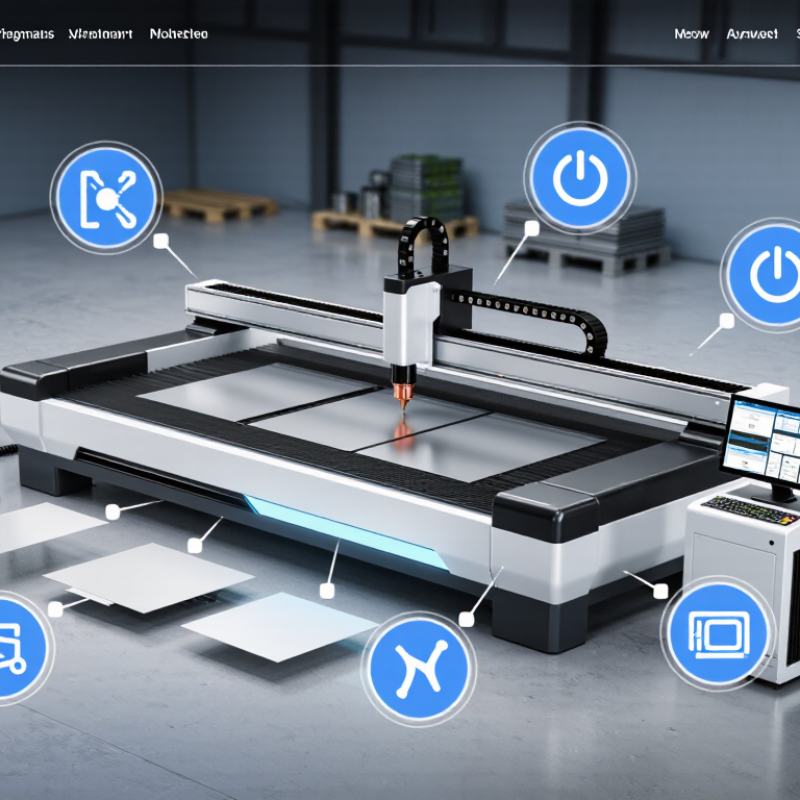
Plasma vs. Laser Cutting: Comparing 30,000°C Arcs, Kerf, and Cost
Plasma and laser cutters solve different production problems. A plasma arc can approach 30,000°C, according to technical guidance from TWI. It melts conductive metals quickly, especially carbon steel and stainless steel. Typical plasma systems cut roughly 6–40 millimetres, depending on power and material. Their kerf often measures 2–4 millimetres. That wider cut removes more metal and leaves a visibly larger heat-affected zone.
Laser cutting concentrates energy into a much smaller spot. Industry benchmark tables published in 2024 commonly report kerfs near 0.1–0.4 millimetres for sheet-metal laser work. ISO 9013:2017 evaluates thermal-cut edges through perpendicularity, roughness, and dimensional quality. Laser usually performs better on thin, detailed parts. Plasma usually costs less initially and handles thick plate more economically. Laser equipment demands higher capital investment, cleaner material, and stricter maintenance. Small nozzle damage can quickly spoil edge quality. That detail matters.
Energy use is less simple. A 2023 manufacturing efficiency review found that process power, gas consumption, duty cycle, and material thickness can change operating costs substantially. A low-cost plasma cutter may waste more material through its wider kerf. A high-power laser may waste less material but consume more electricity. These figures are useful, not absolute. Actual results depend on operator skill, nesting software, tolerances, and local gas prices. Global buyers should test the intended steel grades before trusting catalog estimates. The wrong machine can look affordable for one afternoon.
What Is the Best Plasma Laser Cutter for Global Buyers?
Plasma vs. laser cutting: comparing approximately 30,000°C plasma arcs, kerf width, and typical equipment cost.
The very high-temperature arc rapidly melts electrically conductive metals.
Fiber laser usually produces a narrower cut than air plasma under comparable conditions.
Plasma systems generally cost less; laser cost rises with power, automation, and table size.
The chart shows representative kerf-width ranges for cutting 10 mm mild steel. Actual results vary with power, gas type, consumables, focus, material grade, and cutting speed. Plasma is often preferred for thick conductive plate and lower initial investment, while fiber laser is typically selected when fine detail, narrow kerf, and reduced heat-affected zones are priorities.
Cutting-Capacity Matrix: Matching 1–100 mm Thickness to Material Type
What Is the Best Plasma Laser Cutter for Global Buyers?
A practical cutter must match thickness, material, amperage, and required edge quality. The World Steel Association reported 1.89 billion tonnes of crude steel production in 2023. This volume explains why mild steel remains the main plasma application. Cutting performance still changes sharply between dry plate, painted sheet, and rusty structural steel. Test cuts matter.
A useful cutting-capacity matrix looks like this: 1–6 mm suits mild steel, stainless steel, and aluminum with compact systems. From 6–20 mm, higher amperage improves speed and reduces dross. At 20–40 mm, mild steel remains efficient, while stainless steel and aluminum need stronger gas control. From 40–70 mm, industrial plasma systems become more suitable. At 70–100 mm, high-power plasma can work, but speed drops and edge taper increases. Oxy-fuel may be more economical for thick mild steel.
The International Aluminium Institute reported more than 70 million tonnes of primary aluminum production in 2023. Aluminum therefore deserves a dedicated setting, not a generic one. Stainless steel also needs controlled gas selection and stable torch height. ISO 9013:2017 provides thermal-cut quality classifications, including edge geometry and surface roughness. Buyers should compare those measurements, not marketing claims. I have seen thin sheets cut beautifully, while thicker plates exposed poor grounding and unstable arcs. The matrix is useful, but imperfect. Scrap testing remains essential.
Power and Precision: How 40–400 A Plasma Ratings Shape Throughput
What Is the Best Plasma Laser Cutter for Global Buyers?
Power and Precision: How 40–400 A Plasma Ratings Shape Throughput
Choosing a plasma laser cutter starts with the workpiece, not the advertised amperage. A 40 A system can deliver clean results on thin sheet metal and reduce operating costs. A 100 A unit suits regular fabrication, structural parts, and moderate production volumes. For thick steel, 200–400 A systems provide stronger piercing power and faster cutting speeds. More power is not always better.
In practical workshops, rated amperage affects throughput, edge quality, and duty cycle. A high-current machine may cut faster, but it can demand larger electrical capacity, stronger ventilation, and more expensive consumables. Operators also need training. Small mistakes in torch height or travel speed can create bevelled edges, slag, or incomplete cuts. Real performance depends on material grade, thickness, air quality, and maintenance. I would not trust a rating alone; test samples often reveal uncomfortable differences.
Tips
Match the amperage to your daily thickness range, not your maximum occasional job. Ask for cut charts and verify recommended pierce limits. Check duty-cycle data at your intended current. Inspect consumable availability in your region before purchase. Keep a margin for future work, but avoid paying for unused power. A careful trial cut is worth more than a confident sales promise.
Global Compliance: Checking ISO 9013, IEC 60974-1, CE, and UL Markings
For global buyers, compliance should be checked before comparing cutting speed or advertised power. The World Steel Association reported 1,888.2 million tonnes of crude steel production in 2023, showing the scale of international metal processing demand. In this market, a plasma cutter needs traceable technical evidence, not only a polished product label.
ISO 9013 classifies thermal-cutting quality, including edge angle, roughness, and dimensional tolerance. It does not certify electrical safety. IEC 60974-1 addresses safety and performance requirements for arc-welding equipment, including plasma power sources. Request the latest test report, model number, ratings, and laboratory scope. Check the paperwork. A certificate without matching serial details deserves caution.
CE marking indicates conformity with applicable European requirements, supported by a Declaration of Conformity and technical file. It is not a universal quality approval. For North American projects, verify whether the UL marking relates to the complete cutter, its power source, or selected components. Confirm the certification in the official directory and check local installation rules. The Global Harmonization Task Force has repeatedly emphasized documented conformity assessment and post-market controls in medical-device guidance; the same discipline is useful here, although the product category differs. I would not accept a logo alone. Even experienced buyers can overlook regional voltage, plug, grounding, or inspection differences. That mistake becomes expensive after shipment.
What Is the Best Plasma Laser Cutter for Global Buyers? – Global Compliance: Checking ISO 9013, IEC 60974-1, CE, and UL Markings
A practical, brand-neutral compliance checklist for evaluating plasma cutting equipment and plasma–laser combination systems in international markets.
| Compliance Dimension | Relevant Standard or Marking | What It Actually Covers | Evidence Buyers Should Request | Key Verification Points | Buyer Relevance |
|---|---|---|---|---|---|
| Cut quality classification | ISO 9013:2017 Thermal cutting classification and quality tolerances |
Classifies the quality of thermal-cut surfaces and defines geometrical product specifications and tolerances. It is relevant to cut quality, including characteristics such as angular deviation, surface roughness and dimensional accuracy. | A test report identifying the material, thickness, cutting process, consumables, cutting speed, gas settings and measured quality results. | Confirm that the report applies to the actual plasma process and material thickness being purchased. Do not treat ISO 9013 as an electrical-safety approval or a general machine certification. | Quality benchmark |
| Arc-equipment safety | IEC 60974-1 Arc welding equipment – Part 1: Welding power sources |
Specifies safety and performance requirements for relevant arc-welding and allied-process power sources. Its applicability to a particular plasma power source must be confirmed from the product design and applicable conformity assessment. | A declaration of conformity, applicable test report, electrical schematic, rated-input data and protection-class information. | Check the exact edition cited, rated supply voltage, duty cycle, output current, enclosure protection and whether the report covers the complete power source rather than only a component. | Application-dependent |
| European market access | CE marking EU conformity marking |
Indicates that the manufacturer declares conformity with applicable European Union legislation. Depending on the machine and configuration, relevant legislation may include machinery, electrical safety, electromagnetic compatibility and hazardous-substance requirements. | EU Declaration of Conformity, technical documentation summary, risk assessment, instruction manual and the list of applied EU legislation and harmonised standards. | Verify that the CE mark is on the final machine, the declaration identifies the correct model, and the signatory is authorised. CE is not a universal third-party quality certificate. | Required for applicable EU sales |
| Electrical safety in Europe | Low Voltage Directive 2014/35/EU Where the machine falls within its voltage scope |
Addresses health and safety risks from electrical equipment operating within the directive’s voltage limits. It can be one part of the conformity basis for a cutter’s electrical system. | Electrical safety assessment, test records, wiring diagrams, protective-device specifications and the related section of the EU Declaration of Conformity. | Confirm the declared input voltage and frequency, earthing method, overcurrent protection, emergency-stop circuit and protection against electric shock. | Scope-dependent |
| Electromagnetic compatibility | EMC Directive 2014/30/EU For equipment placed on the EU market |
Covers electromagnetic emissions and immunity so that the equipment does not cause unacceptable interference and can operate as intended in its electromagnetic environment. | EMC test report, test configuration, cable and grounding details, applied standards and the EMC portion of the EU Declaration of Conformity. | Ensure the report covers the complete configured machine, including the plasma power source, CNC controller, torch-height control, motors and accessories. | Required where applicable |
| North American acceptance | UL Marking Product-specific certification or recognition |
A UL Mark generally indicates that a specific product has been evaluated by the relevant certification body against identified safety requirements. The meaning depends on the exact mark and certification category. | Certification number, model and revision covered, certification category, installation conditions and the official listing or certification record. | Check the exact product and model, not merely a supplier statement. Confirm whether the mark is a Listed, Classified or Recognized Component mark and whether it covers the complete machine. | Market and installation-dependent |
| National electrical installation | Local electrical codes For example, requirements adopted by the destination authority |
Cover site installation issues such as supply connection, grounding, disconnects, overcurrent protection, wiring methods, ventilation and operator protection. These requirements are separate from the machine’s factory conformity documentation. | Installation manual, full-load current, recommended breaker or fuse, grounding instructions, wiring diagram and required environmental conditions. | Have a qualified local electrician or authority having jurisdiction confirm compatibility before commissioning, especially for high-current three-phase equipment. | Required at installation |
| Laser safety, if a laser source is included | IEC 60825-1 Safety of laser products – Part 1 |
Applies to the classification and safety requirements of laser products. The applicable controls depend on the laser type, accessible emission, enclosure, interlocks and operating configuration. | Laser classification, risk assessment, interlock test records, protective housing details, warning labels and user instructions. | Confirm whether the product is a true plasma cutter, a laser cutter, or a combination machine. Plasma-related compliance documents do not automatically cover the laser subsystem. | Only for laser-equipped systems |
| Operating performance | Technical specification validation Not a substitute for conformity marking |
Covers practical performance factors such as rated cutting current, duty cycle, maximum recommended thickness, piercing capability, positioning accuracy, repeatability, consumable life and compressed-gas requirements. | Factory acceptance test, sample-cut records, dimensional inspection results, duty-cycle data and a written list of operating limitations. | Compare tested results with the buyer’s actual material grades, thickness range, production volume, gas supply and ambient conditions. | Commercial acceptance |
| Documentation and traceability | Compliance dossier Model-specific records |
Provides traceability between the machine delivered, its electrical and mechanical configuration, applicable standards, risk controls, maintenance requirements and declared operating limits. | Serial-number record, parts list, manuals, wiring diagrams, declarations, test reports, maintenance schedule and change-control information. | Match every document to the delivered model and revision. Request translated safety instructions when required by the destination market. | Essential before shipment |
Buyer Scorecard: Ranking Duty Cycle, Consumables, Warranty, and Total Cost
What Is the Best Plasma Laser Cutter for Global Buyers?
Buyer Scorecard: Ranking Duty Cycle, Consumables, Warranty, and Total Cost
A reliable cutter should survive real production, not just a showroom demonstration. I compare duty cycle ratings with actual heat buildup during repeated cuts. A machine rated for continuous work may still require pauses in a hot workshop. That detail matters. Buyers should request test videos, cut samples, and temperature records before ordering. Check cutting speed across mild steel, stainless steel, and aluminum. Thin sheet performance can hide weak results on thicker plate.
Consumables often decide the daily cost. Electrodes, nozzles, lenses, and protective shields should be easy to source locally. I calculate cost per finished meter, not cost per package. Cheap parts can create rough edges and extra grinding. That wastes time. A clear replacement schedule also shows whether the supplier understands field use. I would record consumption after one month, because estimates are often too optimistic.
Warranty terms need careful reading. Confirm coverage for the power source, torch, control system, and cooling unit. Ask who handles repairs across borders, and who pays return freight. A two-year warranty sounds strong until service takes twelve weeks. Total cost includes shipping, taxes, training, software updates, electricity, and downtime. I have seen buyers focus on purchase price, then regret ignoring voltage compatibility. The perfect scorecard does not exist. My own rankings change after installation, because real operators reveal problems that specifications miss.
Related Posts
-
Unlocking Efficiency: Mastering the Use of Plate Laser Cutting Machines in Your Production Line
-
Revolutionizing Precision Cutting with Small Plasma Tables for Global Manufacturers
-

Essential Insights for Maximizing Efficiency with Cnc Plasma Cutters
-
7 Reasons Why the Best Small Plasma Table is a Game Changer for Your Business
-
China's Trusted Quality in Best Plasma Laser Cutters for Global Buyers
-
Ultimate Comparison: Discover the Top 5 Best Plasma Laser Cutters for Global Buyers
