
10 Best Excavator Gear Suppliers for Global Buyers
Excavator Gear is a small component with a large job: transferring force reliably through dust, vibration, heavy loads, and long shifts. For global buyers, choosing a supplier means looking beyond a polished catalog. Gear material, heat treatment, tooth accuracy, and documented inspection all matter. So does fit. A gear that appears correct on a drawing may still cause trouble if its dimensions, hardness, or mounting details differ from the original specification. Ask for measurable evidence, not just reassurance. Request drawings, inspection records, material details, and clear answers about production tolerances. Check whether the supplier can support repeat orders and communicate changes before shipment. The details count.
This guide compares ten suppliers through practical buying questions: product range, manufacturing capability, quality controls, customization, export experience, and after-sales support. A fictional composite specialist, Daniel Mercer, offers this illustrative line—not a verified quotation from a real person: “A reliable gear begins with a verified specification, not a confident promise.” Buyers should still verify each supplier’s claims directly. Ask how samples are checked, how defects are handled, and which documents accompany an order. Compare like with like. Price alone rarely reveals the cost of rework, delays, or unexpected downtime. And supplier information can change; confirm current capabilities before making a decision. The right choice depends on the machine, operating conditions, and evidence each supplier can provide.
Understanding Excavator Gears and Their Role in Machine Performance
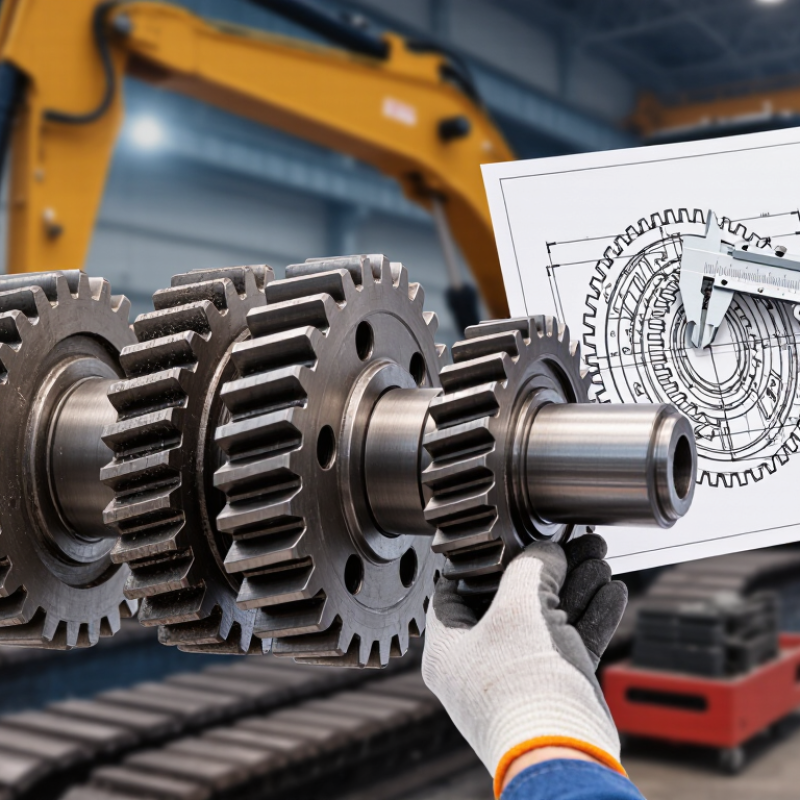
Excavator gears help transfer power to the travel system and swing mechanism. In a typical swing drive, a hydraulic motor turns a reduction gearbox, which slows rotation and increases torque. Planetary gears are common because they fit substantial load capacity into a compact housing. When gear teeth wear or lubrication breaks down, movement may become noisy, uneven, or less responsive. Even a small change can matter during precise digging.
Tips: Check the equipment manual for the correct lubricant and service interval. Look for leaks around gearbox seals, and note new clicking or grinding sounds. Keep inspection records; memory alone is unreliable.
When sourcing replacement gears, match the part to the machine model, serial details, and gearbox configuration. Ask about material, heat treatment, dimensional checks, and documentation. A gear that looks right may still have the wrong tooth profile or fit. These details affect contact between teeth and can lead to premature wear. It is tempting to focus only on price, but compatibility and traceable quality records deserve equal attention.
Key Criteria for Evaluating Excavator Gear Suppliers
Choosing an excavator gear supplier starts with fit, not price. Confirm module, tooth count, pressure angle, bore, and mounting dimensions against the machine drawing. Ask for material certificates, heat-treatment records, and inspection results for each batch. Tooth hardness and case depth matter: a hard surface with a weak core can still fail under shock loads. ISO 6336 provides recognized methods for calculating cylindrical gear load capacity; ask whether the supplier uses a documented rating method. The U.S. Department of Energy’s 2014 guide, Improving Motor and Drive System Performance, notes that gear-drive efficiency can approach 98%. Treat that as a general benchmark, not a guaranteed excavator performance figure.
Look closely at quality controls and delivery capability. Request sample measurements for backlash, runout, and tooth profile, plus traceability from steel batch to finished part. Check whether the supplier can hold tolerances across repeat orders, not only one polished sample. Ask for lead times, packaging details, and a clear process for handling dimensional defects. Small details matter. A missing inspection record may not prove poor quality, but it leaves buyers with less evidence when problems appear.
Tips: Send a drawing and operating conditions, including typical load, shock exposure, and service environment. Request a first-article inspection report before approving a large order. Compare like with like: a lower quotation may exclude testing or protective packaging. And be candid about uncertainty; field wear data is not always complete, so a trial batch can reveal issues that paperwork misses.
Profiles of 10 Leading Excavator Gear Suppliers Worldwide
The ten supplier profiles below reflect distinct strengths, not a ranked list of named companies. An original-equipment supplier may match gears closely to a specific excavator model. A precision gearmaker can produce custom tooth geometry. Heavy-duty specialists serve high-torque swing drives. Compact-machine suppliers focus on smaller modules and tight packaging. Integrated drive makers supply matched gears and housings.
Aftermarket specialists offer replacement gears for older fleets. Heat-treatment suppliers emphasize case depth and surface hardness. Forging-led producers control blanks and machining under one roof. Engineering-focused firms help verify dimensions when drawings are missing. Regional distributors add nearby inventory and technical support. Fit matters. Buyers should request material certificates, tooth-contact checks, and measured backlash. A small mismatch can cause noise, heat, or premature wear.
KHL’s 2024 Yellow Table reported that the world’s 50 largest construction equipment manufacturers generated about $243 billion in 2023 sales. This signals the scale of equipment manufacturing, not excavator-gear demand specifically. Still, it makes supplier capacity and quality records worth checking. Ask for inspection results from actual production batches, not only sample parts. A limitation: supplier claims can look stronger than field evidence. Compare warranty terms and delivery records before choosing.
10 Best Excavator Gear Suppliers for Global Buyers
Typical Gear-Driven Functions in a Crawler Excavator
A typical crawler excavator has two travel drives—one for each track—and one swing drive for rotating the upper structure. Configurations vary by model. This chart provides technical context for buyers and does not rank or compare suppliers.
Comparing Supplier Expertise, Product Range, and Global Reach
Comparing excavator gear suppliers takes more than checking catalog size. Look for experience with the gear type and machine class you need. Ask how teeth, hubs, and mounting dimensions are verified against your worn part or technical drawing. Clear material and heat-treatment records matter. So does a practical answer when measurements do not match.
Product range affects sourcing time. A supplier offering drive gears, idlers, sprockets, and related components may simplify ordering, but a broad catalog does not guarantee the right fit. Check part references, tolerances, and available documentation before placing an order. Global reach also means more than shipping to many countries. Ask about regional stock, export packaging, estimated transit times, and support across time zones. Even a capable supplier can give a vague delivery estimate; treat that as a real limitation, not a small detail.
Tips: Send clear photos, machine details, and measured dimensions. Request written confirmation of compatibility, warranty terms, and lead time. Compare the full landed cost, not just the unit price. A short call can reveal expertise, but written specifications are easier to verify later.
| Supplier Profile | Typical Expertise | Relevant Product Range | Typical Global Reach | Best Buyer Fit | Key Checks Before Ordering |
|---|---|---|---|---|---|
| 1. Equipment-Maker Dealer Network | Machine-specific parts identification and service support through an established dealer network. | Genuine swing and travel reduction assemblies, gears, shafts, seals, and related service parts, subject to model availability. | Regional or international coverage depends on the equipment maker’s dealer footprint and local inventory. | Buyers prioritizing exact machine compatibility and traceable parts. | Confirm machine serial number, part number, stock location, delivery lead time, and warranty terms. |
| 2. Specialist Gearbox Manufacturer | Design or manufacture of gear-reduction units and precision transmission components. | Gearboxes, gear sets, pinions, shafts, and selected custom or replacement components. | Often serves export markets through direct sales, distributors, or industrial supply partners. | Buyers seeking engineered replacements or repeat supply for defined applications. | Check drawings, gear specifications, material and heat-treatment details, inspection records, and fitment validation. |
| 3. Heavy-Equipment Aftermarket Manufacturer | Production of replacement parts for multiple equipment makes and models. | Selected swing-drive and travel-drive gears, reduction components, and associated repair parts. | May export through regional distributors; coverage and inventory vary by product line. | Buyers comparing aftermarket availability, price, and lead time. | Verify cross-reference accuracy, dimensional tolerances, quality controls, and the stated warranty. |
| 4. Final-Drive and Swing-Drive Rebuilder | Inspection, repair, and remanufacture of complete drive units and subassemblies. | Rebuilt travel motors or swing drives, replacement gears, bearings, seals, and repair kits. | Usually strongest in its home market; cross-border service depends on shipping and core-return arrangements. | Fleet operators seeking a repair or exchange solution rather than individual parts only. | Ask for inspection findings, included components, test results, core charges, and return-shipping conditions. |
| 5. Industrial Gear-Cutting Shop | Machining and gear production to customer drawings or samples, subject to shop capability. | Custom spur or helical gears, splined parts, pinions, and other machined transmission components. | Can ship internationally, but technical coordination and engineering approval are important for remote projects. | Buyers with legacy, obsolete, or drawing-defined components. | Confirm profile and tooth measurements, material specification, heat treatment, inspection method, and prototype approval. |
| 6. Regional Construction-Equipment Parts Distributor | Local sourcing, stockholding, and order consolidation across equipment-part categories. | Common replacement gears and drive components sourced from multiple manufacturers. | Typically focused on one country or region, with importing available through supplier relationships. | Buyers who value local communication, consolidated orders, and nearby support. | Check actual stock status, source traceability, return policy, and whether quoted parts are OEM or aftermarket. |
| 7. Export-Oriented Parts Wholesaler | International order handling and consolidation of replacement parts from multiple sources. | Varied gear and drive-component availability, depending on sourcing network and catalog coverage. | May serve multiple countries; shipping options, customs support, and destination restrictions vary. | Buyers consolidating mixed parts orders or sourcing across borders. | Request manufacturer and origin details, packing standards, export documents, delivery terms, and a confirmed lead time. |
| 8. Hydraulic-Drive Component Supplier | Supply of hydraulic motors and drive assemblies, with gear components available as part of selected units. | Travel or swing motor assemblies, reduction drives, and compatible replacement components where offered. | Reach is commonly supported by distributors or hydraulic-service partners in selected markets. | Buyers replacing a complete drive assembly or coordinating hydraulic and mechanical parts. | Match displacement, mounting, ports, reduction ratio, rotation, and machine-specific interface requirements. |
| 9. Remanufacturing and Exchange-Service Provider | Restoration of used drive components and supply of serviceable exchange units. | Remanufactured gearboxes or drives, inspected gear sets, and related replacement parts. | Often dependent on return logistics and service-center locations; international exchanges may take longer. | Buyers seeking a managed repair process and an alternative to new assemblies. | Clarify remanufacturing scope, test documentation, core condition rules, turnaround time, and warranty coverage. |
| 10. Online Heavy-Equipment Parts Marketplace Seller | Catalog-based quotation and order placement across a broad selection of equipment parts. | Listings may include replacement gears, drive assemblies, and repair kits from different sources. | Potentially broad order access, but fulfillment, after-sales support, and shipping depend on the individual seller. | Buyers who need to compare availability and quotations across multiple listings. | Validate seller identity, exact part specifications, stock location, return terms, payment protection, and shipping costs. |
How Global Buyers Can Verify and Source Excavator Gears
Global buyers should verify an excavator gear against the machine’s serial number, drawings, and service history. Check tooth count, module, pressure angle, bore size, and rotation before requesting a quotation. Ask for material certificates, heat-treatment records, hardness readings, and inspection results tied to the gear’s batch number. A certificate helps, but it is not proof by itself. Request close-up photos of tooth flanks and a dimensional report; compare critical measurements with the original specification. Small details matter.
Traceability deserves attention. The OECD and EUIPO estimated that counterfeit goods represented 2.5% of global trade in 2019; this figure covers all product types, not excavator gears specifically. It still shows why buyers should confirm where parts were made and how batches are tracked. Ask suppliers to explain their inspection process and provide a sample report before placing a large order. If possible, test a sample for fit and contact pattern. I would not rely on polished photos alone.
Logistics can also affect sourcing decisions. The World Bank’s 2023 Logistics Performance Index assessed 139 economies, including customs and shipment reliability. Compare delivery estimates with actual tracking records, and clarify packaging, replacement terms, and documentation before payment. Keep one retained sample for future comparison. It is a little extra work, but it may reveal mismatched tolerances that paperwork missed.
