
7 Best Galvanized Steel I Beam Suppliers for Global Buyers
Global buyers are rethinking steel sourcing as infrastructure, warehousing, and energy projects expand across regions. The World Steel Association reported approximately 1.89 billion tonnes of crude steel production in 2023. That scale creates opportunity, but it also creates confusion. Not every producer offers the same section accuracy, zinc coating, or export discipline.
This guide examines seven Galvanized Steel I Beam suppliers through practical purchasing criteria. These include mill capacity, coating control, dimensional tolerances, material certificates, inspection support, packaging, and delivery performance. ASTM A123/A123M and ISO 1461 provide useful benchmarks for hot-dip galvanized coatings, although buyers should confirm the exact standard stated in each quotation. A certificate alone is not enough. Traceability matters.
Field experience shows how small details become costly. A beam may arrive with damaged coating, unclear heat numbers, or inconsistent flange dimensions. That is not a minor inconvenience on a bridge, warehouse frame, or solar structure. It can delay fabrication and increase inspection costs. The World Steel Association’s production data explains the market’s depth, but not every supplier’s reliability. Buyers still need independent verification.
Our selection is therefore a starting point, not a permanent verdict. Prices change. Lead times change faster. Some suppliers communicate well but provide limited customization. Others offer strong engineering support but require larger minimum orders. This comparison highlights those trade-offs, helping global buyers request clearer quotations and make more defensible sourcing decisions. A low price can still be expensive.
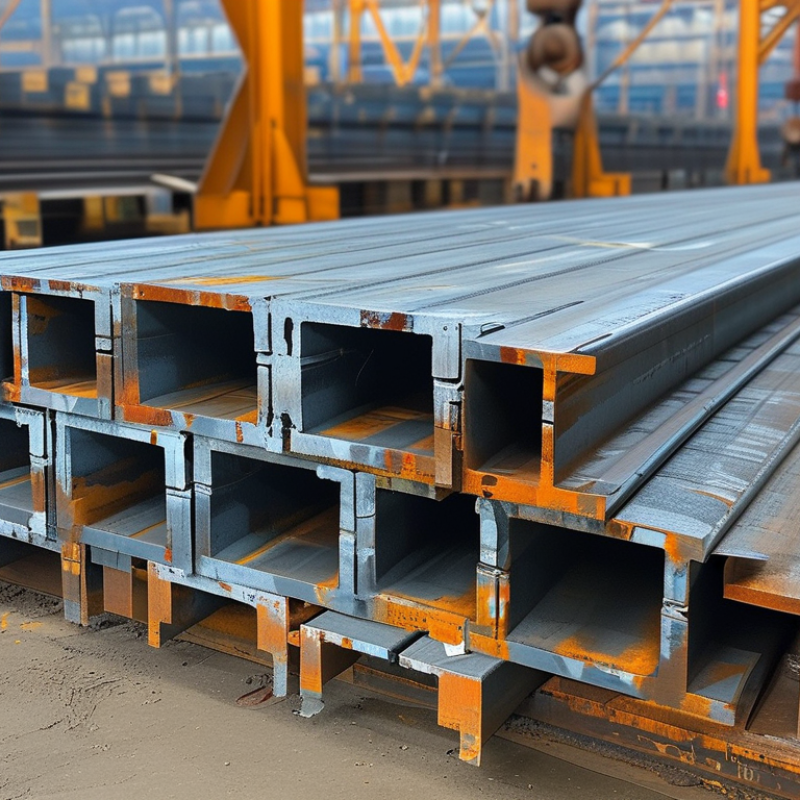
What Is a Galvanized Steel I Beam?
A galvanized steel I beam is a load-bearing steel section with vertical web and horizontal flanges. Its distinctive I shape resists bending while limiting material use. Manufacturers usually clean the fabricated beam, immerse it in molten zinc, and form a metallurgical coating around exposed steel surfaces. This hot-dip process protects through barrier coverage and sacrificial action when scratches appear. It matters.
World Steel Association’s World Steel in Figures 2024 reports global crude steel production of about 1.89 billion tonnes in 2023. That scale reflects why buyers need consistent steel grades, traceable mill certificates, and documented coating practices. ISO 1461 and ASTM A123/A123M provide widely recognized requirements for hot-dip galvanized coatings. Coating thickness depends partly on the steel’s thickness and chemistry, so “more zinc” is not always a useful purchasing measure. Ask for measured coating results.
In practical service, galvanized I beams suit bridges, warehouses, platforms, agricultural structures, and outdoor frames exposed to rain or humidity. However, galvanizing does not make a beam maintenance-free. It does not replace structural calculations, drainage design, or inspection around cut edges and welded joints. I have found that overlooked water traps often cause more trouble than ordinary surface exposure. That detail deserves attention. Buyers should also verify beam straightness, flange dimensions, yield strength, weld quality, and packaging before shipment. Saltwater locations may require duplex protection, such as paint over zinc, after surface preparation.
Galvanized Steel I Beam: Nominal Mass of Common IPE Sections
Galvanized steel I beams are structural steel sections protected with a zinc coating to improve resistance to atmospheric corrosion. The chart compares the nominal mass per metre of commonly used IPE sections before galvanizing. Actual finished weight may vary slightly depending on the steel grade, dimensional tolerances, and zinc coating thickness.
Reference: Nominal section masses based on commonly published EN 10365 IPE section tables.
How to Evaluate Global I Beam Suppliers
Global I beam sourcing demands more than comparing prices. The World Steel Association reported approximately 1.89 billion tonnes of crude steel production in 2023. That scale creates many suppliers, but quality remains uneven. Evaluate mill certificates, steel grade, section tolerances, and galvanizing records before discussing volume. Standards such as ASTM A123 and ISO 1461 define important coating requirements. Ask for coating thickness readings from several beam areas, not one attractive sample. A practical supplier should explain testing methods clearly.
Check production experience with export projects, lifting plans, packing details, and port handling. Request recent inspection reports, traceability records, and independent test results. Verify whether each beam carries a heat number matching the certificate. The International Trade Centre recommends examining supplier reliability, delivery performance, and trade documentation during cross-border sourcing. Freight matters too. A low offer can become expensive after inland transport, customs delays, and damaged bundles. I have seen specifications look complete, yet omit straightness limits. That mistake can disrupt fabrication later.
Tips: Compare three written quotations using identical dimensions, grades, coating standards, and Incoterms. Confirm production capacity during peak seasons. Ask for reference projects in similar climates. Inspect before shipment when the order is substantial. Keep payment milestones linked to evidence, not promises. Supplier websites are useful, but they are not proof. A video call from the factory helps, though it cannot replace independent inspection. Mistakes still happen. Careful buyers leave room for them.
Profiles of the 7 Best Galvanized Steel I Beam Suppliers
For global buyers, the strongest supplier is rarely the cheapest one. Supplier One serves large construction projects with hot-dip galvanized I beams, custom lengths, and stable monthly output. Its production team should provide mill certificates, coating measurements, and dimensional reports for every shipment. Details matter.
Supplier Two focuses on structural steel for warehouses, bridges, and industrial platforms. It combines automated welding with manual inspection around flanges and web joints. Supplier Three is suitable for smaller orders because it offers flexible quantities and mixed-container loading. Buyers should confirm minimum order rules before requesting a quotation. Supplier Four stands out for export experience, seaworthy packaging, and clear documentation. Its beams should arrive with dry wrapping, edge protection, and readable bundle labels.
Supplier Five specializes in higher-strength grades and can support design discussions with technical staff. That support is useful when load requirements change late. Supplier Six offers broad profile availability, including uncommon sizes and drilled or cut components. However, unusual profiles may require longer production times. Supplier Seven emphasizes competitive pricing and regional distribution through several ports. Its quote may look attractive, but buyers should compare coating thickness, steel grade, tolerances, and freight terms carefully. No supplier is perfect. I would request recent inspection records, production photos, and independent test results before placing a large order. This extra step often reveals packaging weaknesses or delays that polished sales materials do not show.
Key Comparison Factors for International Buyers
For international buyers comparing seven galvanized steel I beam suppliers, price is only one measurement. World Steel Association reported 1.89 billion tonnes of crude steel production in 2023. That scale creates many sourcing options, but quality still varies between mills, coating lines, and export channels. Request mill test certificates, dimensional inspection records, and recent shipment references.
Coating performance deserves close attention. ISO 1461 specifies an average zinc coating mass of 610 g/m² for fabricated steel thicker than 6 mm, with a 505 g/m² local minimum. ASTM A123 uses related coating-thickness requirements for structural products. Ask suppliers to state the exact standard, coating mass, steel grade, beam size, and tolerance before comparing quotations.
Delivery reliability also affects the real purchase cost. Compare production lead time, port location, packing method, container loading plans, and replacement procedures for damaged beams. The World Bank’s 2023 Logistics Performance Index shows wide differences in customs and transport efficiency across trading markets.
A bright surface can look convincing. It does not prove coating adhesion or thickness.
Suppliers offering independent pre-shipment inspection may reduce uncertainty, especially for large projects. Still, inspection is not a substitute for clear specifications.
I would also check whether certificates match the actual heat numbers; this small detail is often overlooked. A cheaper quotation can become expensive after rework, storage, or delayed installation.
How to Select and Purchase the Right I Beam Supplier
7 Best Galvanized Steel I Beam Suppliers for Global Buyers
Selecting among seven galvanized steel I beam suppliers requires evidence, not attractive quotations. The World Steel Association’s World Steel in Figures 2024 reports global crude steel production of 1.892 billion tonnes in 2023. This scale does not guarantee consistency. Ask each supplier for recent mill test certificates, heat numbers, and production locations. Verify beam depth, flange width, web thickness, straightness, and mass tolerance against approved drawings and relevant ASTM or EN standards. Keep it practical. Clear drawings prevent expensive disputes.
Galvanizing deserves separate scrutiny. The USGS Mineral Commodity Summaries 2024 estimates global zinc mine production at 12 million metric tons in 2023. Zinc availability affects coating costs, but it does not prove coating quality. Request coating thickness or coating mass results from independent inspection. Check surface preparation, vent and drain holes, and repair procedures. For coastal routes, compare duplex protection systems instead of assuming thicker zinc always performs better. It sometimes does not.
Evaluate delivery reliability through evidence, including 12-month shipment records, export packing photos, loading plans, and claims data. A supplier should state lead time in working days, not “fast delivery.” Confirm Incoterms, insurance responsibility, payment terms, and customs documents before ordering. Factory inspection can verify dimensions and coating before loading. I would also trial one small batch. It may seem inefficient, yet it can expose packaging damage, inconsistent labels, or weak communication early. Landed cost includes inspection, transport, duties, storage, and replacement risk. A polished quotation can still hide poor traceability.
7 Best Galvanized Steel I Beam Suppliers for Global Buyers - How to Select and Purchase the Right I Beam Supplier
Practical comparison of supplier profiles, standards, product capabilities, and purchasing considerations
| No. | Supplier Profile | Typical Product Range | Common Material Standards | Galvanizing Requirements | Main Strength | Best For |
|---|---|---|---|---|---|---|
| 1 | Integrated Structural Steel Mill Produces or sources steel directly from primary mills. | Standard and custom I sections; commonly 100–600 mm nominal depth, subject to mill capability. | EN 10025, ASTM A36, ASTM A572 Grade 50, or equivalent national standards. | Hot-dip galvanizing to ISO 1461 or ASTM A123, with coating thickness confirmed by inspection. | Strong traceability, stable production capacity, and consistent mechanical properties. | Large infrastructure, industrial, and repeat-volume projects. |
| 2 | Export-Oriented Steel Distributor Aggregates products from several approved mills. | Broad range of standard I beams, cut lengths, and export-ready bundles. | ASTM, EN, JIS, GB/T, and other standards depending on the production source. | ISO 1461 or project-specific coating requirements; request a coating test report. | Flexible sourcing, consolidated shipments, and support with export documentation. | International buyers needing mixed sizes or combined steel cargo. |
| 3 | Custom Fabrication and Galvanizing Supplier Provides processing before or after galvanizing. | Cut-to-length beams, drilled members, welded assemblies, plates, and connection components. | Material grades selected according to structural design and welding requirements. | Hot-dip galvanizing after fabrication where practical; vent and drain holes may be required for hollow parts. | Reduces on-site fabrication and can deliver project-specific assemblies. | Construction projects requiring ready-to-install structural members. |
| 4 | Regional Stockholding Supplier Maintains inventory close to the destination market. | Frequently used standard sizes, usually supplied in commercial stock lengths. | Locally accepted standards such as ASTM, EN, or national structural steel specifications. | Pre-galvanized or hot-dip galvanized material; confirm whether repairs are permitted after cutting. | Shorter delivery times and lower logistics complexity for urgent requirements. | Small and medium projects with immediate delivery needs. |
| 5 | Project-Specification Specialist Focuses on compliance with engineered project documents. | Beams manufactured to approved drawings, bills of materials, and inspection plans. | Specified grade, yield strength, tensile strength, and impact requirements stated in the project documents. | Coating class, surface preparation, thickness, adhesion, and repair procedure documented for approval. | Strong document control, inspection coordination, and engineering communication. | Public works, energy facilities, and projects requiring formal approvals. |
| 6 | Small-Batch and Prototype Supplier Accepts lower quantities and special trial orders. | Limited standard sizes, trial sections, short lengths, and development quantities. | Common commercial grades; verify certification for load-bearing applications. | Galvanizing availability depends on batch size; coating consistency should be checked on samples. | Lower minimum order quantities and easier product testing before scale-up. | Maintenance work, prototypes, agricultural structures, and small contractors. |
| 7 | Value-Focused Bulk Supplier Competes primarily on volume pricing and shipment efficiency. | High-volume orders of standard sections, usually packed in bundles for container or bulk shipment. | Commercial structural grades with mill certificates and third-party testing available by agreement. | Hot-dip galvanized coating based on ISO 1461, ASTM A123, or the buyer’s technical specification. | Competitive unit cost, efficient packing, and suitability for repeat procurement. | Large-volume buyers who can provide clear specifications and flexible delivery schedules. |
Note: Product ranges and service capabilities are typical industry profiles. Actual availability, certification, coating thickness, pricing, and delivery terms must be verified directly in the supplier’s quotation and technical documents.
