
2026 Best Foldable Sunroom for Global Buyers?
In 2026, global buyers will ask a practical question: which Foldable Sunroom performs best across climates, homes, and budgets? The answer is rarely the cheapest model. It depends on wind resistance, drainage, frame strength, glazing, ventilation, installation support, and replacement-part availability. A bright showroom may hide weak seals. That matters.
The International Energy Agency reports that buildings consume about 30% of global final energy and create roughly 26% of energy-related emissions. The U.S. Department of Energy also notes that windows can represent 25–30% of household heating and cooling energy use. These figures make insulation, shading, and airtight construction important buying criteria. A lightweight enclosure can feel comfortable in mild weather, yet become noisy and overheated under strong sun. Buyers should request tested U-values, solar heat-gain data, wind-load ratings, and evidence of water management.
Building-science expert Joseph Lstiburek repeatedly emphasizes, “Water is the enemy.” His warning applies directly to every Foldable Sunroom. Look closely at roof joints, folding tracks, drainage channels, and wall connections. Small gaps become visible problems after one rainy season. No product is best everywhere. Coastal salt, tropical humidity, snow, and desert dust expose different weaknesses. This guide compares 2026 models through a global buyer’s lens, using published specifications, industry reports, practical installation experience, and a little healthy skepticism. Some advertised claims still need independent verification.
What Is a Foldable Sunroom and How Does It Work?
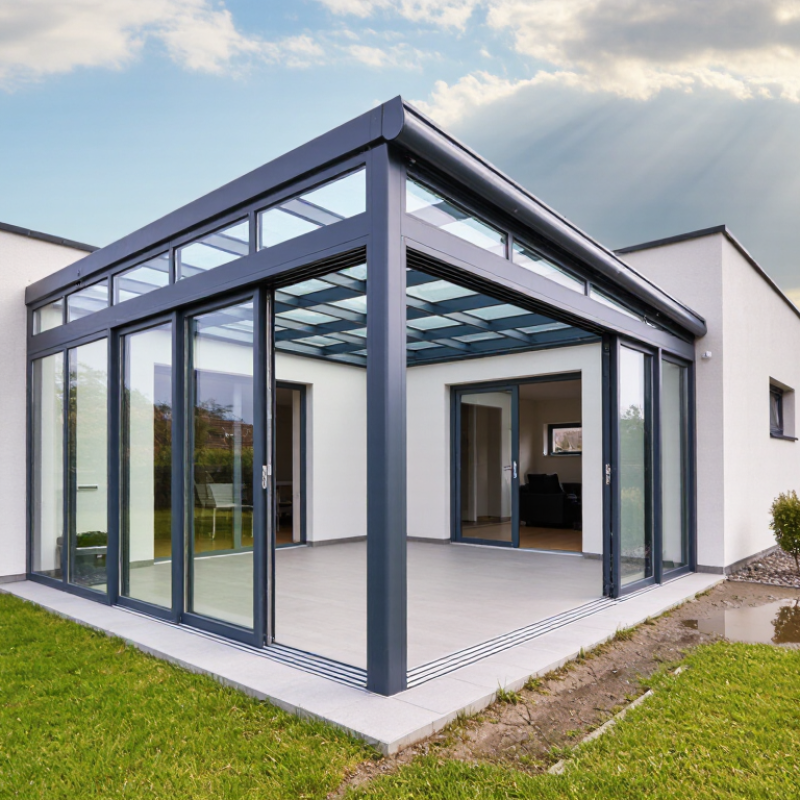
A foldable sunroom is a lightweight outdoor enclosure with flexible walls, folding frames, and transparent panels. It expands living space without permanent construction. Depending on the design, panels may use tempered glass, polycarbonate, or reinforced clear fabric. The structure usually folds along hinges or sliding tracks. When opened, it creates a sheltered sitting area. When closed, it protects furniture from light rain, wind, and insects.
Its operation is simple, but not effortless. Users release the frame locks, fold the panels inward, and secure them against a wall or support rail. Seals reduce drafts, while roof slopes guide rain toward drainage channels. Anchoring matters. A strong gust can move a poorly fixed unit, especially on tiled or exposed surfaces.
Ventilation panels also help prevent heat buildup on sunny afternoons. It can become hot quickly.
Global buyers should check local wind ratings, snow loads, fire requirements, and building permits before ordering. Coastal users may need corrosion-resistant hardware and frequent rinsing. Cold-climate buyers should inspect seals after freezing weather.
In humid regions, trapped moisture can encourage mold around tracks and floor joints. Accurate measurements are essential, yet real walls are rarely perfectly square. A small measuring mistake may affect folding movement.
This is where many attractive plans fail in practice. A professional site check can reduce that risk, although it adds cost and time.
A foldable sunroom works best when its climate limits, drainage needs, and maintenance demands are accepted from the beginning.
Key Features to Evaluate in a 2026 Foldable Sunroom
A 2026 foldable sunroom should be judged by measurable performance, not attractive photographs. Start with the frame. Aluminum should resist corrosion, while reinforced joints must stay firm after repeated folding. Check hinge quality, locking points, drainage channels, and replacement access. A lightweight structure is useful, but excessive lightness may reduce stability in strong wind.
Glazing deserves equal attention. Look for low-emissivity panels, UV control, and clear thermal specifications. The International Energy Agency reports that global space-cooling demand could more than triple by 2050. Therefore, roof shading and cross-ventilation are not decorative extras. They can reduce heat buildup beside glass walls. Airflow matters. Test whether vents work when rain screens are closed. Some designs appear ventilated, yet their openings are too small.
Climate suitability must be documented. Ask for wind-load, snow-load, fire-performance, and water-resistance test data for the intended installation region. The 2023 Global Status Report for Buildings and Construction states that buildings account for about 34% of global energy demand and 37% of energy-related emissions. Better insulation can support lower operating demand, although a foldable enclosure rarely performs like a permanent room. That distinction is important. I would also inspect floor anchoring, threshold height, accessibility, and maintenance instructions. A product may fold smoothly in a showroom but behave differently after dust, salt air, or winter frost. Even strong specifications need local verification.
Comparing Materials, Designs, Sizes, and Weather Resistance
2026 Best Foldable Sunroom for Global Buyers?
Comparing Materials, Designs, Sizes, and Weather Resistance
Material choice controls weight, insulation, and maintenance. Aluminum frames are light and resist corrosion, but they conduct heat quickly. Thermal breaks improve comfort in hot and cold regions. Steel offers stronger spans, yet it needs reliable protective coatings. Polycarbonate panels reduce weight and diffuse harsh sunlight. Tempered glass feels clearer, but it increases shipping weight and structural demands. Measure twice.
Design should match daily use, not only appearance. Sliding or accordion walls save space beside narrow patios. A 2.5-by-3-meter model suits two chairs and a small table. Larger units need stronger hinges, roof supports, and anchoring. DOE Energy Saver guidance reports that windows can cause 25–30% of household heating and cooling energy use. Therefore, low-emissivity glazing and tight seals matter more than decorative frames.
Weather resistance requires evidence. Ask for air, water, wind, and load-test records, not vague “all-weather” wording. ASTM E331 evaluates water penetration, while ASTM E330 examines structural performance under wind pressure. NOAA’s 1991–2020 Climate Normals can help compare local heat, rainfall, and snowfall patterns. Coastal buyers should inspect salt-spray protection. Snow regions need published roof-load ratings. I would still question any foldable design claiming maximum insulation with thin panels. Hinges move, seals age, and installation errors remain common. Test drainage with a hose before regular use.
How to Choose the Best Foldable Sunroom for Different Climates
Choosing a foldable sunroom begins with climate, not appearance. In mild coastal areas, a lightweight frame and breathable panels can improve comfort. However, strong sea winds demand corrosion-resistant hardware and secure anchors. I learned this after watching a temporary shelter rattle during one storm. It stayed upright, but the noise was unpleasant.
Hot, sunny regions need reflective roofing, adjustable vents, and UV-resistant fabric. Place the opening away from afternoon sun when possible. In humid climates, quick-drying panels and raised flooring reduce mold risk. Leave airflow beneath the structure. Small details matter. Yet ventilation alone cannot fix poor drainage.
Cold regions require insulated panels, tight zippers, and a frame rated for snow loads. Never rely on appearance; ask for tested load data and replacement-part availability. In changeable climates, choose a design that folds without forcing wet fabric into storage. Dry it completely first. I once ignored this step, and a faint mildew smell returned weeks later. Check local wind, snow, and installation requirements before buying. A portable structure still needs careful placement.
| Climate Type | Main Environmental Conditions | Recommended Frame | Recommended Roof and Wall Materials | Key Performance Requirements | Ventilation and Thermal Control | Anchoring and Drainage | Overall Suitability of a Foldable Sunroom | Important Limitations |
|---|---|---|---|---|---|---|---|---|
| Hot and Humid Tropical or subtropical regions | High solar radiation, frequent rainfall, high humidity, and possible mold or corrosion risk. | Powder-coated aluminum or galvanized steel with corrosion-resistant fasteners. | UV-resistant polycarbonate roof panels or coated waterproof fabric; mesh or screened side panels for airflow. | Water resistance, UV protection, corrosion resistance, insect screening, and quick drying after rain. | Large operable openings, roof vents, adjustable louvers, and light-colored roof surfaces are strongly recommended. | Use raised thresholds, sloped flooring, gutters, downspouts, and secure ground anchors. Avoid placing the structure in standing water. | ★★★★★ Excellent | Fabric components may require more frequent cleaning and replacement in strong sunlight and high humidity. Regular ventilation helps reduce condensation. |
| Hot and Dry Desert or semi-arid regions | Intense sunlight, large day-to-night temperature changes, dust, and occasional strong wind. | Powder-coated aluminum with UV-stable connectors and reinforced joints. | UV-stabilized polycarbonate or tightly woven UV-resistant fabric; reflective or light-colored materials can reduce heat gain. | High UV resistance, dust control, wind stability, and resistance to thermal expansion. | Cross-ventilation, shade panels, roof vents, and removable sidewalls help prevent overheating. | Use deep ground stakes, ballast weights, or screw anchors suited to sandy soil. Check that dust cannot block drainage channels. | ★★★★☆ Very Good | A foldable sunroom without adequate shading or ventilation can become excessively hot. Lightweight fabrics may deteriorate faster under intense UV exposure. |
| Temperate Moderate four-season regions | Mild to warm summers, moderate rainfall, occasional frost, and variable wind conditions. | Aluminum frame or galvanized steel frame, depending on size and expected wind exposure. | Multiwall polycarbonate, laminated outdoor fabric, or a combination of transparent panels and fabric curtains. | Balanced daylight, moderate insulation, waterproof seams, stable doors, and adaptable enclosure options. | Adjustable windows and removable panels provide flexibility across spring, summer, and autumn. | Secure the unit to a deck, concrete slab, or suitable ground anchors. Provide a slight floor slope or perimeter drainage. | ★★★★★ Excellent | Standard foldable models may not be suitable for prolonged exposure to heavy snow, freezing rain, or severe storms unless specifically engineered for those conditions. |
| Cold and Snowy High-latitude or alpine regions | Freezing temperatures, snow accumulation, ice, freeze-thaw cycles, and strong winter winds. | Reinforced galvanized steel or engineered aluminum with robust cross-bracing and corrosion protection. | Multiwall polycarbonate or other rigid panels designed for cold conditions; avoid thin fabric as the primary winter enclosure. | Structural snow-load rating, low-temperature durability, tight seals, strong door hardware, and resistance to wind uplift. | Use insulated curtains or removable thermal panels. Keep ventilation available to manage condensation when temperatures rise. | Install on a level, load-bearing base and use permanent anchors where appropriate. Remove snow regularly unless the product is rated for the local snow load. | ★★★☆☆ Conditional | Many portable folding models are seasonal structures and should be folded, dismantled, or stored before heavy snow or extreme winter weather. |
| Coastal and Windy Seaside or exposed open areas | Salt spray, high humidity, gusty winds, driving rain, and possible storm conditions. | Marine-grade or heavily powder-coated aluminum with stainless or corrosion-resistant hardware. | UV-resistant polycarbonate or reinforced outdoor fabric with securely fastened seams and edges. | Wind resistance, corrosion protection, reinforced corners, secure closures, and minimal loose fabric. | Keep doors and vents secured during high winds. Use cross-ventilation during normal weather but close openings before storms. | Prefer concrete, masonry, or engineered deck anchoring. Use additional ballast only when permitted by the installation instructions. | ★★★☆☆ Conditional | Salt can accelerate corrosion, and sudden gusts can damage lightweight structures. Foldable sunrooms are not a substitute for certified cyclone, hurricane, or typhoon shelters. |
| Rainy and Mild Oceanic or wet temperate regions | Frequent rainfall, cloudy periods, moderate temperatures, damp soil, and occasional wind. | Powder-coated aluminum or galvanized steel with sealed joints. | Waterproof outdoor fabric, laminated panels, or polycarbonate roof sheets with UV protection. | Reliable waterproofing, sealed zippers or fasteners, mildew resistance, and effective rainwater management. | Roof vents and adjustable windows reduce condensation. Avoid sealing the room completely without controlled ventilation. | Install gutters, downspouts, a raised base, and a well-drained surface. Check seams and roof channels after heavy rainfall. | ★★★★☆ Very Good | Poorly dried fabric can develop mildew. Regular inspection of seams, drainage paths, and attachment points is necessary. |
| High-Altitude Mountain and elevated regions | Stronger UV exposure, rapid weather changes, low temperatures, snow, and potentially strong winds. | Reinforced aluminum or galvanized steel with braced corners and reliable mechanical connections. | UV-resistant multiwall polycarbonate or durable coated fabric rated for outdoor exposure and low temperatures. | UV protection, wind stability, thermal flexibility, snow management, and resistance to rapid temperature changes. | Use adjustable vents to manage condensation and heat changes. Keep snow from accumulating on unsupported roof areas. | Anchor to a firm foundation or engineered deck. Confirm local wind and snow requirements before installation. | ★★★☆☆ Conditional | Lightweight portable units may require seasonal removal. Local building requirements can be stricter at exposed elevations. |
Installation, Maintenance, Safety, and International Buying Factors
2026 Best Foldable Sunroom for Global Buyers?
A foldable sunroom should match local weather, not only its advertised size. Check wind, snow, rain, and ultraviolet exposure before ordering. Ask for structural drawings, material specifications, and tested load information. International buyers should confirm packed dimensions, import duties, electrical requirements, and replacement-part availability. A low price can become expensive after freight and customs delays.
Installation needs a level base, accurate measurements, and reliable anchoring. Leave enough clearance for panels, drainage, and seasonal movement. In coastal areas, use corrosion-resistant fasteners and rinse exposed surfaces regularly. Inspect hinges, seals, locking points, and fabric tension every few months. Remove standing water quickly. It causes stains and weakens seams. Safety glass, stable locks, ventilation, and emergency release access deserve careful attention. Children should not operate folding mechanisms alone. Local building rules can differ sharply, so consult a qualified installer when permits or snow loads are unclear.
Tips: Photograph the package before opening it. Keep all screws labeled. Test the folding action slowly. Do not force a misaligned panel. Recheck anchors after the first strong storm. I would also order spare seals early, because international shipping can be slow. My own preference is practical: choose repairable parts over decorative extras. That decision is not always attractive, but it usually reduces long-term waste and downtime.
2026 Best Foldable Sunroom for Global Buyers
Maintenance and safety planning benchmarks for foldable sunrooms. Shorter intervals are recommended in coastal, snowy, dusty, or high-wind environments.
Use these intervals as practical planning guidance rather than universal legal requirements. Installation should follow the supplier’s structural instructions and local building codes. International buyers should also verify wind and snow-load ratings, drainage design, electrical conformity, customs documentation, replacement-part availability, and after-sales support before ordering.
